Ismaël Koné's World Cup Over After Leg Surgery
Canada’s greatest World Cup night in the men’s game came with a brutal cost.
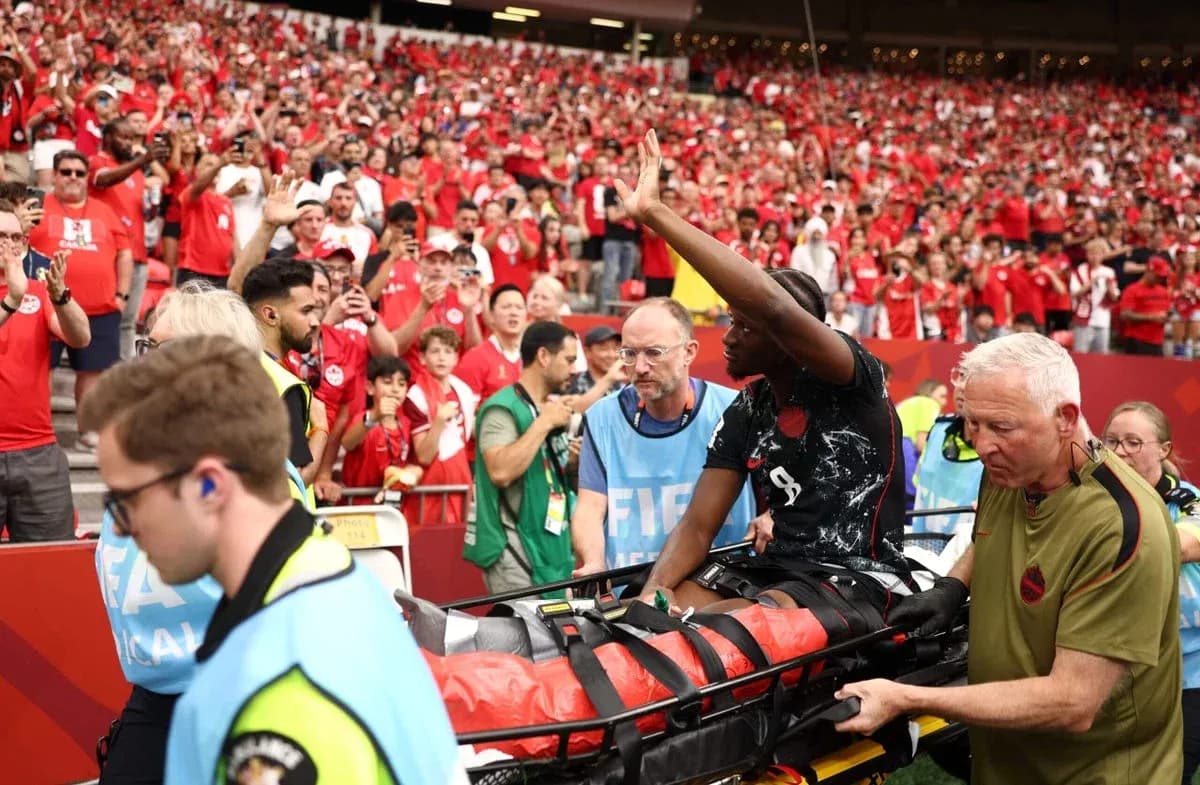
Ismaël Koné, the 24-year-old heartbeat of Jesse Marsch’s midfield, has undergone successful surgery on a fracture to his left leg and will miss the rest of the 2026 FIFA World Cup, Canada Soccer confirmed on Friday.
The injury came in the 51st minute of Canada’s 6-0 demolition of Qatar at BC Place in Vancouver, a landmark result that underlined the host nation’s rise — and then stopped everyone cold.
A historic win, a horrific moment
Canada were cruising. Three goals up, a man up, the crowd in full voice. Koné took a routine pass near the touchline, turning away from pressure as he has done countless times.
Then Assim Madibo arrived late from behind.
The contact caught Koné’s lower left leg. The sound, by all accounts, was sickening.
“You could hear the bone snap,” Marsch said after the game. “Your heart goes out to him. Everybody’s shaken for him.”
The challenge unfolded just a few feet from the Canada bench. Koné immediately clutched his leg and went down. Medical staff sprinted on. Tempers flared. Richie Laryea confronted Madibo, and players from both sides clashed as the seriousness of the injury became clear.
Madibo initially received a yellow card, but after a VAR review the referee upgraded it to red, leaving Qatar with nine men. They had already lost Homam Al-Amin to a straight red in the 33rd minute for bringing down Tajon Buchanan and denying an obvious goalscoring opportunity.
Canada kept scoring. The stadium kept roaring. Yet the night’s defining image had already changed.
Surgery and prognosis
“Last night, Ismaël Koné underwent successful surgery to repair a lower limb fracture,” read a Canada Soccer statement on Friday. “He is expected to make a full recovery but will miss the remainder of FIFA World Cup 2026.”
By the time Marsch reached the hospital, the operation was already being prepared.
“By the time we got to him, he’d already had some drugs to help sedate him a little bit,” Marsch told reporters. “He was being prepared to go into the operation room. But he was in really good spirits and he was adamant that he’s going to be fine.”
The procedure, according to Marsch, lasted about 90 minutes and involved three surgeons.
“I think what happened is the surgeons watched it on TV and they saw what happened and they knew right away,” he said. “And so they brought their top three surgeons to the hospital immediately to take care of him.
“So by the time he got there, the surgeons were there and they were ready. And then we just had to communicate with our medical team and make sure that the surgery was the best option that we thought. But I could see by meeting them and hearing what they had to say about the situation that he was in really good hands. So the surgery they said went really well.”
Koné’s club side, Sassuolo, echoed that optimism in their own statement: “The operation to repair the fracture in his left leg was a complete success. The player will begin his rehabilitation programme in the coming days. The whole club sends Ismaël their best wishes for a speedy recovery.”
Marsch, reflecting on the tackle itself, refused to vilify Madibo.
“I don’t think he meant such a gruesome situation,” the Canada coach said. “I don’t fault him for that.”
No replacement, no like-for-like
World Cup regulations add another twist to Canada’s dilemma. Marsch cannot call up a replacement outfield player at this stage. Any injury replacement had to be made 24 hours before Canada’s opening match.
Koné had started both of Canada’s group games and was central to Marsch’s aggressive, front-foot approach. Losing him strips Canada of a midfielder the coach openly admits he cannot replicate.
Marsch has already said there is no like-for-like alternative for a player who “can do things that no other player can do.”
So Canada will have to rewire on the fly.
Nathan Saliba, who came on for Koné against Qatar, is the most direct stand-in. The 22-year-old, a close friend of Koné’s, immediately stamped his mark on the game, scoring Canada’s fourth goal roughly 10 minutes after entering and celebrating by lifting Koné’s No 8 shirt above his head.
It was a raw, emotional moment — a young squad rallying around one of its leaders.
Saliba brings some of the same thrust and verticality that Koné offers, and he will be the first in line to fill that vacancy. But Marsch’s adjustments will run deeper than a simple one-for-one swap.
Niko Sigur, often used at full-back for Canada, is expected to slide into central midfield more frequently to add creativity and control in the middle of the pitch. That shift, combined with Saliba’s energy, will define how Canada reshape their core without their most unique midfielder.
Switzerland next, with top spot on the line
Canada now turn toward Switzerland on Wednesday, knowing a draw will be enough to secure first place in Group B.
They will walk into that match emboldened by a 6-0 statement win, but without the player who so often knits their transitions together and drives them forward from deep.
The World Cup has already given Canada a night to remember and a loss that will linger. How Marsch’s side respond, tactically and emotionally, will tell as much about this team’s maturity as any scoreline.