Is Cristiano Ronaldo Now a Liability for Portugal?
Ronaldo's Role in Portugal's Struggles at the 2026 World Cup
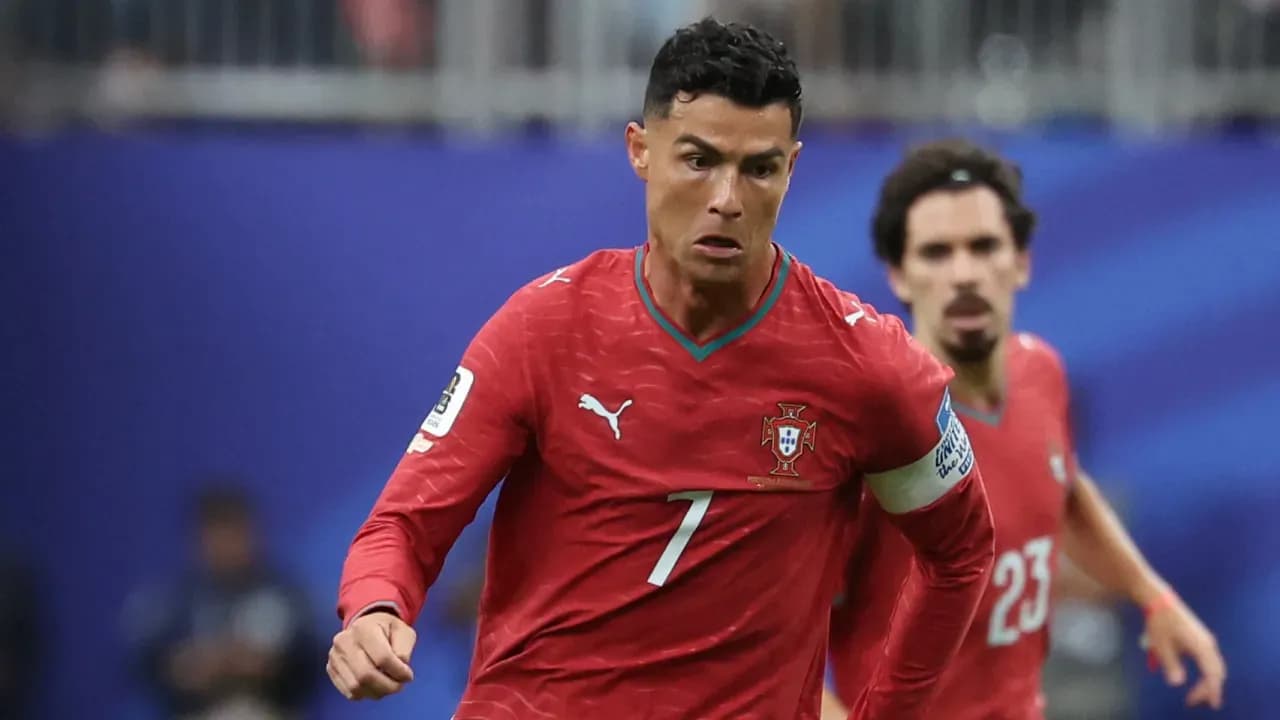
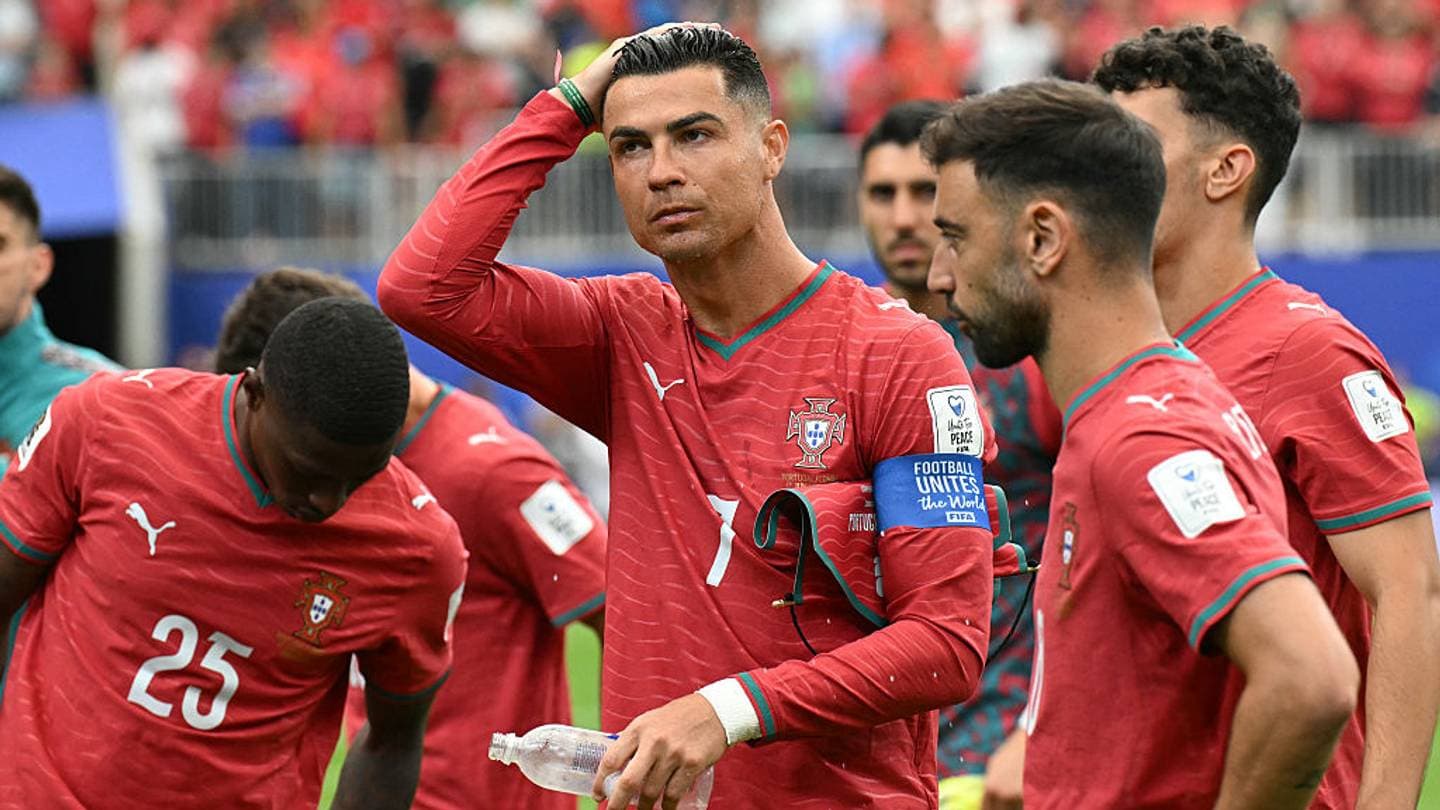
Cristiano Ronaldo, despite being a legendary figure in football, seemed more like a bystander during Portugal’s disappointing 2026 World Cup opener against DR Congo. At 41, the five-time Ballon d’Or winner’s presence on the pitch raised questions about whether he is helping or hindering his national team.
Ronaldo himself admitted in 2025 that winning the World Cup was not a dream of his, nor would failing to win it define his career. Still, watching him largely ineffective in Portugal’s opening match—touching the ball only 25 times, taking three off-target shots, and creating no chances—was disheartening. His best chance came from a scuffed shot that perhaps should have been left for teammate Bruno Fernandes.
A Decline Evident Over Time
Ronaldo’s struggles in major tournaments are nothing new. His World Cup record has always lagged behind Lionel Messi’s, with just eight goals in 24 appearances compared to Messi’s 16 in 27. More strikingly, Ronaldo has now gone ten consecutive major tournament games without scoring. His last goal on such a stage was against Ghana in the 2022 World Cup opener, after which his influence dwindled and he was even benched during the knockout rounds.
In qualifiers and the UEFA Nations League, Ronaldo still finds the net regularly, but his performance in high-pressure tournaments has faded. Playing almost every minute at Euro 2024 without scoring signals a shift: if Ronaldo isn’t scoring, he’s contributing very little.
The Saudi Pro League Factor
Since joining Al Nassr in Saudi Arabia in early 2023, Ronaldo’s scoring stats remain impressive on paper—50 goals in 2023–24 across all competitions and 28 league goals in 30 appearances in 2025–26, culminating in a Saudi Pro League title. Yet the league’s overall quality pales compared to Europe’s top competitions. This environment has kept him playing longer than usual but may have inflated perceptions of his current level.
DR Congo’s defense, composed mostly of players active in Europe’s top leagues, managed to contain Ronaldo effectively. His reduced mobility and predictable positioning make it easier for defenders to mark him tightly, especially when the team relies heavily on him as the focal point.
Portugal’s Options Moving Forward
Portugal faces a tough decision: continue relying on Ronaldo or look toward younger talent. Manager Roberto Martínez has defended Ronaldo’s place in the squad, but with his departure after this World Cup, changes could be imminent.
Gonçalo Ramos stands out as the natural successor. Once hailed as a rising star and having outscored Ronaldo at the last World Cup, Ramos has struggled for minutes at Paris Saint-Germain and served mostly as backup at Euro 2024. He thrives in systems that allow positional rotation and fluid attacking play—styles Ronaldo cannot match anymore.
Other alternatives for a more dynamic ‘false nine’ role include Bernardo Silva, João Félix, and Rafael Leão, who can link up with midfielders and wingers better than a static striker. With Portugal’s next match against Uzbekistan likely pivotal for progressing from the group, relying on an immobile Ronaldo might limit their offensive potential again.