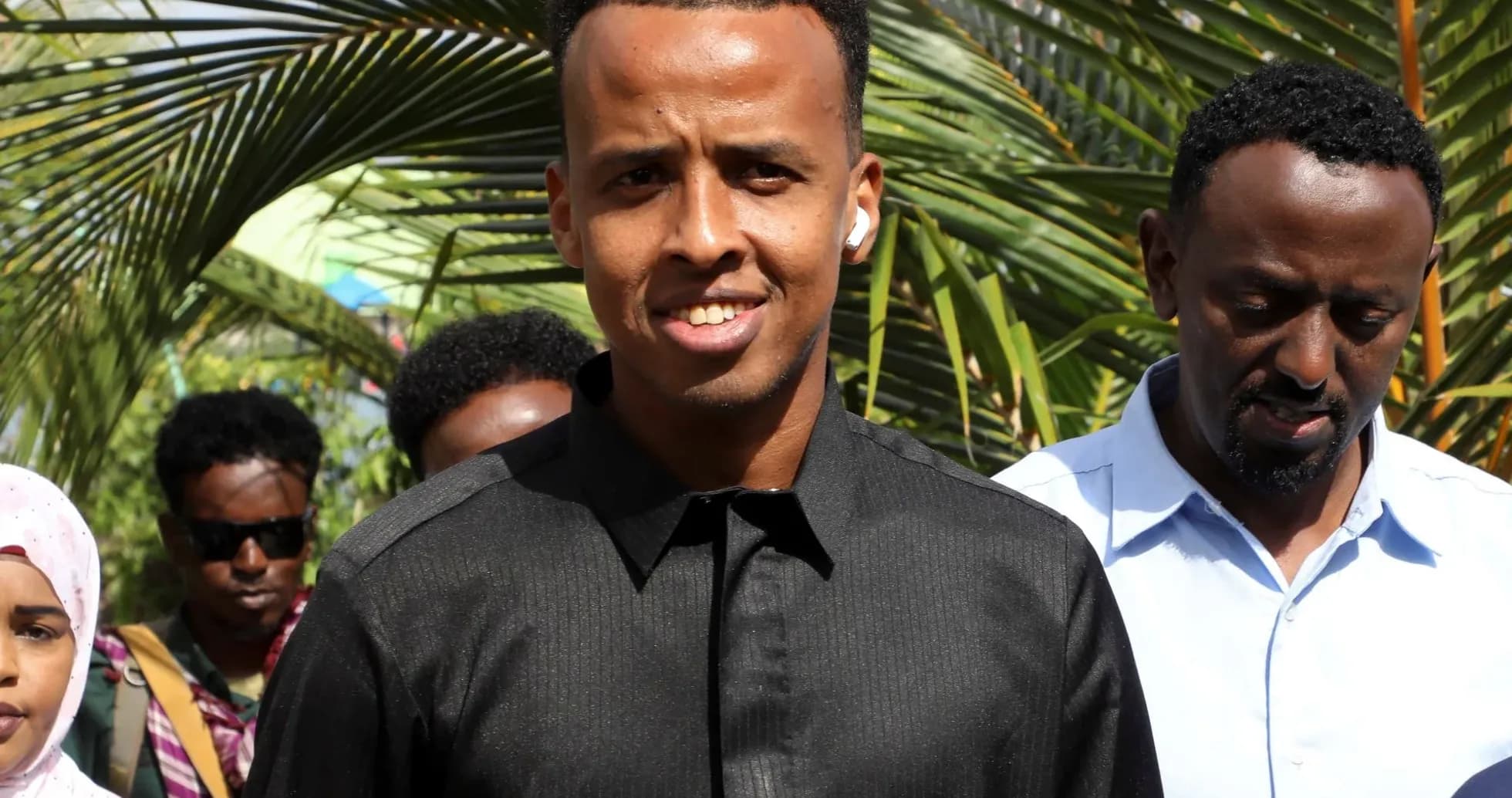
Omar Artan's Journey: From World Cup Heartbreak to UEFA Super Cup
Omar Artan’s World Cup heartbreak will finally meet its counterweight under the bright lights of Europe.
On Wednesday, the Somali referee who was dramatically blocked from entering the United States before the World Cup will take charge of the UEFA Super Cup between Paris Saint-Germain and Aston Villa – his first match on European soil, and a stage heavy with symbolism.
From airport rejection to European showpiece
Artan, 34, never expected to become a headline before a ball was kicked in June. Selected by FIFA as part of the World Cup refereeing panel, he arrived at Miami International Airport ready for the biggest assignment of his career.
He never got past the border.
A US Department of State official later told AFP that Artan was “associated with suspected members of terrorist organisations”, a claim that rendered him “ineligible for admission to the United States”. The allegations were rejected by the referee and sparked fury in Somalia, where he was greeted as a hero on his return.
“It was a very tough period,” Artan told UEFA in an interview. “A lot of people have sympathy for me, because when someone has been working a lot of years and is supposed to do something, and then can’t do it, it’s very challenging.”
The World Cup went on without him. His story, though, refused to fade.
Even FIFA president Gianni Infantino felt compelled to address it. “It is unfortunate what happened to the referee from Somalia,” he said, adding pointedly: “We don’t control everything.”
UEFA steps in – and sends a message
UEFA did control one thing: who would referee its own curtain-raiser.
The European body moved to hand Artan the whistle for the Super Cup, a meeting of Champions League winners PSG and Europa League champions Aston Villa. On paper, it fits within a cooperation agreement signed in April with the Confederation of African Football (CAF), designed to deepen ties and create opportunities for African officials.
In reality, it is more than administrative housekeeping. It is a political statement.
UEFA has been locked in an increasingly bitter stand-off with Infantino, particularly over an abandoned plan to open up the World Cup to private investors. That project collapsed under fierce resistance led by UEFA, which has even floated the nuclear option: a boycott of FIFA competitions, including future World Cups, to force the FIFA president out.
In that context, elevating a referee who became a symbol of FIFA’s limitations and a victim of a World Cup he never reached is a pointed move. Artan’s appointment is both an embrace and a rebuke.
A journey from Mogadishu to the Super Cup
For Artan, the politics swirl around him; the personal journey runs deeper.
“I was lucky, but I have worked very hard to be here and I’m really proud,” he said. “As you can imagine, I grew up in a difficult situation, but it didn’t prevent me from pursuing my dreams.”
Earlier this year, he became the first Somali to officiate at the Africa Cup of Nations, a landmark moment for a country whose football has long been overshadowed by conflict and instability. Now comes Europe, a different tempo, a different glare, a different kind of scrutiny.
“Having adventures, making memories and learning new things is always great,” he added. “When we got this call it was, for me and my family, really a very, very happy moment.”
The Super Cup will not erase what happened in Miami. It cannot return the World Cup that slipped away at an airport gate. But on Wednesday, when PSG and Aston Villa line up and the cameras pan to the man with the whistle, the narrative changes.
The referee who was turned away at the border will finally walk out at the front of the line.