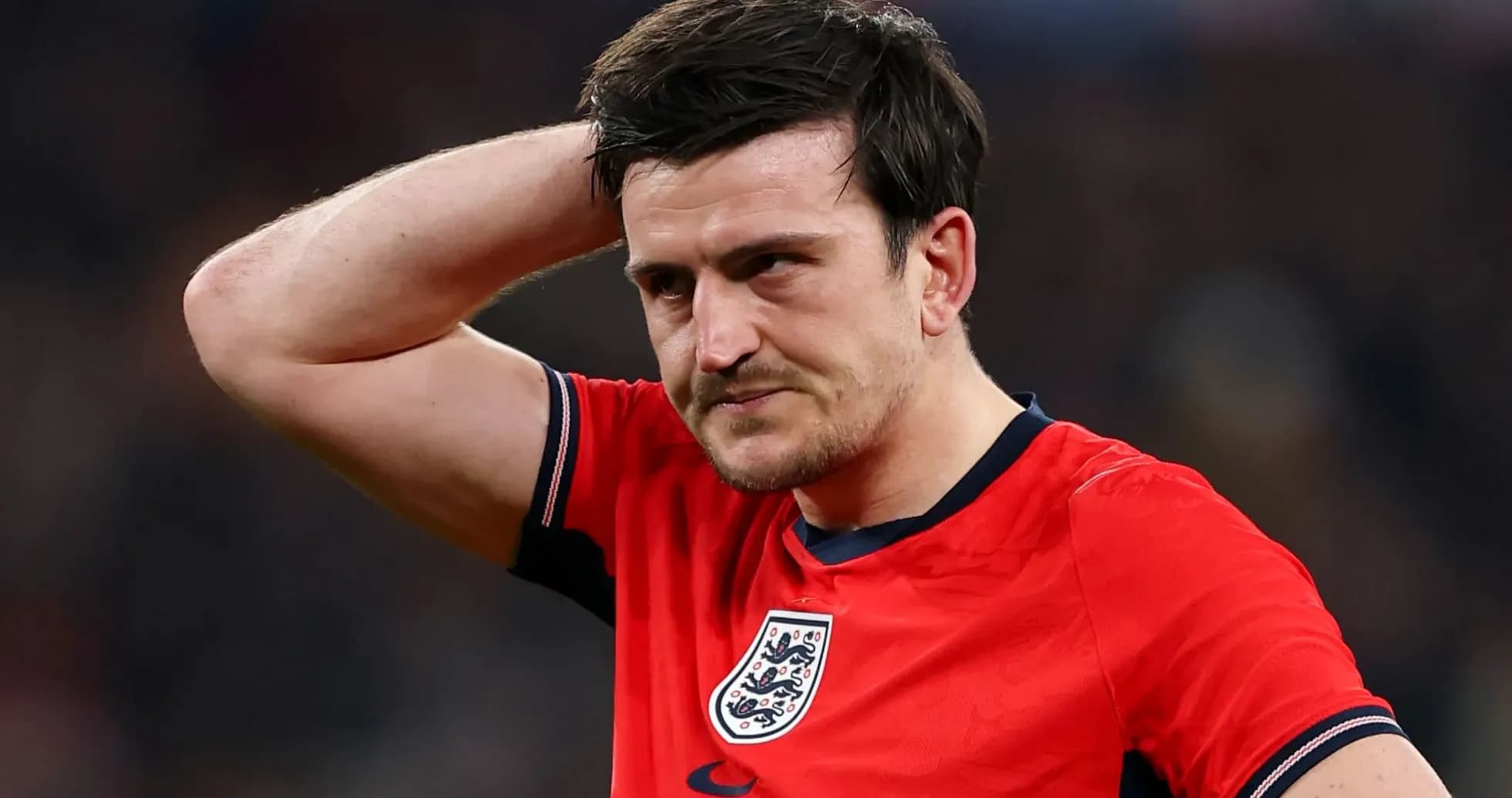
Harry Maguire's World Cup Omission: A New Era for England's Defense
Harry Maguire has grown used to scrutiny. He has heard every question, ridden out every storm. Yet this one will sting.
After dragging his club form back into shape at the business end of the 2025-26 Premier League season and helping Manchester United to third place and Champions League football, the 33-year-old looked to have done enough to muscle his way into another major tournament with England. Sixty-six caps, big nights, big headers, big performances. A defender who, for his country, has rarely flinched.
It still wasn’t enough.
When Thomas Tuchel’s World Cup squad list dropped, Maguire found himself behind John Stones, Ezri Konsa, Marc Guehi, Dan Burn and Jarell Quansah. A senior pillar of the Gareth Southgate era suddenly reduced to a name on the outside looking in.
Tuchel delivered the news over FaceTime. Maguire later admitted on The Rest Is Football podcast that the call was “quite an awkward” one. Awkward is polite. This is a player who has been England’s defensive reference point for years, now watching a new hierarchy form without him.
England’s new-look defence under the spotlight
England opened their World Cup campaign in Texas with a 4-2 win over Croatia, a scoreline that flatters the defence more than the performance. Stones and Konsa started at centre-back, and while England’s attack eventually cut loose, the back line wobbled early on. Croatia found gaps. Frailties surfaced.
That, for former England full-back Danny Mills, was always the fear.
Speaking on behalf of betTOM, Mills told GOAL: “I think going into the tournament, the defensive situation was always going to be the worry – especially as you go deep into the tournament and you come up against better teams, some very, very good teams, in the latter stages. Trying to find that balance is never going to be easy, I think, with the squad that was picked.”
The balance, in his eyes, wasn’t quite right from the start.
“I was a little bit surprised by Stones and Konsa, that selection. I've said from day one, if Stones is fit, he plays, because I think he's exceptional. But I would have played him alongside Marc Guehi. They've not just played together at Manchester City, they know each other from Manchester City as well. They've trained together every day, they have an understanding, they've built that up.”
The logic is simple: in tournament football, familiarity matters. Combinations matter. Stones plus Guehi, in Mills’ view, offered a ready-made partnership. Instead, Konsa got the nod and England’s back line looked anything but settled in that first half against Croatia.
Out wide, questions linger as well. “Reece James, I think he's a fantastic full-back and a great footballer,” Mills said. “Left-back, Nico O'Reilly has done great for Manchester City, but my concern is he's better attacking than he is defensively at times, and he goes wandering into those areas.”
That word again: concern. Not about talent, but about reliability when the margins tighten and the opposition sharpens.
“So, yes, I was surprised by the omission of Harry Maguire,” Mills admitted.
A weapon left at home
Maguire’s absence isn’t just about leadership or experience. It’s about options.
“When I look at the squad in general, defensively, at what stage do some of those players start for England?” Mills asked. “I'm not sure some of them do, unless there's six or seven injuries. Whereas Harry Maguire, you can bring on, you can play him in a back three if you need to. You can use him as a weapon up front.”
That versatility has been one of Maguire’s great strengths in tournament football. Back three, back four, late set-piece chaos in the opposition box – he has ticked all those boxes for England. Tuchel has chosen to move on from that profile, leaning instead into mobility, technical security and a different blend of attributes.
The second half against Croatia showed the upside of this new approach. England were bold, fluid, ruthless. They scored four and could have had more. But the defensive doubts didn’t vanish; they were merely pushed to the background by attacking brilliance.
“So, yes, one or two defensive concerns still,” Mills said. “Fantastic second half, great performance in the second half, but I think there will be much stiffer challenges to come.”
Those challenges are exactly where Maguire used to come into his own.
Standby lists and closed doors
There was, briefly, a flicker of hope for the United defender. When Newcastle’s versatile full-back Tino Livramento withdrew from the squad, England had a chance to revisit their defensive mix. It was a natural moment to reach for experience, for a known quantity, for a player who has weathered knockout-stage tension.
Tuchel went another way.
Chelsea’s Trevoh Chalobah, with just one senior England cap, got the call. Another nod to the future. Another sign that, for this World Cup at least, Maguire’s chapter is closed.
Had Maguire’s own reaction to his initial omission played a part? He had spoken publicly in the aftermath of the snub, and the question lingers over whether any bridges were singed in the process.
Mills, though, sees a more pragmatic explanation.
“I have to assume that when the squad was announced – three weeks ago, three-and-a-half, four weeks ago – Thomas Tuchel would have had to say to four or five players, ‘keep yourself fit and keep yourself ready, because you're on the standby list and if something happens, you may get a phone call’,” he said.
“That is hard because you're not involved in it and most of your other players and colleagues are either at a World Cup or they're off on holiday, enjoying themselves and doing what they need to do. But you've got to train alone, keep training – very, very hard to get to that stage and be ready just in case.”
The implication is clear. If Chalobah was called, he was likely on that original standby list. Maguire, by that logic, was not.
“So I would assume that's the reason why there would be a list of maybe four or five that were told you have an opportunity if somebody gets injured and that's maybe why that call-up has come.”
For Maguire, it leaves a stark reality. After years as a cornerstone of England’s defence, he is now watching a new generation take the stage, his name no longer the automatic inclusion it once was. As England stride deeper into this World Cup with a back line still under the microscope, the question will follow them: in the biggest moments, will they regret leaving their most battle-hardened defender at home?