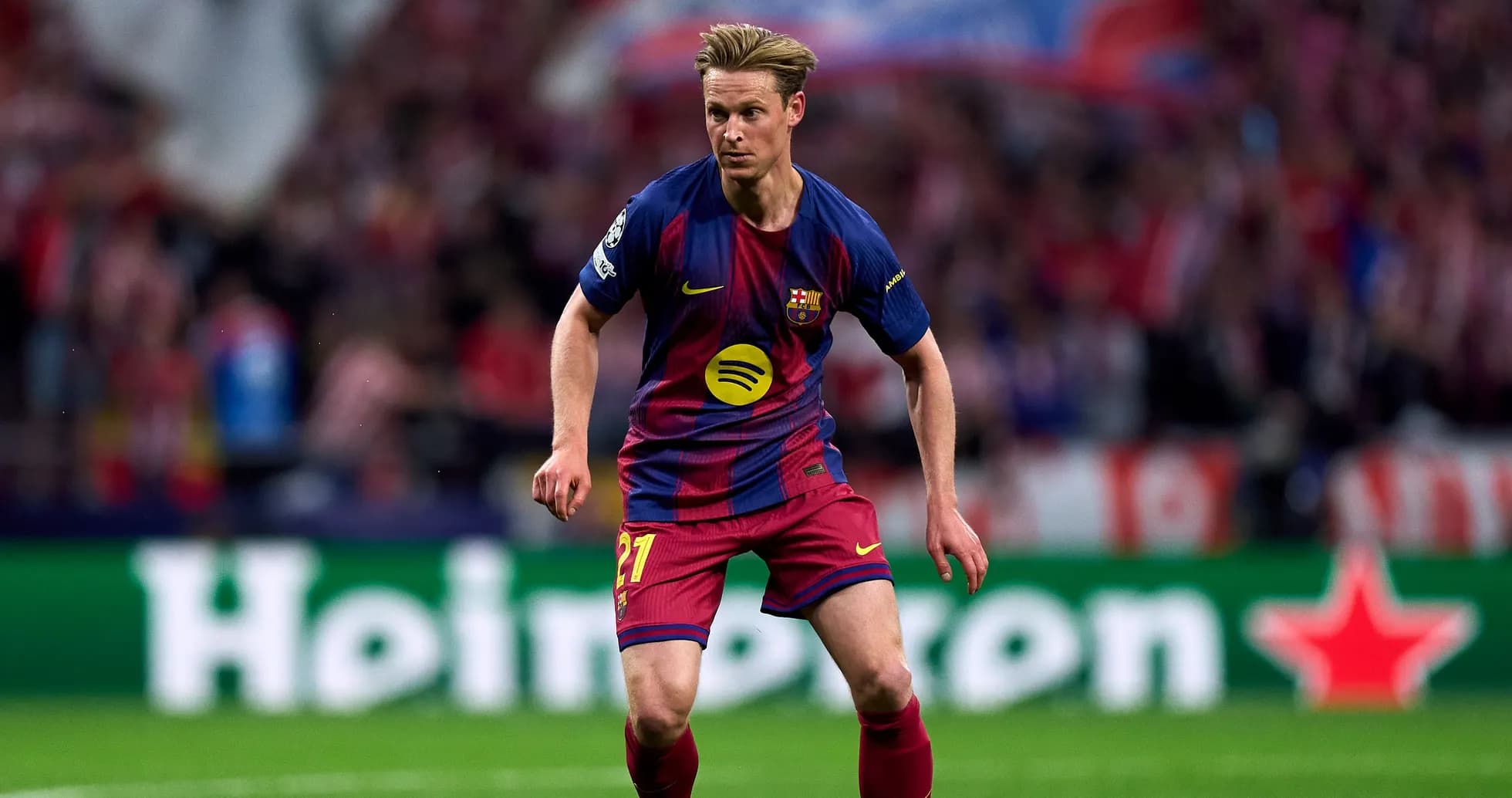
Frenkie de Jong's Recovery Journey Back to Barcelona Midfield
Frenkie de Jong’s road back to the Barcelona midfield is turning into a long one.
The 29-year-old Dutchman is still recovering from the knee injury he picked up at the start of September and, barring a sudden change, he is not expected to be fully fit before October. Even that target depends on one key condition: no pain and no setbacks as he pushes through the final stages of his programme.
A World Cup injury that wouldn’t go away
According to Mundo Deportivo, De Jong tore the medial collateral ligament in his right knee during the World Cup. Barcelona only made the diagnosis public on 23 July, but the information relayed to Hansi Flick’s staff points to the problem starting much earlier, around 16 June, in one of the Netherlands’ training sessions.
The delay in understanding the real extent of the damage has become a story in itself. The Dutch national team’s medical staff initially gave De Jong an incorrect diagnosis, which allowed – and encouraged – him to keep playing. His World Cup ended on 30 June, yet he did not immediately report back to Barcelona. Instead, he took a two-week holiday in Ibiza.
By the time he returned, Barcelona were still in the dark. The Catalan club only obtained a precise picture of the injury on 13 July, when their own medical team finally pinned down the full severity of the ligament tear.
Conservative treatment, divided opinions
Once the problem was clear, a second battle began: how to treat it.
De Jong opted for a conservative approach, rejecting surgery despite the recommendation of the club’s medical staff, who believed an operation would be the safer and more definitive solution. Barcelona, wary but respectful, accepted the midfielder’s decision. Both sides agreed to track his progress day by day, guided by his pain levels and how his knee responded to the workload.
The next key checkpoint is already marked on the calendar. Members of Flick’s staff indicate that De Jong’s condition will be reassessed after the upcoming international break, which runs from 21 September until La Liga resumes on 10 or 11 October.
The midfielder plans to squeeze everything he can out of that window without club fixtures. This is the period he wants to use to give conservative treatment one last push.
A race against a brutal fixture list
De Jong has a date in mind. By 8 October, he hopes to be back in full training with the group, the same day his international teammates are due to return to Barcelona’s sessions.
That hope comes with several conditions. He must be pain-free in the injured ligament of his right knee. He must also recover a basic level of match rhythm, something no medical test can simulate. Only minutes on the pitch can do that.
And this is where the real complication starts.
The calendar waiting for Barcelona after the break is unforgiving: Getafe, Galatasaray, Real Betis, Paris Saint-Germain and then Real Madrid in the Clásico on 25 October. These are not games for players feeling their way back. Flick will need his side at full physical intensity, not half-measures.
So De Jong’s return will not be decided by medical clearance alone. Flick’s judgement will be crucial. Does he risk a key midfielder early, in the middle of a brutal run, or does he hold him back a little longer and trust the rest of the squad to carry the load?
For Barcelona, and for De Jong, the next few weeks are not just about healing a ligament. They are about timing a comeback in a season that may not wait for anyone.