Frenkie de Jong's Barcelona Future in Question Amid Rodri's Arrival
Frenkie de Jong’s Barcelona future is back under the microscope. Again.
This time the noise comes from the Netherlands, where journalist Valentijn Driessen has suggested the Dutch midfielder could be heading into his final season at Camp Nou, with the 2026/27 campaign potentially his last in Blaugrana colours.
The timing is no coincidence. Barcelona have just brought in Rodri, one of the most accomplished midfielders in the game, and De Jong is currently sidelined with injury. For Driessen, that combination changes everything.
“He has been injured a lot; they already tried to get rid of him before, and now they bring Rodri,” he said on De Telegraaf’s podcast, via SPORT. “I don’t think that now that he’s injured they’re trying to transfer him – I can’t imagine it – but I do think he’s in his last season at Barça.”
Rodri’s arrival reshapes the midfield
De Jong has never hidden his dream: stay at Barcelona for his entire career. He has said it, he has lived like it. But dreams collide with reality when a club signs a player of Rodri’s stature.
Barcelona have added a Spanish international at the peak of his powers, a midfielder built to anchor Hansi Flick’s system and dictate the rhythm of games. Rodri is expected to sit at the heart of the team, the reference point around which others move.
Driessen doesn’t claim that Rodri’s signing means Barcelona will rush De Jong out of the door while he’s injured. That, he insists, is not the scenario. The concern lies elsewhere: in the slow, ruthless erosion of status that comes when a new leader steps into your zone of the pitch.
“He wanted to stay at Barcelona until the end of his career, but that’s a privilege granted to very few players,” Driessen said. “He’s not the sort of player you’d think would remain a first-team regular at Barcelona until he’s 35. In short, he won’t see out the end of his career there.”
The Dutch journalist even questioned whether Flick can realistically start both Rodri and De Jong on a regular basis.
“You always have to perform to keep playing. If an excellent player comes in who plays in your position, I can’t imagine those two playing together.”
A tactical crossroads for De Jong
That leads to the key issue: adaptation.
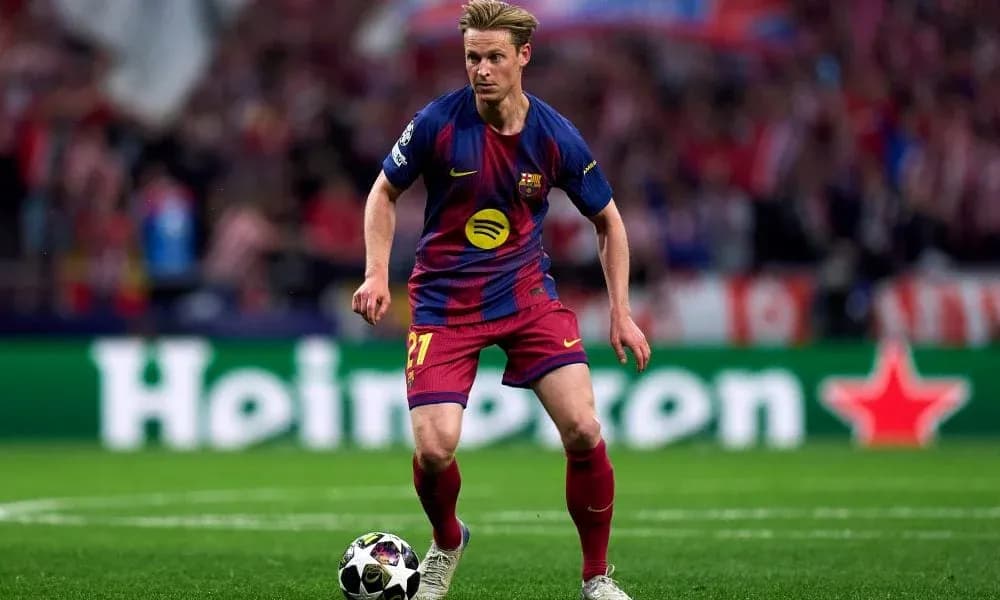
De Jong has built his reputation on controlling games from deep. He drops close to the centre-backs, carries the ball through pressure, knits phases together. He is a conductor, not a poacher.
To share a pitch with Rodri, Driessen argues, De Jong might have to reinvent himself higher up the field, operating in a more advanced, attacking role. And that, in his view, cuts against the grain of the player’s profile.
“He might be able to try, but he needs to be more attacking, and that’s usually the point of criticism: that he lacks that. He’s never managed it.”
So the question shifts from contracts and transfer fees to tactics and roles. Can Flick carve out a structure that protects De Jong’s strengths while giving Rodri the central lane he thrives in? Or does one inevitably push the other to the margins?
Barcelona’s midfield is already crowded with players who can interpret different roles and zones. Once De Jong returns, Flick will have choices to make and a system to define. There is no guarantee that Rodri’s arrival automatically forces the Dutchman out of the XI, but the comfort of guaranteed selection is gone.
The competition has sharpened. Now De Jong has to decide: evolve, or accept that his Barcelona story may be entering its final chapters.