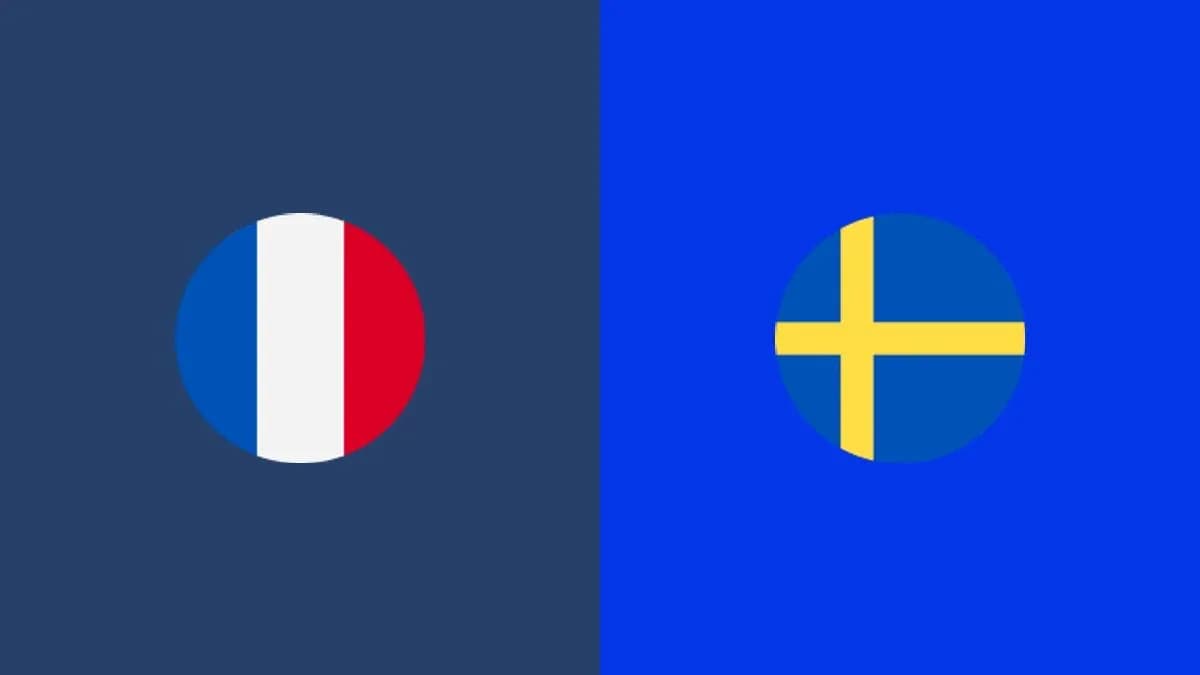
France vs Sweden: Deschamps’ Last Dance in World Cup Knockout
On a humid New Jersey night, under the glare of a World Cup knockout, the storylines could hardly be louder. France, two-time world champions and flawless through the group stage, walk into the New York New Jersey Stadium on 30 June as the heavyweight everyone expected. Sweden arrive as the side nobody quite trusts, but nobody really wants to play.
Didier Deschamps has already announced he will step down at the end of this tournament. Every match now feels like a chapter in a long goodbye. His team have responded in the most emphatic way possible: three games, three wins, ten goals, two conceded. No drama. No fuss. Just a familiar, ruthless machine rolling into the knockouts.
Graham Potter’s Sweden could hardly be more different. They’ve lurched into the Round of 32 as one of the best third-placed finishers, equal parts dangerous and vulnerable. Seven scored, seven conceded, a 5-1 hammering by the Netherlands, a 5-1 dismantling of Tunisia, and a nervy 1-1 draw with Japan that just about dragged them over the line. Unstable, yes. But unpredictable enough to be awkward.
France in full flow
France’s group campaign never really flickered into crisis. They took care of Senegal 3-1, brushed past Iraq 3-0, then finished with a statement: 4-1 against Norway, powered by an Ousmane Dembélé hat-trick that underlined the depth behind Kylian Mbappé.
Deschamps has built yet another side that knows exactly what it is. Mike Maignan anchors a back four that should be restored to full strength, with Jules Koundé, Dayot Upamecano, William Saliba and Lucas Hernández forming a unit that, on paper, looks close to unbreakable. Saliba, rested against Norway because of a back issue, is expected to play through discomfort to keep his place. This is knockout football. Nobody wants to give an inch.
In front of them, the double pivot is the metronome. Aurélien Tchouaméni and Adrien Rabiot set the rhythm, closing space, recycling possession, and giving the artists a platform. Michael Olise and Désiré Doué drift into half-spaces, rotate into pockets, drag markers away. All of it is designed to do one thing: isolate Mbappé in dangerous areas and let Dembélé attack full-backs one-on-one.
When it clicks, it suffocates opponents. They can’t get out, and when they do, they’re too tired to hurt France.
Sweden on the edge
Sweden, by contrast, live on a knife edge. Their World Cup has already swung from humiliation to exhilaration and back again.
The 5-1 loss to the Netherlands exposed everything that worries Swedish fans: a fragile back line, loose marking, and a midfield that struggled to cope under pressure. The 5-1 win over Tunisia showed the other side: quick, incisive, direct, with forwards who can tear teams apart in transition. The draw with Japan was somewhere in between, a dogged, pragmatic performance that did just enough.
Potter’s biggest problem is at the heart of his defence. Isak Hien is out injured, and that single absence forces a chain reaction. Victor Lindelöf, who has been operating in midfield, is expected to drop back into central defence to plug the gap. That opens a door for Lucas Bergvall, Tottenham’s teenage prodigy, to step into the midfield engine room.
It’s a huge responsibility for a young player in a knockout tie against a side as structured and relentless as France. But Potter doesn’t have the luxury of perfect options. He has to take risks.
Behind them, Oliver Zetterström must be flawless. Sweden’s goalkeeper will face waves of pressure, aerial traffic, and runners attacking the box from all angles. His command of the penalty area and his decision-making off the line will be critical. One misjudged cross, one parried shot into the wrong area, and France tend to punish.
Styles that clash
This match-up is brutally clear. France want control. Sweden want chaos.
Deschamps’ side will look to pin Sweden back with long spells of possession, using Tchouaméni and Rabiot to squeeze the pitch and Olise and Doué to overload the spaces between full-back and centre-back. The aim is to drag Sweden’s back three and wing-backs into constant decisions: step out or hold the line, follow a runner or protect the box. Get those choices wrong, and Mbappé or Dembélé will be darting into the gaps.
Sweden’s answer lies in what happens the moment they win the ball. No hesitation, no sideways passes. Straight up the pitch.
Anthony Elanga, fresh from a spectacular long-range strike against Japan, brings raw pace and direct running. Alongside him, Alexander Isak offers elegance and intelligence, while Viktor Gyökeres brings power and relentless movement. If Sweden can break France’s first line of pressure, those three can force the French back four to turn and run towards their own goal. That’s when mistakes creep in, even in elite defences.
France have looked occasionally passive when they lose the ball high up the pitch, slow to track runners and a little casual in transition. Sweden will have watched those clips on repeat. If they can drag this game into a series of open-field sprints, they have a puncher’s chance.
Defensive puzzles at both ends
For all of France’s superiority on paper, both managers know the tie could hinge on how their back lines cope under stress.
Deschamps will want his first-choice defence in front of Maignan, not only for their individual quality but for their familiarity. Knockout matches are often decided not by the brilliance of an attack but by one lapse, one missed runner at the back post. With Saliba nursing a back problem, that risk is real.
On the other side, Potter is trying to build a makeshift structure in the worst possible moment. Lindelöf dropping into central defence, Gabriel Gudmundsson likely alongside him, and Gustaf Lagerbielke in a back three means communication and positioning must be instant and precise. Any hesitation, and France will exploit it.
The Swedish full-backs and wing-backs face a brutal assignment. Alexander Bernhardsson and Elliot Stroud must track Dembélé and Olise relentlessly, knowing that one mistimed step forward can leave acres of space behind. That’s the territory where France live.
Form and history lean one way
Recent form paints a stark picture. France have won four of their last five, with the only defeat coming in a pre-tournament friendly against Ivory Coast. Since then, they have moved through the group stage with an authority that suits their billing as favourites.
Sweden’s last five tell a more volatile story: one win, two draws, two defeats, ten scored, ten conceded. They can hurt you. They can hurt themselves.
The head-to-head record also leans towards Les Bleus. Their most recent meeting came in November 2020, when France won 4-2 in the UEFA Nations League. Sweden did claim a 1-0 victory in Stockholm earlier that year, and the World Cup qualifiers in 2016 and 2017 were split with each side winning at home. Across the last five clashes, France have three wins to Sweden’s one.
History, form, depth, and stability. All point to France.
The stakes in New Jersey
Deschamps has a full squad available, with no reported injuries or suspensions clouding his options. He can pick his strongest XI, manage minutes, and adjust in-game with a bench stacked with talent: Marcus Thuram, Rayan Cherki, N’Golo Kanté, and others capable of changing a tie in 20 minutes.
Potter does not have that luxury. Hien’s absence forces him into a reshuffle, and he must lean heavily on a core group to survive long stretches without the ball. If Sweden are still in the game after an hour, his changes will be about energy and running rather than introducing game-breaking stars.
This is the reality of a knockout. One slip, one set-piece, one moment of brilliance, and months of planning evaporate.
France arrive as favourites, as they always seem to in this era. Sweden arrive with questions swirling around their defence, but with enough pace and punch in attack to ask a few of their own.
If Deschamps’ last World Cup campaign is to stretch deep into July, this is the kind of tie his France simply have to navigate. If Potter is to write a defining chapter of his own, this is exactly the kind of giant they need to drag into a fight they were never supposed to win.