France Dominates Norway: Dembélé's Hat-Trick Shines
The posters sold one story. The pitch delivered another.
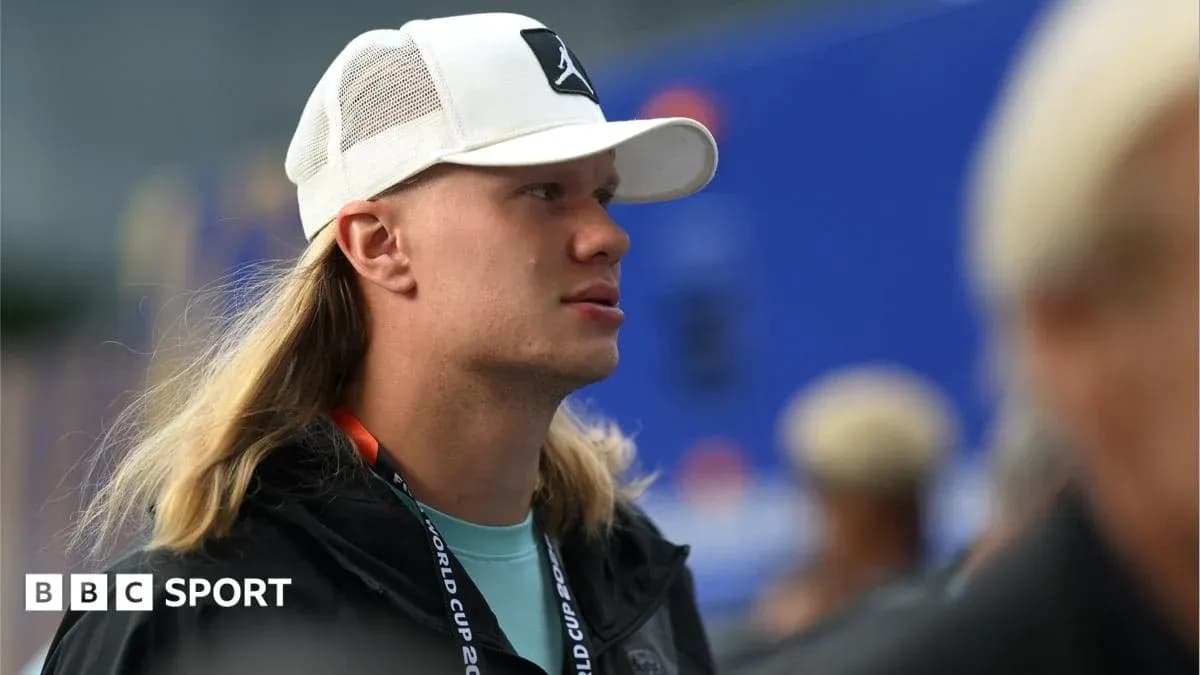
This was supposed to be Kylian Mbappé v Erling Haaland, a Golden Boot duel on American soil, a World Cup group-stage night dressed up as a future Ballon d’Or playoff. Instead, one superstar watched in a bib, the other rattled the crossbar in the opening minute – and Ousmane Dembélé stole the show.
By the time the whistle blew on France’s 4-1 dismantling of Norway at Boston Stadium, the Ballon d’Or winner had torn through a second-string defence with a ruthless 25-minute hat-trick. The game was done before half-time. The argument over Norway’s gamble will run far longer.
Haaland sits, Dembélé explodes
Ståle Solbakken did not just rotate. He ripped up his team sheet.
With Norway already assured of a place in the knockout rounds, the coach made 10 changes to the side that had beaten Senegal, leaving Haaland – four goals in his first two games – on the bench and breaking a run of starts that stretched back to early 2024. Martin Ødegaard also stepped aside. The spine, the stardust, gone in one sweep.
“A no-brainer,” Solbakken called it. Medical staff, physios, even some players, he said, had all pushed in the same direction. Only the travelling support, desperate to see their heroes on the biggest stage, were cited as a nagging doubt.
The mood among those fans swung the moment the team news dropped. Some stared at their phones in disbelief. Others just shrugged, sang louder and launched into their now-familiar Viking-style row celebrations in the stands. They had crossed an ocean; they were going to enjoy it.
On the grass, France smelled opportunity.
Didier Deschamps went the other way entirely, unleashing an array of attacking talent that he believes can carry Les Bleus all the way to New Jersey on 19 July. Inside 60 seconds Mbappé had already crashed a shot off the underside of the bar. Norway’s makeshift back line rocked. The pressure did not ease.
Dembélé, drifting, darting, then striking, took over. Space appeared where Norway’s usual giants would have stood. With Haaland and the first-choice defensive unit watching on, the French winger filled his boots, finishing with the kind of cold precision that turns a group game into a procession.
The cost of rotation
This was not a decision taken in isolation. Norway’s staff had pored over the data after the win against Senegal. According to Solbakken, five or six players were “very affected” after 80 minutes – the entire defensive line and a couple of midfielders among them. The numbers screamed fatigue. The style, as Pat Nevin noted on BBC Radio 5 Live, is brutally physical. Something had to give.
“If they go and try that physical style and lose two players, was it worth it?” Nevin asked. “I suspect they think that's not worth it and that's why they've done this.”
Former England striker Ian Wright, speaking on ITV Sport before kick-off, understood the logic of resting Haaland if Norway wanted him fully charged for the latter stages. Yet even he admitted he was “surprised” by the sheer scale of the changes, especially after Solbakken had named the same XI for wins over Iraq and Senegal.
The risk crystallised in one moment after the break. With France already in control but Norway threatening a flicker of a comeback, Haaland’s deputy Jørgen Strand Larsen stepped up to take a penalty that would have dragged the score back to 3-2. He missed. Haaland stayed seated. The chance to turn a chaotic night into a statement slipped away.
All of this came after Haaland himself had downplayed the France clash in the aftermath of his two-goal performance against Senegal.
“I couldn't care too much about that game now,” he said once qualification was secure. “They're probably going to win against us. They're probably going to win the whole tournament.”
His coach picked a team that seemed to agree.
France cruise, Norway hit the road
France, ruthless and unbothered by the noise around Norway’s selection, did exactly what a heavyweight should do against a weakened opponent. They pressed, punished, and never really looked threatened. Three wins from three, top of Group I, and a clean route into the last 32.
Their reward is a short hop to the nearby New York New Jersey Stadium on 30 June, where they will meet the runners-up from Group F or G. Minimal travel, maximum control. This is how tournament favourites like it.
Norway’s path looks far more gruelling.
Based in Greensboro, North Carolina, they now face a 1,100-mile journey to Arlington, Texas, to meet Ivory Coast in the last 32 on the same day. Had they topped the group, the distance would have been roughly half. The decision to rotate did not just alter one night in Boston; it reshaped the geography of their World Cup.
“It is quite complicated,” Nevin said. “The various distances you'll have to go, the massive distances you have to go if you lose this game, uproot your team and all that sort of stuff. On the other hand, it's probably a good idea to make sure you just get through and that everyone is completely and utterly fit.”
If Norway beat Ivory Coast, the travel carousel spins again. They would then fly north to New Jersey for a last-16 tie on 5 July against the winners of Brazil-Japan. That is the stage Solbakken is clearly targeting: a fully loaded Norway, with Haaland and Ødegaard restored, trading blows with one of the tournament’s blue bloods.
History’s mixed verdict
Norway are only the fourth team to make 10 or more changes to their starting XI in a single World Cup match at the same tournament. The precedent offers no simple answer.
Spain did it in 2006, rotating all 11 players against Saudi Arabia, still winning the group game but then falling 3-1 to France in the last 16. The rest did not translate into resilience when it mattered most.
Belgium provide the counterpoint. In 2018, they made 10 changes and still beat England in their final group match. Later, with the big guns back, they edged Japan 3-2 in a wild last-16 tie and then stunned Brazil 2-1 in the quarter-finals before finally bowing out to France. The gamble fed a deep run.
Solbakken will point to Belgium and hope he is following the right blueprint. His critics will look at Spain and warn of a team that blinked too early.
For now, the only clear winners are France, who barely had to break stride to assert their authority on the group and underline their status as serious contenders.
Norway’s verdict comes later, on a hot night in Texas, with Haaland back on the pitch and no room left for calculated sacrifice.