France Triumphs Over Norway as Dembélé Shines with Historic Hat-Trick
France marched through their final group game at the 2026 World Cup on Friday night, but their 4-1 win over Norway unfolded under a heavy shadow.
Didier Deschamps, the man who has shaped this era of French football, was not on the touchline. He stayed away following the death of his mother, leaving longtime assistant Guy Stéphan to lead a team that has grown used to his voice, his presence, his silhouette in that technical area.
The French Football Federation sought a simple gesture of mourning: black armbands to honor their absent manager’s mother. FIFA turned the request down, according to reporting from The Athletic’s Amy Lawrence. A small detail, but on nights like this, those details sting.
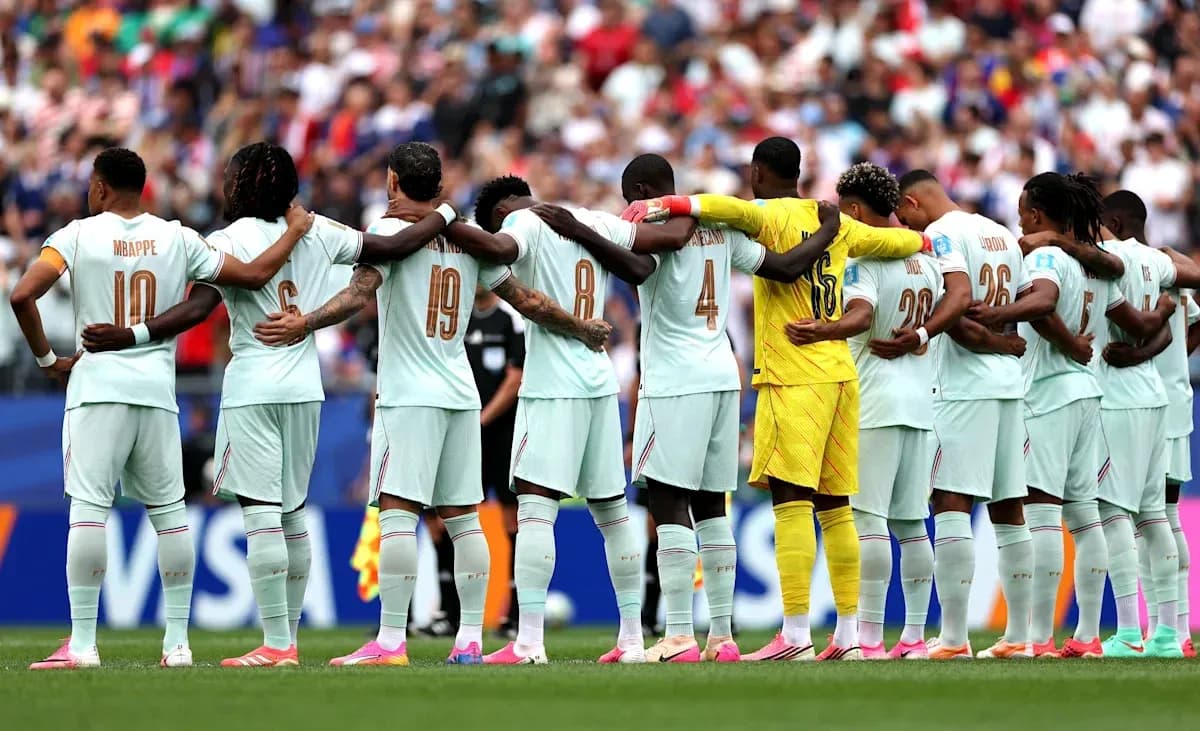
Confusion then clouded the pre-match tributes. The FFF initially informed journalists that a minute’s silence would be held in memory of Deschamps’ mother. Soon after, a clarification arrived: FIFA had in fact arranged the silence for the victims of the deadly earthquake in Venezuela. Two tragedies, one moment of reflection, and a sense that France’s own grief had been pushed quietly to the margins.
On the pitch, though, the players responded in the way Deschamps would have demanded.
Under Stéphan’s guidance, France tore into Norway, sealing a third straight group win and a perfect 3-0 record. The scoreline, 4-1, barely flattered them. This was a statement of depth, of authority, of a squad that has learned to function almost on autopilot at major tournaments.
At the heart of it all stood Ousmane Dembélé, the reigning Ballon d’Or winner, playing with the conviction of a man at the peak of his powers. He produced the second-quickest hat-trick in World Cup history, a blistering showcase of acceleration, precision and ruthless finishing that ripped the Norwegians apart and turned the game into a procession.
Every touch from Dembélé carried menace. Every run seemed to open another seam in Norway’s defense. In a tournament already thick with storylines, his Golden Boot push is rapidly becoming one of the central threads.
Kylian Mbappé, also in the Golden Boot race, added his own threat and gravity to a forward line that looks built for late July, not just late June. This is what Deschamps has crafted since taking charge in 2012: a machine that can absorb absences, even one as emotional and seismic as his own.
Under his tenure, France have already climbed to the summit once, lifting the World Cup in 2018, and came within touching distance again in 2022 as runners-up. Now, in 2026, they are once more among the favorites, carrying both the weight of expectation and the familiarity of this stage.
The immediate reward for their flawless group campaign is pragmatic rather than glamorous: a round-of-16 tie against a third-place qualifier at MetLife Stadium in New Jersey on Tuesday. On paper, it is the kind of assignment a team of this stature should handle.
But tournaments do not play out on paper. They twist on moments, on mood, on how a squad channels its emotions.
France have shown they can win without their manager on the bench, playing through grief and administrative missteps to deliver a performance worthy of him. The question now is simple and sharp: when Deschamps returns, can this team turn their controlled fury into another run at the trophy?