Football's Political Landscape: Protests, Transfers, and Champions League Drama
Budapest beckons, but football refuses to stay in one place. From Dublin to Los Angeles, from the politics of protest to the cold clarity of a Champions League final, the sport is being dragged in every direction at once.
Dublin’s tennis balls and a team in the firing line
In Dublin, Qatar’s 1-0 defeat to Ireland felt almost like background noise. The real story bounced onto the pitch in fluorescent yellow.
Several times during the first half, protesters hurled tennis balls carrying the message “stop the game” onto the turf, a pointed intervention against Ireland’s upcoming Nations League fixtures with Israel, and in particular the match scheduled for 4 October in Dublin. Play stopped, restarted, stopped again. The footballers kept moving; the politics refused to shift.
Veteran defender Seamus Coleman had already voiced his unease, arguing that head coach Heimir Hallgrimsson and the players had been left exposed by decisions made above them. After the match, the sense of discomfort lingered.
Hallgrimsson did not hide behind platitudes. “Seamus spoke really well about it the other day. We all don’t agree with what’s going on. Ideally it’s not in our hands. It’s not a nice situation to be put into. Like I said, personally, none of us agree with what’s going on.” The message was clear: this is not their fight, yet they are the ones standing in the line of fire.
On the pitch, Ireland did enough. Off it, the questions only grew louder.
Volpato’s late switch and Australia’s race against the clock
While Ireland wrestled with politics, another national team waited on paperwork. Cristian Volpato, the Sassuolo playmaker and an Italian youth international, is on the brink of a dramatic change of direction.
At 22, he is set to switch allegiance from Italy to Australia, four years after turning down the chance to represent the country of his birth at the World Cup in Qatar. Then, he said no. Now, he wants in.
Football Australia is scrambling. Fifa still has to sign off the change before Socceroos coach Tony Popovic names his 26-man World Cup squad by 1 June. The clock is ticking, the squad list looming, and a player once lost to Australia could yet become a central figure in their next World Cup chapter.
If the paperwork lands in time, Popovic gains a creative wildcard. If it doesn’t, Australia will watch a pivotal decision drift past them for the second time.
Pochettino, Pulisic and a career still waiting to explode
Elsewhere, another World Cup figure sits under a harsher light. Christian Pulisic is 27 now, no longer the wide-eyed prodigy, and Mauricio Pochettino has set a blunt tone around his star’s international choices.
“I was disappointed with him [for missing the Gold Cup],” Pochettino said in a briefing with reporters. “I am transparent about that. He was disappointed with our decision not to include him in the two friendly games [against Switzerland and Turkey].”
The tension is obvious. A coach unhappy with a player’s absence. A player unhappy with a coach’s response. Somewhere between those positions lies the truth about where Pulisic’s career currently stands: too talented to ignore, not consistent enough to be untouchable.
For a footballer long billed as “the coming man”, the numbers and the impact need to catch up with the reputation. One goal here, a flash there, will not be enough. Not at 27. Not with a manager publicly raising the bar.
Havertz, underdogs and a familiar script in Budapest
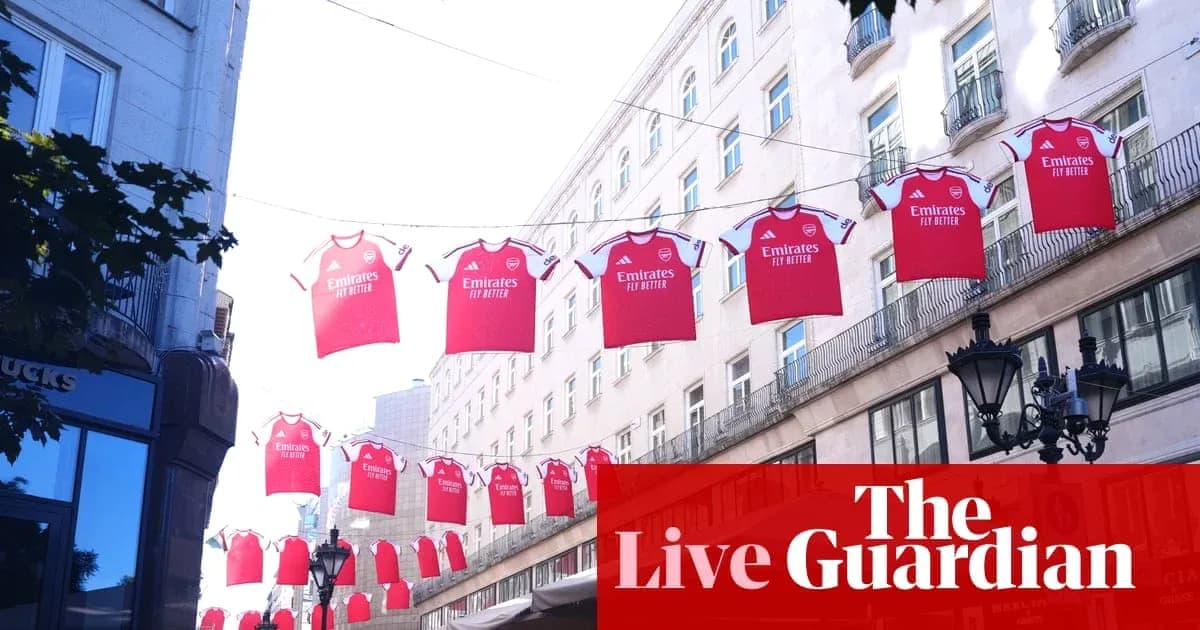
While individual stories swirl, the club game narrows its gaze on Budapest. Arsenal face Paris Saint-Germain in the Champions League final, a meeting of heavyweights in a city more used to hosting history than making it.
Kai Havertz knows this territory. He has already lived one Champions League final as an underdog, scoring the winner for Chelsea against a Manchester City side that had cantered to the Premier League title under Pep Guardiola.
“Havertz is looking ahead to Arsenal’s final against Paris Saint-Germain in Budapest on Saturday, when not many give them a chance of winning,” runs the assessment. It was the same narrative before that night with Chelsea. City were the machine; Chelsea, the flawed chasers. They still walked away with the trophy.
“We were the underdogs on that day, for sure,” Havertz says. “We hadn’t had the best season. But now it is completely different.”
Different club, different coach, different role. Yet the same question hangs over him: can he bend a final to his will again, this time in Arsenal red?
Iran, the US and a World Cup that cannot escape geopolitics
The World Cup, officially, is still about football. Reality keeps intruding.
In Los Angeles, a fixture between the United States and Iran has survived weeks of uncertainty after the US and Israel attacked Iran on 28 February. The political shockwaves threw the match into doubt: would the Islamic Republic allow its national team to travel to the home of one of its attackers? Would the US even welcome Team Melli?
With kick-off now just weeks away, the game looks set to go ahead. That does not mean it will be quiet.
A large Iranian diaspora in “Tehrangeles”, many of whom fled the 1979 revolution, is expected to use the occasion to protest. Players could choose their own forms of defiance. The stadium may become a stage far bigger than 90 minutes of football. It is, unmistakably, more than a fixture on a schedule.
Arsenal’s tightrope: set pieces, full-backs and PSG in transition
Back in Budapest, the tactical battle is being dissected from every angle. Jonathan Wilson has already reached for Agincourt in his preview, and the numbers support his caution.
PSG have scored more goals from non-penalty set plays than Arsenal in this season’s Champions League – eight to five – yet corners and free-kicks may still offer Arsenal their clearest route to a breakthrough. The real danger lies elsewhere.
PSG live off the counterattack. Most domestic opponents in Ligue 1 sit deep and wait, only to be sliced apart when Luis Enrique’s side transition at speed. Their wins over Chelsea, Liverpool and Bayern Munich have followed that same pattern: absorb, spring, punish.
For Arsenal, the warning lights are flashing at full-back, especially on the right. Ben White is out with a knee injury. Jurriën Timber is doubtful after a groin problem picked up against Everton in mid-March. That leaves whoever starts exposed to Desiré Doué and Khvicha Kvaratskhelia, both rapid, fearless dribblers who run straight at defenders and rarely slow down.
Give either of them space to accelerate, and Arsenal’s defensive line could unravel in seconds.
Fresh legs, heavy stakes
Luis Enrique has prepared for this final with a ruthlessness that only the modern superclub can afford. He has rotated relentlessly in Ligue 1, resting his stars and sacrificing rhythm for freshness.
The numbers are stark. Ballon d’Or winner Dembélé has started just 11 of PSG’s 34 league games. Neves, Mendes and Fabián Ruiz have 13 starts each. Kvaratskhelia has 18. Doué and Hakimi 16 apiece. Marquinhos only 11. None of them has played even half of PSG’s league minutes.
They arrive in Budapest with fuel in the tank and a season’s worth of load management behind them. Arsenal arrive with belief, scars and a sense of opportunity that has been building for months.
From Dublin’s protests to LA’s geopolitical storm, from Volpato’s late switch to Pulisic’s uneasy standoff, the sport keeps throwing up complications. On Saturday in Budapest, for 90 minutes at least, the question becomes simpler: can Arsenal break PSG’s stride, or will another European night belong to the team that looks built for the sprint?