Estevao Willian: Chelsea's Untapped Talent in the Wings
The shot bent, dipped and seemed destined for the top corner. David Raya’s fingertips said otherwise.
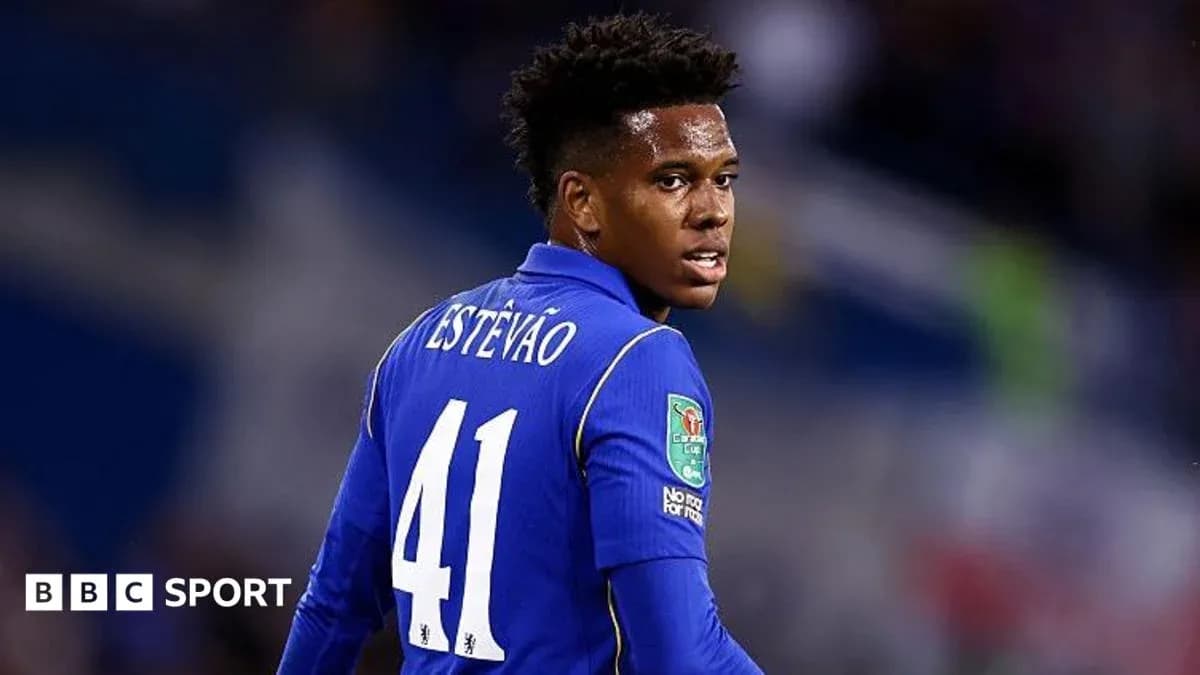
Estevao Willian’s late curler at the Emirates did not rescue Chelsea a point against Arsenal, but it did something else. It jolted everyone’s memory. This 19-year-old Brazilian, a £51m investment from Palmeiras, is supposed to be part of the club’s future – and right now, he is barely on the pitch.
A talent waiting in the wings
So far this season, Estevao has played just 96 minutes in all competitions. Eighty of those came in the Carabao Cup against League One side Luton Town. The rest – 16 minutes – have been scattered across brief substitute cameos against Fulham and Arsenal.
He did not get off the bench in the narrow win over Brighton, watching on as Chelsea clung to three points.
His path is blocked by big money and big form. Chelsea’s club-record £117m signing Morgan Rogers has walked straight into the team from Aston Villa. Cole Palmer is undroppable. Joao Pedro has started all three league games. Between them, they have locked down the attacking positions Estevao wants to call home.
Reports in Brazil have painted a picture of a frustrated young winger, unhappy with his lack of minutes. Inside Stamford Bridge, that version of events is flatly rejected. Club sources and people close to the player insist he is content, excited even, by Chelsea’s summer recruitment – including Rogers’ arrival – and fully engaged with Xabi Alonso’s plans.
What is not in doubt is how highly Chelsea rate him. Internally, Estevao sits in a small “untouchable” group alongside Palmer, Joao Pedro and Moises Caicedo. The club have no intention of selling any of them. Estevao is seen as central to the long-term project being built by Alonso and the hierarchy.
There have already been early conversations about a new contract. Chelsea want to reward key players with improved terms, just as they have done with Joao Pedro.
Alonso’s stance and the tactical puzzle
Alonso is adamant there is no problem.
“No, Este is ready, training well. The other day he had a great impact,” the head coach said when asked if the winger’s lack of involvement pointed to any unhappiness.
“He is fully involved with a very good attitude every day. I count on Este 100% because of his potential. He is so young but he is learning and adapting quickly. The season is long.”
That last line matters. Estevao is coming off a serious grade-four hamstring tear suffered late last season, an injury that cost him a World Cup appearance. Chelsea always expected to build him up gradually through this campaign.
Even so, the way he is being used tells its own story about the battle for places.
At Arsenal, Estevao replaced Pedro Neto, who has been operating as a wing-back in Alonso’s new system. As Chelsea chased an equaliser, the teenager was pushed into a role that demanded defensive discipline and physicality, far from his natural comfort zone.
Under normal circumstances, it is hard to see Alonso asking him to perform that job. Estevao’s preferred space is the inside-right channel, operating as a number 10. That territory currently belongs to Palmer, who is not just a key attacking threat but also viewed as a leader in the dressing room.
When Alonso has switched to a back four, Estevao and Palmer have shown flashes of an intriguing partnership. The catch? That shape has only appeared once – against Luton in the Carabao Cup. In league play, Alonso has stuck close to his strongest XI as he hammers home his tactical ideas, helped by the fact Chelsea have no European fixtures to juggle.
Dislodging Palmer in that environment will be brutally hard.
A swollen squad, shrinking windows
Estevao is not the only one feeling the squeeze.
Chelsea’s squad stands at 27 players. With 11 starters and nine substitutes allowed, a fully fit group would leave six outfield players watching from the stands every matchday.
For now, injuries have softened the edges. Caicedo and Jordan Henderson have both had fitness issues, leaving Chelsea light in midfield at times. Even then, summer signing Valentin Barco has managed just one start and one substitute outing, while right-back Malo Gusto has been repurposed in midfield. Wing-back Marco Palestra is still sidelined.
Up front, the hierarchy is clear. Palmer and Rogers have started every game. Joao Pedro has begun all three league matches. Danny Welbeck led the line against Luton. That has squeezed Emmanuel Emegha, a summer arrival from Strasbourg, down to a single appearance on the bench.
Defender Aaron Anselmino is yet to play and has been named in only one squad, with fitness management also a factor. Young attacking options Geovany Quenda and Jamie Gittens have barely had a look-in, logging eight and 10 minutes respectively across four matches. Quenda, signed despite serious interest from Manchester United in 2024, has already been omitted from two of Alonso’s matchday squads.
The calendar offers little relief. If Leeds United knock Chelsea out of the Carabao Cup at Stamford Bridge on Wednesday, there will be no more domestic cup football until the FA Cup in January. Quietly, that turns this midweek tie into a pressure point – not just for progression, but for squad harmony.
A prolonged cup run could be the difference between Estevao’s season being defined by cameos or by genuine opportunities.
History points to a core, not a crowd
Chelsea’s situation is not unique. Teams without European football often tighten around a small core, no matter how big the squad on paper.
Leicester City’s remarkable 2015-16 title win came with only 14 players making more than 15 appearances in all competitions under Claudio Ranieri. A year later, Antonio Conte’s Chelsea lifted the Premier League with no European commitments; just 13 players reached more than 1,500 minutes.
Even in the era of five substitutions, the pattern holds. When Newcastle United qualified for the Champions League in 2022-23, only 14 of their players topped the 1,500-minute mark across all competitions.
The most relevant modern parallel sits closer to home. Manchester United, after finishing third last season without European football, also leaned heavily on a core group: just 13 players recorded more than 1,500 minutes, and that was with early exits in both domestic cups.
That is the reality Estevao is wrestling with. Alonso, like many managers in this situation, is likely to trust a tight inner circle. Breaking into that group is hard. Staying in it is harder.
For now, the Brazilian is a symbol of Chelsea’s future, not yet a pillar of their present. His shot at Arsenal hinted at what he can bring: invention, audacity, the ability to change a game with a single swing of his left boot.
The question is simple and unforgiving: how long can a club that calls him “untouchable” afford to keep him on the margins if those glimpses start to come more often, and in bigger moments?