England vs Panama: Tuchel's Tactical Dilemma
In another universe, Thomas Tuchel would be debating only one thing before England face Panama in New Jersey: protect Harry Kane’s legs or unleash him on Group L’s weakest seeds to chase Lionel Messi, Erling Haaland, Kylian Mbappé and the rest of the Golden Boot pack.
That plan vanished in the goalless grind against Ghana.
Failing to wrap up the group with a game to spare has dragged England into a far messier reality. A brutal schedule looms – potentially four matches in 13 days – and Tuchel’s clean rotation blueprint is covered in red pen and question marks. The Panama fixture, once circled as a “Kane rest day” by Ollie Watkins and Ivan Toney, now carries weight England cannot ignore. Top spot is still on the line. So is momentum.
Rotation with a price
There will be changes against Panama. Some Tuchel wants. Some he very much does not.
Declan Rice sits one booking away from suspension and finished the Ghana game with strapping on his left calf. His situation is a concern; the loss of Reece James is a full-blown problem. The right‑back’s latest hamstring issue rules him out for at least two games and strips England of one of their few natural attacking outlets from deep – exactly the kind of weapon Tuchel needs against low blocks.
No one can claim this was unforeseeable. James has lived with hamstring trouble for years and missed almost two months at the end of the club season. Tuchel rolled the dice at full-back and the numbers are coming up ugly. He picked only three attacking full-backs in his squad. Tino Livramento, himself fragile, has already gone home and been replaced not by another raiding defender but by centre-back Trevoh Chalobah.
So the burden of width and invention from the back now falls on Nico O’Reilly’s young shoulders. On the right, the options behind James are Ezri Konsa, Jarell Quansah and Djed Spence – all capable defenders, none a natural attacking force. Against opponents who sit deep and stay there, the omission of Trent Alexander-Arnold will be picked apart more than ever.
What should have been a straightforward assignment against Panama suddenly feels tight and awkward. The draw with Ghana means England cannot ease off, cannot coast, cannot indulge in a mass rotation exercise.
Kane, Bellingham and the risk calculation
So do Kane and Jude Bellingham go again? It is hard to see Tuchel benching both. Some of his A‑listers will have to carry the load. He will not want a second‑placed finish reshaping England’s route through the knockouts. He will not want the familiar narrative of a strong opening win – Croatia this time – followed by a flat second game to become the story of another tournament.
There is no panic from Tuchel, but there is clarity. England must improve against low blocks. Ghana’s compact 4‑5‑1 turned the night into a slog and Panama, already eliminated after 1-0 defeats by Ghana and Croatia, are likely to offer another long examination of England’s patience.
Thomas Christiansen’s side have grown since the 6-1 humiliation by England at the 2018 World Cup. They sit deeper, defend narrower, and turn games into wrestling matches. Tuchel expects a back five that at times will resemble a back six or even seven. He knows this is the kind of structure that has blunted England before.
They dazzled when Croatia, Serbia and Wales left space to attack. The memories that linger, though, are the laboured qualifiers against Andorra, Albania and Latvia. Ghana added to that file. Thomas Partey shadowed Kane, cutting off his habit of dropping into midfield. The numbers told the story: Kane had just 19 touches and combined with Bellingham only three times. England hogged 78.8% of the ball yet did not force a shot on target until after the break.
Searching for a key that doesn’t exist
Tuchel has not cracked the code. He knows it.
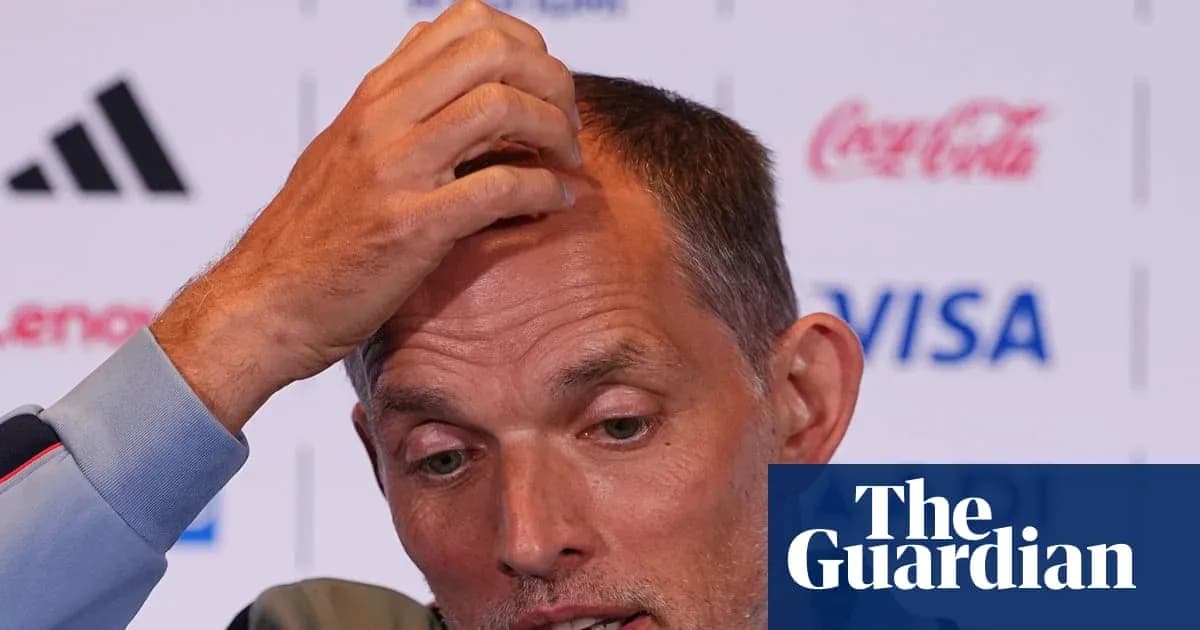
“It is normal that it is difficult for us to overcome these blocks,” he said afterwards. He argued England had done enough to win, but admitted they spent much of the night guarding against Ghana’s counters – and twice got caught badly.
“I haven’t found the recipe where: ‘They do this, then we do this and then we are fine,’” he said. He wants England to be “very active and aggressive” against Panama but refuses to be reckless. Seven players on the last line and three left to defend? “It’s not serious enough.”
He values control. He wants patterns. The idea is simple: create overloads in specific zones, then accelerate sharply. The reality against Ghana? “There was no overload,” he admitted. He expects the same against Panama.
So the answer has to be more risk in possession, not less. Sharper movement. More bravery. Avoid the traps that let Panama slow the game to walking pace and break England’s rhythm into pieces.
Bellingham’s irritation against Ghana was obvious. He demanded the ball, but his team-mates did not always find him. Just before half-time he lunged into a needless foul, a small sign of a big frustration.
Left side in the spotlight
England cannot afford that emotional drift. The centre-backs must step in with more conviction, compress the pitch and pin Panama back. Kobbie Mainoo, with his ability to operate in tight pockets, could come in for Rice and help England play through the congestion.
Out wide, the message is blunt: attack your full-back. Run at them. Keep running.
Tuchel hopes Bukayo Saka is ready to return on the right in place of Noni Madueke. On the left, Anthony Gordon has not made the spot his own and may give way. Marcus Rashford is the obvious candidate, yet his late cameo against Ghana – he arrived in the 83rd minute – did little to strengthen his case as a guaranteed starter.
“He’s a candidate to start,” Tuchel said, before widening the lens. “But the left side in general needs to provide more threat.”
There are other options. Eberechi Eze or Morgan Rogers could start on the left and drift inside, linking with Bellingham and the central midfielders. That kind of movement might help restore the fluency Tuchel thought he already had.
After the friendly win over Costa Rica this month, he believed the Gordon–O’Reilly combination had solved the issue. “I thought: ‘OK, left side is solved,’” he admitted. Then came the competitive games. “We played the first match and they’re not clicking. It was not the same penetration, not the same verticality, and this was the same in the second match.”
Against Ghana, the switch to the right-footed Spence at left-back reduced England’s threat even further. Spence offered little on the ball compared with the more naturally adventurous O’Reilly. The entire flank looked dulled.
One-against-ones and one moment of quality
Tuchel keeps dragging the conversation back to the collective. He wants his players to relish their “one-against-ones”, to take responsibility instead of waiting for the system to solve everything. He also knows Panama will try to smother every attempt to create overloads.
“It is difficult to accelerate the match against these low blocks,” he said. So the margins shrink. One cross. One shot. One deflection.
“It needs this one moment of quality and a bit more precision with the crossing. Are we arriving aggressively enough with the cross? How can we shoot more from outside the box, have a deflection and force this goal in?”
Tuchel is not losing perspective. He is adamant that no side will enjoy facing Carlos Queiroz’s Ghana. He has seen this movie before in the Champions League group stage: the underdog who celebrates every duel, every clearance, every counterattack as if it were a goal. On Tuesday, Ghana treated crossing halfway like a major event and cherished a 0-0 as though they had won the tournament.
England live in a different world. Expectations are heavier. Style matters as much as results right now. Against Panama, they will be asked not only to win but to entertain, to ease the tension, to stride into the knockouts with something more than a grim sense of duty.
Tuchel’s task is clear. He has to keep control without killing the risk, solve the left flank, find a route through another low block and, somehow, take the handbrake off this team at exactly the moment the schedule demands caution.