Dani Carvajal: A Legendary Farewell to Real Madrid
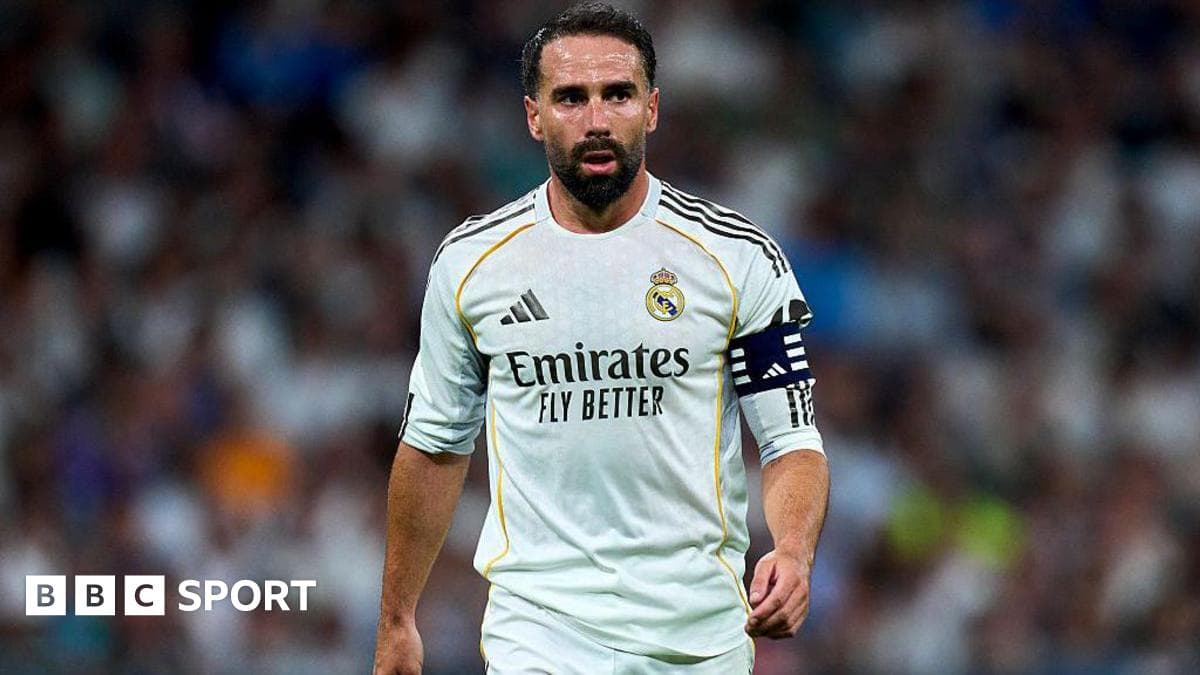
Dani Carvajal will walk away from Real Madrid at the end of the season, closing a 23-year chapter that began as a boy in the academy and ended with the captain’s armband and a place in club folklore.
The 34-year-old’s contract runs out in June. There will be no renewal, only a farewell at the Santiago Bernabeu against Athletic Club on 23 May, when Madrid will pause a second consecutive trophyless season to salute one of their greatest right-backs.
From Valdebebas to the Bernabeu throne
Carvajal joined Madrid’s youth system in 2002, a local kid from Leganés fighting for space among hundreds of hopefuls. Eleven years later, after a formative season at Bayer Leverkusen and a buy-back clause swiftly activated, he stepped into the first team and never really stepped out again.
Across 450 appearances, he scored 14 goals, but his value was never measured in numbers on a scoresheet. It was measured in nights, in trophies, in the way Madrid’s right flank felt secure and dangerous at the same time.
He leaves with 27 titles, one of the most decorated players in the club’s history. Six Champions Leagues, four La Liga crowns, two Copas del Rey, six Club World Cups, five UEFA Super Cups and four Spanish Super Cups. It is an honours list that reads like an era.
Master of the biggest stage
Only five players have lifted the Champions League six times. Carvajal is in that select group, and he stands alone in one respect: he started in all six finals he won.
Those matches defined him. He did not just survive the pressure; he shaped it. The 2024 final against Borussia Dortmund became his personal showcase, a performance of controlled aggression and timing, capped with the opening goal and the man-of-the-match award. On a stage built for forwards, the right-back stole the spotlight.
Recognition followed. A place in the FIFPro 2024 World XI. Inclusion in The Best FIFA Men’s World XI that same year. Individual accolades that simply confirmed what Madrid supporters had known for a decade: in his prime, there were few, if any, more complete right-backs in world football.
The complete right-back
At his best, Carvajal blended defensive bite with attacking clarity. He pressed high, tackled hard, and read danger early. Then, with the same conviction, he overlapped, underlapped, and offered an outlet for midfielders under pressure.
Under Carlo Ancelotti and Zinedine Zidane, he became a structural pillar. He stretched the pitch, linked with midfield, and helped Madrid flip from defence to attack in a heartbeat. The team’s shape often hinged on his positioning, his willingness to run, his judgement on when to surge and when to sit.
He did the unglamorous work that allowed others to shine, yet his absence always exposed how vital he had become. When Carvajal was missing, Madrid looked less assured, less balanced, less themselves.
Leader of a changing dressing room
His influence was never only tactical. As Sergio Ramos, Karim Benzema, Toni Kroos and Luka Modric drifted away from the Bernabeu stage, Carvajal grew louder. The academy graduate became a reference point in a dressing room full of stars, then its captain.
His voice carried weight in difficult periods. Across the last two seasons, as Madrid lurched through managerial instability and watched rivals lift major trophies, his mentality helped hold the group together. He had lived the highs and lows, and players listened.
Club president Florentino Perez captured the sentiment bluntly: “Dani Carvajal is a legend and a symbol of Real Madrid and its academy. Carvajal has always exemplified the values of Real Madrid. This is and will always be his home.”
The body begins to say no
Time, and the game’s brutality, eventually caught up. The defender’s last years in white were scarred by serious injuries. A cruciate ligament tear in October 2024, then another major knee problem a year later, forced him into long, draining recoveries.
Those setbacks, combined with the arrival of Trent Alexander-Arnold from Liverpool last summer, shifted the landscape. Under Alvaro Arbeloa, the England international gradually became the first choice at right-back. Carvajal’s role shrank, his minutes in La Liga this season limited to 892.
The transition was clear. Madrid were planning for the future, even as the past still laced up its boots.
Spain’s constant
Carvajal’s stature extended beyond club football. Since his Spain debut in 2014, he collected 51 caps and became a fixture on the right side of the national defence.
He helped Spain win the Nations League in 2023 and then the European Championship in 2024, carrying his club-level pedigree into the international arena. For a decade, managers knew exactly what they were getting: intensity, reliability, and a defender who rose with the level of the game.
A farewell that marks the end of an era
On Saturday 23 May, when he steps out at the Bernabeu for the final time in Madrid colours, the reception will be thunderous. Every ovation he still receives hints at the depth of affection fans hold for him, even as they adjust to a new right-back and a new cycle.
Madrid will finish the season without a trophy for the second year running, a jarring statistic for a club built on silverware. Yet amid that frustration, the tribute to Carvajal will offer something else: perspective.
He leaves as a captain, a homegrown symbol, and one of the greatest right-backs ever to wear the shirt. He helped define one of the club’s most successful eras.
The question now is not what he has given to Real Madrid. That is etched in medals and memories. The question is how the club will replace the edge, the experience and the quiet certainty that walked the right touchline for so long.