Crystal Palace vs Arsenal: Season Finale Analysis
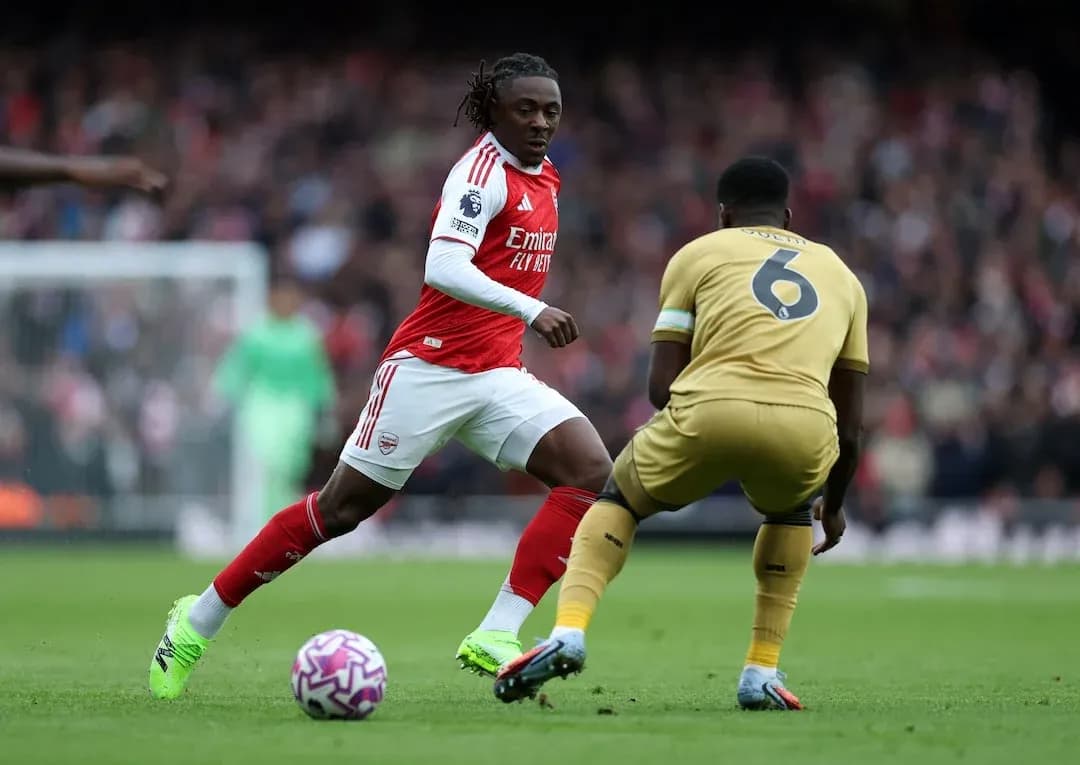
Selhurst Park’s final act of the 2025–26 Premier League season ended with a narrow 2–1 defeat for Crystal Palace against champions Arsenal, a result that neatly encapsulated the contrasting seasonal identities of the two sides.
I. The Big Picture – Season DNA and Final Table Context
Following this result, Arsenal close the campaign as league leaders in 1st place with 85 points, their superiority built on control and balance. Overall they scored 71 goals and conceded 27, giving them a goal difference of +44, a figure that speaks to both an incisive attack and a miserly defence. On their travels they were ruthless: 11 away wins from 19, with 30 away goals for and only 16 against, averaging 1.6 goals scored and 0.8 conceded away from home.
Crystal Palace finish 15th on 45 points, a season of survival rather than surge. Overall they scored 41 and conceded 51, for a goal difference of -10. At home they were stubborn rather than spectacular: 4 wins, 9 draws and 6 defeats from 19 at Selhurst Park, averaging 1.0 goal for and 1.2 against at home. That profile – low-scoring, often tight – framed the tactical challenge of facing the division’s most complete side.
Oliver Glasner again leaned into his structural comfort zone, sending Palace out in a 3-4-2-1, the shape he used in 33 league matches. Mikel Arteta, meanwhile, chose a 4-2-3-1 for Arsenal, the more recently favoured alternative to his 4-3-3, offering extra control in the double pivot and fluidity in the band of three.
II. Tactical Voids – Absences and Discipline
Both managers had to navigate key absences that subtly reshaped their plans. Palace were without C. Doucoure (knee injury), C. Richards (ankle injury) and B. Sosa (injury), stripping depth from the spine and the left side of the back line. The absence of Doucoure in particular removed a natural ball-winner and screening presence in front of the defence, placing more responsibility on J. Lerma, redeployed as part of the back three, and on W. Hughes and D. Kamada to share defensive duties in midfield.
Arsenal’s back line was also patched together. J. Timber (ankle injury) and B. White (knee injury) both missed out, forcing Arteta to lean on a reconfigured defence: M. Zubimendi and C. Mosquera as the central pairing, flanked by P. Hincapie and R. Calafiori. Without White’s overlapping energy and Timber’s press-resistance, Arsenal’s build-up had to be more measured, channeled through the double pivot of C. Norgaard and M. Lewis-Skelly.
Disciplinary trends from the season hinted at the emotional tone of the contest. Palace’s yellow cards were widely spread, but with notable spikes between 31–45 minutes (18.42%) and 46–60 minutes (18.42%), reflecting a side that often had to scrap as halves wore on. They also collected two red cards in the league, one between 46–60 minutes and one between 61–75 minutes, underlining the risk inherent in their aggressive approach.
Arsenal, by contrast, were disciplined front-runners. Their yellow card peak came late: 25.49% of their yellows arrived between 76–90 minutes, with another 21.57% between 61–75. They navigated the entire league campaign without a red card, a testament to their control and game management even under pressure.
III. Key Matchups – Hunter vs Shield, Engine Room Battles
The “Hunter vs Shield” narrative belonged to Arsenal’s forward line against Palace’s often overworked defence. Across the season, Arsenal’s attack averaged 1.9 goals per game overall and 2.2 at home, but even away from the Emirates they maintained 1.6 goals per match. Palace, meanwhile, conceded 1.3 goals per game overall and 1.2 at home, a defence that could be obdurate but was rarely watertight.
The presence of V. Gyökeres on the Arsenal bench was a looming threat. In total this campaign he scored 14 league goals and added 1 assist, with 41 shots and 22 on target. His physical profile – 189cm, 90kg – and his duelling volume (234 total duels, 74 won) marked him as the archetypal battering ram to unsettle a back three that, on the day, featured J. Lerma and C. Riad alongside N. Clyne. The fact that Gyökeres scored 3 penalties from 3 attempts this season added a clinical edge to any box chaos Arsenal could generate.
For Palace, the attacking focal point in the numbers was on the bench: J. Mateta, with 12 goals in total this campaign and 4 penalties scored from 4, plus 56 shots and 32 on target. His aerial presence and duel count (292 total duels, 110 won) made him the ideal late-game weapon against an Arsenal defence that, for all its quality, had to improvise in the absence of Timber and White. In the starting XI, J. S. Larsen led the line, flanked by I. Sarr and J. Devenny, a trio tasked with stretching Arsenal’s back four and exploiting transitions.
The “Engine Room” duel was equally compelling. Arsenal’s double pivot of C. Norgaard and M. Lewis-Skelly was built for control: one experienced organiser and one energetic carrier, shielding the back four and providing the platform for N. Madueke, M. Dowman and G. Martinelli behind Gabriel Jesus. On the bench, M. Ødegaard waited as the creative scalpel; across the season he produced 6 assists and 1 goal, with 40 key passes from 828 total passes and an 84% accuracy. His introduction in any game state tends to tilt territory and possession in Arsenal’s favour.
Palace’s central quartet – D. Munoz wide right, Hughes and Kamada centrally, R. Cardines wide left – had to cover enormous ground. Without Doucoure, Hughes became the metronome and firefighter, while Kamada’s role blurred between playmaker and presser, trying to link with Sarr and Devenny in the half-spaces. The wing-backs’ ability to track Martinelli and Madueke was critical; any hesitation would expose the back three.
IV. Statistical Prognosis and What the 2–1 Tells Us
Following this result, the numbers hold: Palace end with 11 wins, 12 draws and 15 losses from 38, a side that often kept games close but lacked the firepower to consistently overturn deficits. Their 12 clean sheets overall underline that, when the structure holds, they can suffocate opponents – but failing to score in 12 league matches also reveals a blunt edge that a 3-4-2-1 cannot always disguise.
Arsenal’s season-long defensive solidity – 19 clean sheets overall, only 3 matches away from home without scoring – provided the statistical backbone for a champions’ performance at Selhurst Park. Even without explicit xG data, the pattern is clear: a team conceding only 0.7 goals per game overall and 0.8 away will usually be in control of game state, especially against an opponent averaging 1.1 goals for and 1.3 against overall.
The 2–1 scoreline fits the broader arc. Palace, combative and structurally coherent, could keep the margin fine. Arsenal, superior in both boxes across the season, found just enough incision to edge past them, their retooled back line protected by a disciplined midfield and supported by a bench rich in end-product: Gyökeres as the finisher, Ødegaard and M. Odegaard’s creative craft, and the likes of K. Havertz and B. Saka as additional layers of threat.
In the end, Selhurst Park witnessed exactly what the data had foretold: a Palace side whose 3-4-2-1 can frustrate, but rarely suffocate the league’s elite, and an Arsenal team whose blend of control, depth and ruthlessness carried them, once more, over the line.