Chelsea's Midfield Dilemma: Right-Backs in Key Roles
Chelsea poured £349m into a summer rebuild and still finished a statement game at Emirates Stadium with two converted right-backs side by side in midfield.
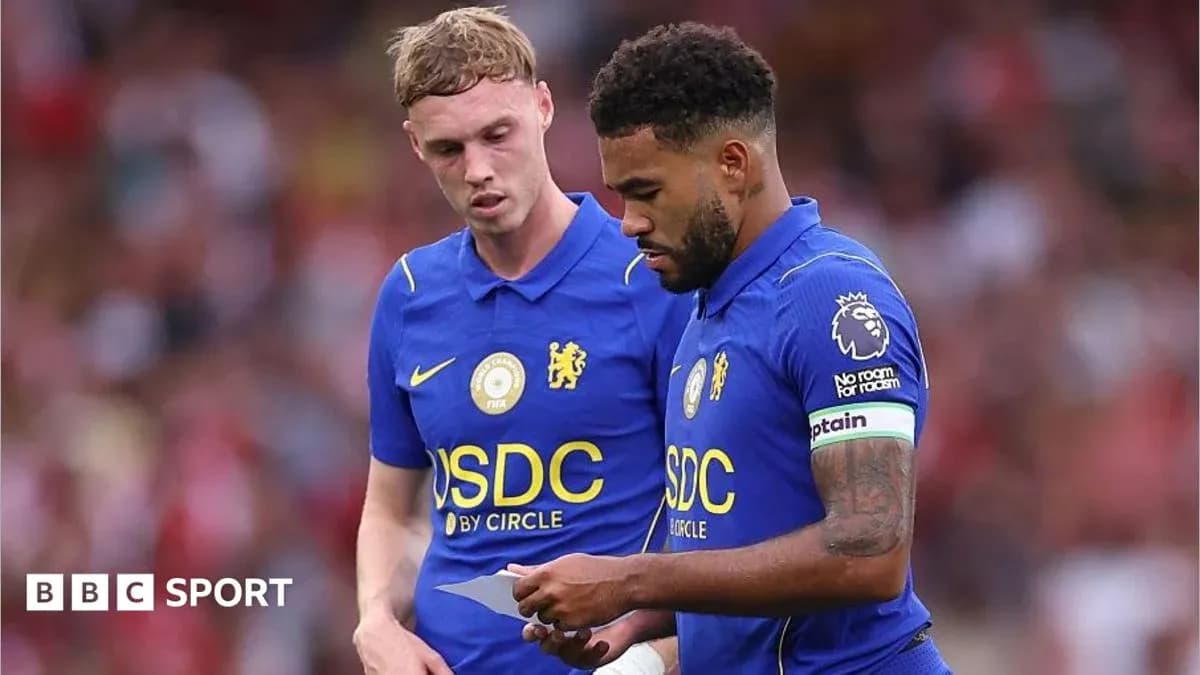
That image – Reece James and Malo Gusto trying to knit things together in the centre of the pitch as Arsenal closed out a 2-1 win – cut through all the talk of “phase one” and long-term projects. It exposed the soft underbelly of a squad that has been aggressively reshaped everywhere except the one area a title challenger can least afford to get wrong.
Right-backs in the middle, points slipping away
The decisive moment summed up the problem. James, entrusted with a central role Xabi Alonso believes can turn him into one of the best midfielders in the world, lost Martin Odegaard as Arsenal’s captain drifted into space to sweep home the winner. One lapse, one run not tracked, and Chelsea’s bright start evaporated.
James actually played well for long stretches. He has spent almost half of last season operating in midfield and carries the authority of someone who understands the role. But when the margins narrowed against the champions, that single defensive detail cost them.
The picture grew stranger as the game wore on. Romeo Lavia, the only orthodox midfielder on the pitch with real defensive instincts, went off. Gusto, another full-back by trade, came on in his place. Two natural right-backs trying to hold the line against the slickest midfield unit in the country.
From the bench, Chelsea had little in the way of control or creativity to change the pattern. Arsenal, by contrast, rolled out substitutes who tilted the contest back their way.
“Chelsea don’t have European football this season so they’re playing less games and can concentrate on the Premier League. But the worry is you’re finishing a game against the champions, and you’ve got two right-backs in midfield,” Ashley Young told BBC Sport.
He didn’t stop there.
“You look at Lavia, who was injured a lot last season. The front line are going to send fear throughout the league but behind that you see the midfield and they’re playing right-backs there.
“Teams will be seeing the game today, seeing that Chelsea will sit in there and get men behind the ball, but there’s still spaces through the lines, and Arsenal found that out.
“Chelsea are giving up a lot of possession and they’re playing counter-attacking football. Today there was probably only once with [Pedro] Neto down the right side when they capitalised on the counter.”
Chelsea’s attacking firepower might be frightening. Their structure behind it is not.
Life without Caicedo
Strip it back and one issue towers above the rest: Moises Caicedo is missing.
The Ecuador international, a machine for availability across the last three seasons, broke down just 11 minutes into a substitute appearance against Brighton and is now sidelined with an unspecified injury for an unknown spell. For a manager trying to build his entire midfield around Caicedo’s presence, it has created a rare kind of problem.
Aside from suspensions, Caicedo had missed only two matches in three years, once with a knock and once through illness. Suddenly, Alonso finds himself in territory no recent Chelsea coach has had to navigate: planning a midfield without the club’s defensive anchor.
“Not longer term, but it is about assessing the risk,” Alonso said when asked about Caicedo. “Probably last week we brought him back too early and I don’t want to make the same mistake again.”
The line was cautious, but the implication was stark. Chelsea misjudged the timing once. They cannot afford to do it again.
What remains unclear is whether those fitness concerns were already creeping in as the club scrambled for central midfielders on deadline day.
A frantic deadline day, no replacement
Chelsea’s late push for reinforcements was chaotic and, ultimately, fruitless.
A £47m move for Lamine Camara collapsed when Monaco pulled the plug at the last minute, leaving officials at Stamford Bridge furious. Bids rising to £64m for Bournemouth’s Alex Scott went nowhere earlier in the summer. A move for France international Manu Kone was blocked when Roma head coach Gian Piero Gasperini refused to sanction the deal.
Publicly, Chelsea insisted Camara was simply a market opportunity. The club maintained they were satisfied with their business and trusted the midfield options already in the building.
That stance raised eyebrows because of one brutal fact: Enzo Fernandez left for Manchester City on deadline day for a joint British-record £125m fee, and Chelsea did not sign a direct replacement.
Caicedo’s injury has now sharpened the focus on that decision. Without him, Alonso’s options are stretched thin. Jordan Henderson is still recovering from a broken arm sustained in a freak incident at the World Cup, when he fell over an advertising hoarding as an unused substitute. Natural midfielder Valentin Barco, signed from Strasbourg in the summer, has been overlooked in all three league games, with Gusto repeatedly preferred.
The numbers tell their own story. With Gusto starting in midfield, Chelsea had just 25.6% possession in their 4-3 win over Brighton – their lowest share of the ball in a Premier League match since records began in 2003-04. They escaped with three points that day, but the pattern is hard to ignore.
Alonso argued before the Arsenal match that, with no midweek European fixtures and five midfielders available when fit, Chelsea would cope across the season. That calculation depends entirely on Caicedo’s absence being brief and uncomplicated. Right now, it doesn’t feel that way.
Attack shines, foundations wobble
For all the structural concerns, this is not a Chelsea side without quality or threat.
Morgan Rogers struck again inside two minutes at Emirates, making history in the process. The club-record signing became the first Chelsea player since Eden Hazard in 2018-19 to score or assist in each of the club’s opening three Premier League matches of a season. Cole Palmer looks reborn, Joao Pedro has been ruthless in front of goal, and the front line genuinely does “send fear throughout the league”, as Young put it.
There were long spells against Arsenal when Chelsea pressed intelligently, broke with speed and looked more cohesive than they have in most of their recent meetings with their London rivals. Across the last 10 clashes, they still haven’t beaten Arsenal, but this performance belonged in the better half of that run.
Yet the raw numbers keep tugging the narrative back. Seven goals conceded in three matches. A midfield that struggles to control games without its main destroyer. A team that leans heavily on transition football and has only occasionally punished opponents on the break.
“We want to be tighter,” Alonso admitted.
The league table underlines the scale of the task. Chelsea finished 10th last season, 33 points behind Arsenal. One competitive display at Emirates does not close that gap. It only shows they can live with the champions for stretches – not yet for a full campaign.
“We came to win. We knew that we were not that far, but it went their way,” Alonso said afterwards. “It hurts, [we’re] disappointed for sure. But this is the first defeat, this is going to be a long way and it doesn’t have a big impact in our mood and in our mindset.”
Phase one, or a flaw that won’t go away?
Arsenal remain the benchmark. Chelsea may have beaten them to the signing of Rogers, but in almost every other respect they still trail the standard-setters in London and across the Premier League.
Alonso has called this summer “phase one”. Ten first-team signings have come through the door. The squad is younger, faster, and undeniably more exciting. Yet the failure to land a midfielder on deadline day has already been exposed as a potential fault line.
If Caicedo returns swiftly and stays fit, some of these concerns will fade. The right-backs will move back to their natural territory, the possession numbers should climb, and Chelsea’s explosive attack will have a sturdier platform.
If he doesn’t, or if the problems linger, the questions will come thick and fast. Why sell Fernandez without a replacement lined up? Why lean on converted full-backs while a natural midfielder like Barco watches on? And how long can a team with this much attacking talent afford to gamble on such a fragile core before January rolls around and the market calls their bluff?