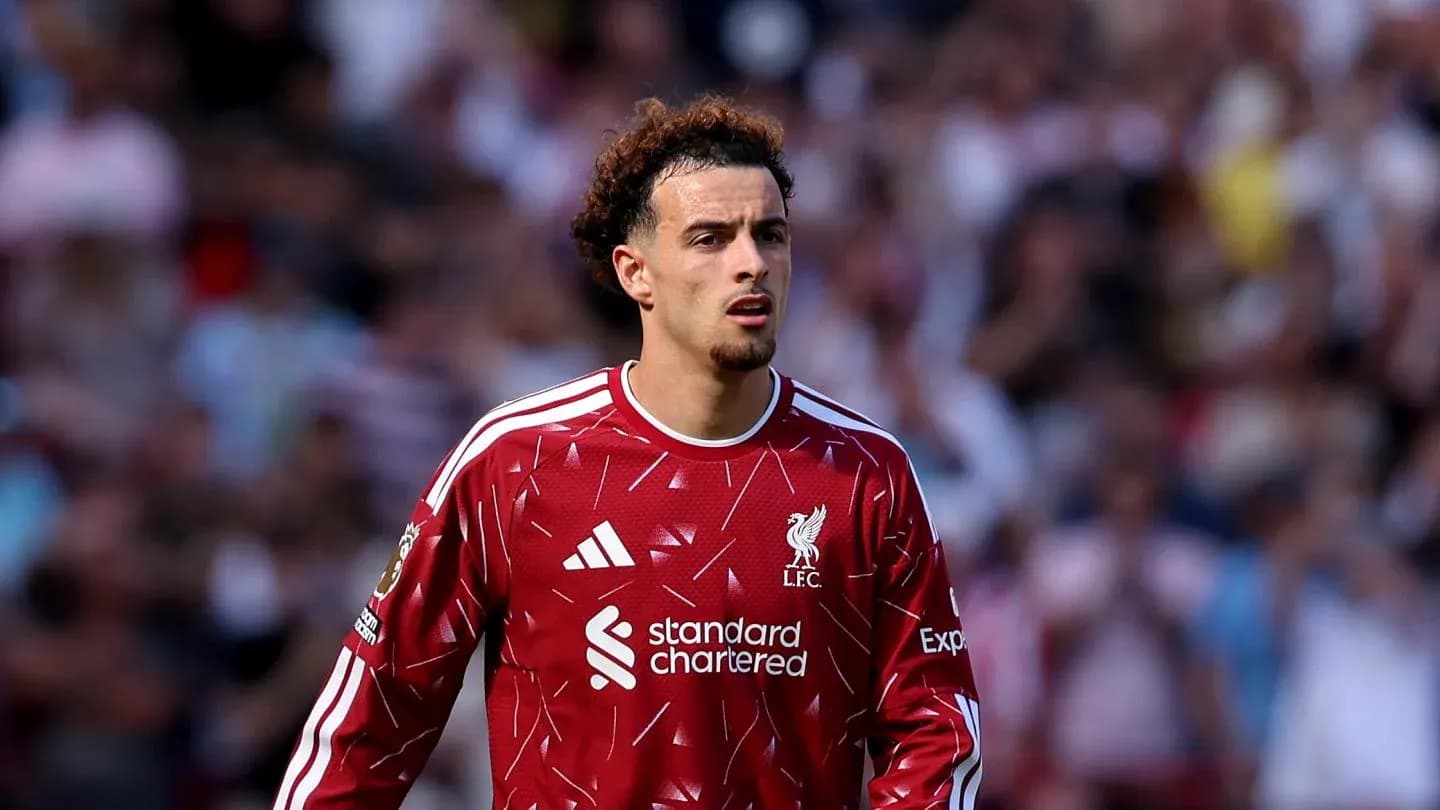
Champions League Qualification and Farewell to Salah and Robertson
The final whistle had barely faded when the reality of the day began to sink in. A season that lurched from surge to stumble had somehow ended with Champions League qualification – and with two pillars of the dressing room walking away.
“It’s been up and down. Of course it has,” the player reflected, summing up a campaign that never quite settled. Big wins, bruising defeats, long stretches when form seemed to evaporate overnight. Yet the table, and the ticket back into Europe’s elite, offer a simple verdict: they got there.
What complicated the emotions was the farewell. This wasn’t just about a point and a place in the top four. It was about saying goodbye to Andrew Robertson and Mohamed Salah – two figures who helped define an era, and who, for the younger players, felt like the constants in the room.
“The pair of them are unbelievable lads,” he said. They had, quite literally, been there from the start of his journey. From the moment he stepped into the senior setup as a kid, they were the ones guiding, pushing, protecting. They won everything at the club. They set the pace. They set the tone.
So yes, it was sad. Of course it was. But there was also a quiet satisfaction that their send-off came with something meaningful attached: Champions League football secured, the club’s standards upheld on the day they left. Emotional, he called it. Emotional, but important – for the players, the club, the fans.
The influence of Salah and Robertson on his career runs deep, and in very different ways.
Salah led with example. No drama, no noise, just relentless professionalism. First in the gym. Last out. The kind of routine that, over time, becomes a message: this is what elite looks like. When injuries hit and the young player struggled, Salah went beyond the usual arm around the shoulder. He opened a door that few superstars would.
“There was obviously a time when I was struggling with injuries,” he recalled, “and Mo let me use his personal physio on the outside.” It was a gesture that cut through status and hierarchy. A senior pro handing over his own resource to keep a team-mate going. “I respect him even more for that,” he added.
Robertson’s approach came from a different angle. Less quiet example, more constant noise – the good kind. When the youngster first broke into the squad, Robertson was there, always talking, always demanding. He told him the talent was there, the ability was there, but it would mean nothing without work. Hard work. Every day.
He was on him, all the time. So much so that, at points, it felt personal. The kind of relentless standard-setting that can grate when you’re young and desperate to prove yourself. Only with age, he admitted, did he understand it properly. The older he got, the more he saw what sat behind it: not criticism, but care. “I knew it was always with love and that he wanted to see me do well.”
Between them, Salah and Robertson became two of the biggest influences in his development. Different methods. Same outcome. Higher standards.
Those standards are the thread that now has to run through a dressing room without them. When he first arrived, the rules were already in place. You didn’t drift. You didn’t pick and choose when to work. You bought in or you fell away.
“You had to obey by the rules. You had to buy into what the lads stood by,” he said. That meant working hard every single day, not as a slogan but as a shared, lived reality. Over time, it stopped feeling like a workplace and started feeling like something closer to home.
“You see it more as a family thing,” he explained. That has always been his view of the club: not just a football team, but a group that lives through the same swings – the highs, the lows, the pressure, the noise – and keeps looking after its own. When things get dark, you look left and right and it’s the same faces, the same voices, holding the line. When things are good, they’re the first ones there too.
That culture, he insists, began with players like Robertson and Salah. Now it’s on the next wave to carry it.
The need for that togetherness has never felt more real than in what he called a “tough” season. Results veered. Confidence dipped and rose and dipped again. And in the middle of it all, the squad suffered a loss that cut far deeper than form.
“We lost one of our brothers [Diogo Jota] – a big part of us,” he said, his voice clearly still heavy with it. Jota wasn’t just a finisher or a system piece. He was a daily presence. “He was unbelievable as a human being and was unbelievable as a player.”
On the pitch, he was the outlet, the solution when the game tightened and the team needed a moment. “In games like that he was always a lad that I thought if I give him the ball, he’s going to go and score at the end and bail us out when we’re in a little bit of trouble.” Off the pitch, he was the steady, helpful figure around the training ground, part of the fabric of the place.
“To lose him,” he admitted, “I can feel it in me, I feel emotional when I speak about it.” The dressing room felt it. The season felt it.
The campaign mirrored that emotional turbulence. They started well. Then came a bad run. They rallied. Another dip. Up and down, all year, like a side trying to rediscover its identity while carrying the weight of expectation and absence.
What held it together, he believes, was that same idea he kept returning to: family. “This club is huge by sticking as one,” he said. When performances wobbled, the fans stayed. When the mood sagged, the group closed ranks. It didn’t make the setbacks hurt any less, but it stopped them from becoming something worse.
In the end, the league table delivered its verdict: Champions League football. The minimum expectation for a club of this size, perhaps, but far from guaranteed in a season like this. For him, that matters. It validates the grind. It gives the campaign a line in the sand.
Now comes the reset.
Next year, he insisted, will be “exciting again.” The new signings, who spent this season adjusting, now have minutes in their legs and a genuine sense of belonging in the squad. “They feel that they’re a part of this as well,” he said, convinced that the club will see the best of them with that foundation laid.
He sounded ready. Eager, even. Ready to move on from the chaos of the past months, to stop carrying the weight of what went wrong and simply play. “Next season it should be great,” he said. “We can put everything behind us and just go and enjoy it and go and play free.”
The standards set by Robertson and Salah will not walk out with them. They stay in the walls, in the dressing room, in the players they shaped. The question now is simple: who picks them up and drives them on into the next era?