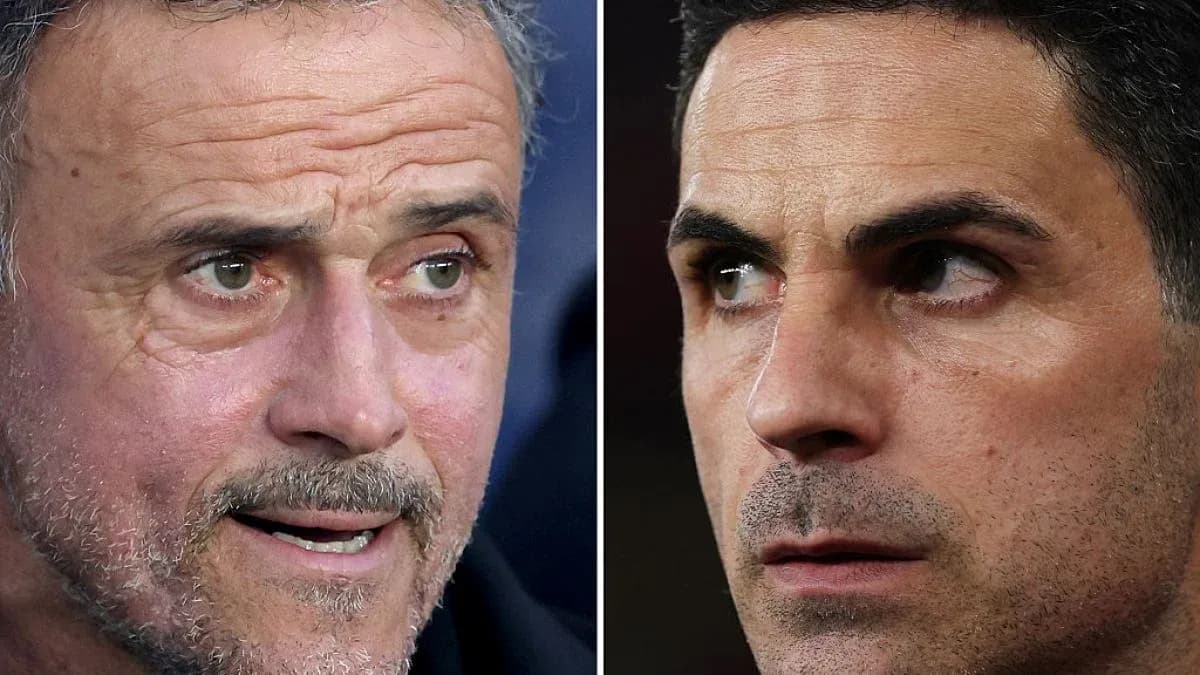
Champions League Final: PSG vs Arsenal in Budapest
The Champions League season comes down to one game, one city, one night. Paris Saint-Germain against Arsenal. Puskas Arena, Budapest. Saturday, 6pm local time (17:00 GMT).
Two clubs who once looked like outsiders at this level now stand eye to eye at the summit, each already champions at home, each chasing the moment that defines an era.
Al Jazeera Sport will be on air from 13:00 GMT, building up to live text commentary of a final loaded with storylines and scars from the recent past.
PSG: From stumbles to a swaggering title defence
For all their status as defending champions, PSG’s route back to the final was anything but smooth.
They finished only 11th in the new 36-team League Phase, three places shy of an automatic last-16 spot. Two early bruises – defeats to Barcelona and Bayern Munich – reopened old doubts about whether this club, for all its money and medals in France, truly owned the big European nights.
Then came the reminder of their ceiling. A ruthless 7-2 demolition of Bayer Leverkusen in Germany, a performance that felt like a warning to the rest of the field.
The price of that shaky start was a playoff tie. Monaco pushed them to the edge, but PSG squeezed through 5-4 on aggregate, a narrow escape that sharpened their focus. From there, they tore into the knockout rounds with the kind of cruelty champions are supposed to show: Chelsea swept aside 8-2 on aggregate, Liverpool brushed off 4-0 over two legs.
Bayern Munich waited again in the semifinals, a rerun of the League Phase and a test of whether PSG had really grown. The first leg in Paris turned into a classic – a 5-4 thriller that swung wildly before the hosts edged it. The return in Germany was tighter, more nervous, a 1-1 draw that felt like an ordeal rather than a spectacle. It was enough. Back-to-back finals secured.
This, remember, is a club still living off the high of last season’s breakthrough. Their 5-0 destruction of Inter Milan in Munich delivered a first Champions League crown, with Desire Doue – then just 19 – scoring twice to rip up the script that had been written for the likes of Lionel Messi and Kylian Mbappe in previous years. After decades of near-misses and superstar experiments, PSG finally had their European star.
Now they stand one win away from joining the continent’s serial winners. One more, and that first triumph stops looking like a peak and starts to resemble a platform.
Arsenal: Perfect in Europe, still chasing perfection
Across the draw, Arsenal have built a very different kind of story.
They arrive in Budapest as the only unbeaten team in this season’s Champions League. Eight games, eight wins in the League Phase. Twenty-four goals scored, just four conceded. A clean, clinical statement of intent from a side that has been threatening to break through for several years.
The knockouts, though, stripped away any illusion of ease.
Leverkusen, so brutally handled by PSG earlier in the competition, gave Arsenal a proper test in the last 16. The Gunners still advanced 3-1 on aggregate, but the margins shrank as the pressure rose. Sporting Lisbon in the quarterfinals and Atletico Madrid in the semifinals both pushed Mikel Arteta’s side to the wire. Arsenal emerged each time by a single goal over two legs – not dominant, but resilient, and increasingly comfortable living on the edge.
Domestically, the story finally turned their way. After three straight seasons finishing runners-up in the Premier League, Arsenal at last climbed the final step, ending a 22-year wait for the title. They had to survive a late charge from Manchester City, who briefly snatched top spot in the run-in. Draws at Everton and Bournemouth, though, opened the door, and Arsenal burst through it, reclaiming first place and with it the championship – and a measure of revenge after City had beaten them in the League Cup final.
The treble dream fell apart in the FA Cup, where second-tier Southampton dumped them out in the quarterfinals. That disappointment now hangs in the background. Win in Budapest, and it becomes a footnote.
Old wounds, fresh stakes
If Arsenal needed any extra edge heading into this final, PSG kindly supplied it last season.
Their Champions League run in 2023/24 ended in the semifinals at the hands of the French champions. Ousmane Dembele struck early at the Emirates, scoring in the fourth minute of the first leg, and PSG never really let go of the tie. Fabian Ruiz and Achraf Hakimi put the return game in Paris out of reach before Bukayo Saka’s consolation goal. A 3-1 aggregate defeat, and another European dream cut short.
There is, though, a more encouraging reference point for Arsenal. In last season’s League Phase, they beat PSG 2-0 at home. Kai Havertz and Saka both scored in the first half at the Emirates, punishing a Paris side that actually controlled the ball, enjoying 65 percent possession and more shots, nine to Arsenal’s six. That result will sit in the back of both managers’ minds: PSG know they can dominate the ball and still lose; Arsenal know they can live without it and still win.
The broader history between these two is finely balanced. This will be their eighth meeting, with both clubs having won twice so far. Their first clash came in the old Cup Winners’ Cup, when Arsenal edged through 2-1 on aggregate – Kevin Campbell scoring in a 1-0 home win, Ian Wright and David Ginola trading goals in a 1-1 draw in Paris.
All of that now feeds into a final where the context is simple. PSG are defending champions. Arsenal are chasing their first European crown.
The weight of history
For PSG, the ledger is short but significant. Last season’s triumph over Inter delivered their first Champions League title. Before that, their only final appearance ended in a 1-0 defeat to Bayern Munich in 2019. In beating Inter, they became just the second French club ever to lift the trophy, following Marseille’s 1993 win over AC Milan.
Arsenal’s European record is more familiar – and more painful. This is only their second appearance in a Champions League final. The last one, in 2006, ended in heartbreak as Barcelona came from behind to win 2-1 in Paris. They have never lifted the trophy, even as English clubs around them have stacked up titles: 15 in total, led by Liverpool’s six and Manchester United’s three.
So while PSG are trying to build a dynasty, Arsenal are trying to break a curse.
Domestic dominance, different flavours
Both teams arrive as champions, but the routes they took at home underline their contrasting identities.
PSG’s grip on Ligue 1 has become almost routine. This season’s title was their fifth in a row and their 12th in the last 14 campaigns. Lens stretched them longer than usual, dragging the race into the final two rounds, but Paris closed it out with a 2-1 win away at their closest challengers. Khvicha Kvaratskhelia and Ibrahim Mbaye scored the goals that made it mathematically impossible to catch them with a game to spare.
They lost that final league match, 2-1 at Paris FC in the capital’s derby, a result that stung more for local bragging rights than for any real consequence. Paris FC had already spoiled PSG’s domestic treble hopes in January by knocking them out of the French Cup. Those defeats add a touch of irritation to an otherwise dominant season.
Arsenal’s title, by contrast, carried a sense of catharsis.
They had led the Premier League by a distance at one stage, only to be reeled in by Manchester City’s familiar late surge. When City briefly moved ahead in the closing weeks, it felt like the old script was being dusted off again. But those dropped points at Everton and Bournemouth cracked the door open, and Arsenal stormed back through it, finishing the job with a ruthlessness that had previously eluded them.
The League Cup loss to City and the FA Cup exit to Southampton denied them a shot at a historic treble. Yet standing here, 90 minutes from a domestic-and-European double, they will not dwell on what slipped away.
Team news: Tight margins, big calls
Fine details often decide finals. This one has several.
PSG have been sweating over the fitness of Ballon d’Or winner Ousmane Dembele, who limped off in their final league game with a calf issue. He was one of the few regular starters not spared in that match, a sign of his importance and perhaps a risk that has backfired. Achraf Hakimi and goalkeeper Lucas Chevalier are also doubts, while Nuno Mendes is expected to recover from a knock in time.
If all goes to plan, PSG’s predicted XI looks like this:
Safonov; Zaire-Emery, Marquinhos, Pacho, Mendes; Neves, Vitinha, Ruiz; Doue, Dembele, Kvaratskhelia.
It is a side built to control the ball and punish on the break, with the craft of Vitinha and Ruiz feeding the direct threat of Doue, Dembele and Kvaratskhelia.
Arsenal’s issues lie mainly in defence. Jurrien Timber remains out with a groin injury that has sidelined him for eight weeks, and Ben White is ruled out as well. Those absences stretch Arteta’s options at the back in a game where concentration and familiarity matter more than ever.
Further forward, Noni Madueke has been nursing a hamstring problem, but is not expected to miss the final. Even so, Saka is set to start ahead of him on the flank, a decision that reflects the England international’s status as one of Arsenal’s key attacking outlets.
Arsenal’s likely lineup:
Raya; Mosquera, Saliba, Gabriel, Hincapie; Lewis-Skelly, Rice; Saka, Odegaard, Trossard; Gyokeres.
It is a blend of youthful energy and established leaders, with Declan Rice anchoring midfield, Martin Odegaard orchestrating between the lines and Viktor Gyokeres carrying the burden of goals.
Budapest’s question
Eight previous meetings. Two wins each. One semifinal grudge still fresh.
PSG arrive as holders, chasing confirmation that last year was the start of something bigger. Arsenal come as newly crowned champions of England, still unbeaten in Europe this season, still waiting to touch the trophy that has defined modern club football.
Budapest will not settle the debate over which project is “better” or which league is “stronger”. It will decide something far simpler and far more brutal.
Who walks away with a legacy, and who walks away with another what-if?