Celtic's Collapse: A Captain's Fury After Defeat
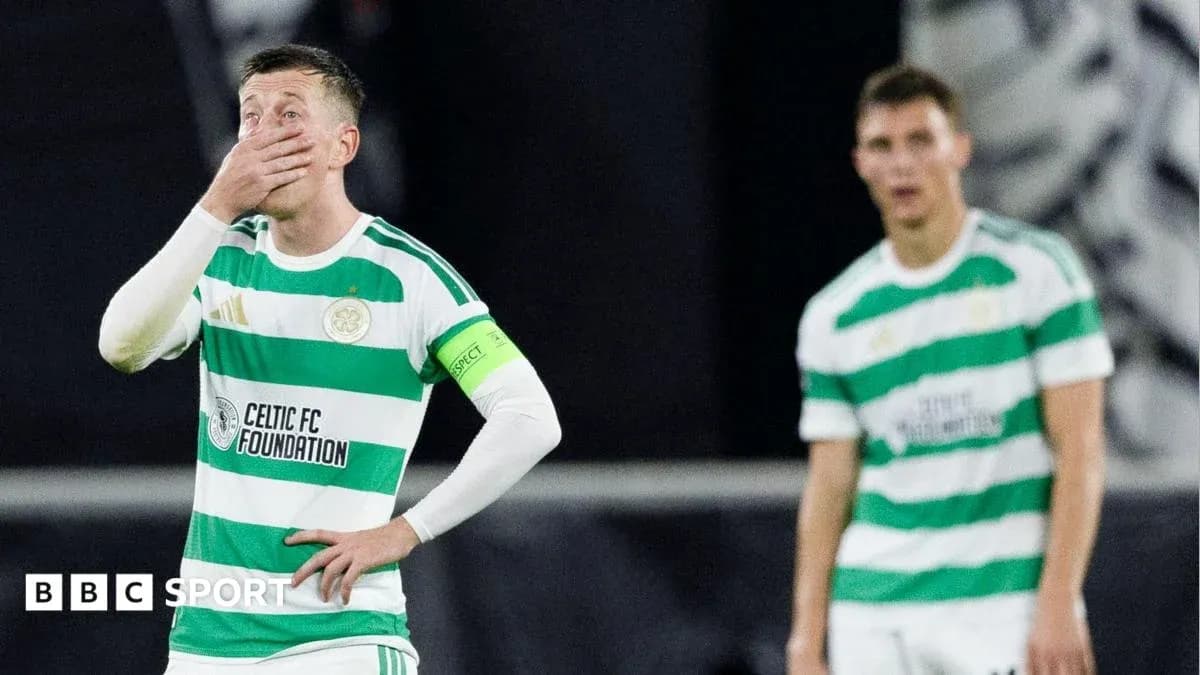
Callum McGregor has worn just about every kind of European scar Celtic can offer, but rarely has he sounded as cutting as he did in Linz.
“Passive.”
“Scared.”
“Now we’ll see what people are made of.”
No pundit, no former pro with a microphone, could have landed a punch as brutal as the Celtic captain did on his own dressing room after a 5-1 loss on the night and a 5-4 defeat on aggregate to LASK. From 4-0 up in the tie to utter collapse. From swagger in Glasgow to shambles in Austria.
A captain’s fury amid the ruins
McGregor has lived this movie too many times. Kairat Almaty and 210 goalless minutes before choking in a penalty shootout. The 7-1 against Borussia Dortmund. The 6-0 against Atletico Madrid. The Champions League exits to Midtjylland, Ferencvaros, AEK Athens and Cluj. The 7-1 against PSG. The 7-0 against Barcelona. A pair of 4-1 defeats to Sparta Prague in the Europa League.
He has the medals, yes, but he also carries the humiliation. All of it.
Yet even against that grim backdrop, this felt different. This was a team with a 4-0 cushion. This was supposed to be the night they exorcised those ghosts, not invited them back in and gave them a seat in the front row.
McGregor actually started the scoring in Linz, his deflected shot stretching Celtic’s aggregate lead to 4-0. LASK had opened brightly, had carved out chances in Glasgow and again in the early minutes here, but that goal looked like a gut punch. Four down in the tie, opportunities squandered, a mountain now bordering on fantasy.
How many blows can one side absorb before they finally crumble? As it turned out, LASK had barely started swinging.
From control to chaos
Celtic helped them. Painfully.
Last week, their goals were slick, their movement adventurous, their confidence infectious. It was easy to believe they had the steel to match the style. That illusion disintegrated the moment Benjamin Nygren played a ludicrously loose pass that handed LASK their first goal of the night.
Thirty-two minutes gone. The aggregate score still 4-1 to Celtic, but the wobble was obvious. At 4-1 up in a Champions League qualifier, they looked anything but secure. It sounded mad. It didn’t look it.
Three minutes into the second half, the fear spread. Auston Trusty was bullied off the ball, brushed aside as if he wasn’t there, and suddenly it was 4-2 on aggregate. LASK had a scent. Celtic had jelly legs.
Trusty wasn’t alone in his struggle, but he became a glaring target. LASK kept going after him and Celtic never found a way to protect him.
Ten minutes later, the third arrived. The slow death had quickened. Parts of the Celtic team simply froze. Panic took over. Passes went nowhere. Shapes dissolved. The players who had looked so composed in Glasgow now resembled a side gripped by dread.
Camilo Duran, the star of the first leg, vanished from the contest. Kasper Hogh ran and chased and pressed, but with no meaningful effect. Celtic had no direction, no control, no poise. They looked lost, like rabbits in headlights as the tie spun away from them.
McGregor tried to drag them through it, tried to put out fires all over the pitch. He couldn’t. The tension was too thick, the fear too visible.
O’Neill’s nightmare on the touchline
On the touchline, Martin O’Neill wore the horror on his face. He looked like a man a decade older than his birth certificate. Later he would call it one of his worst nights in football and accept responsibility. He couldn’t possibly shoulder it alone.
He emptied his bench in desperation, five substitutions in 12 frantic minutes, a flurry of changes that altered nothing. No shift in momentum, no injection of authority. Just more chaos.
Across the entire second half of normal time and all of extra-time, Celtic did not register a single shot on target. Not one. For a team supposedly protecting a Champions League place in a £40m match, they existed only in the way a man clings to a cliff edge. Everyone knew how that story would end.
LASK’s fourth, in the 90th minute, felt inevitable rather than cruel. By then they had racked up 33 shots at Celtic’s goal, on their way to 40 in total, on top of the 20 they had fired off at Celtic Park. Over the two legs, it was a rout dressed up as a comeback.
Cameron Carter-Vickers was hobbling, Hogh not far behind him. Celtic, reduced to hanging on, finished with a back four of Anthony Ralston, Dane Murray, Trusty and Liam Scales. That was the defensive line trying to hold back wave after wave in a match that could transform the club’s finances.
The fifth goal almost felt like a mercy killing. Another Celtic error, another player in the wrong place making the wrong choice at the worst possible time. This time it was Luke McCowan joining Nygren and Trusty on the list of calamities. Hapless, helpless – and out of the Champions League.
A club stripped bare
The final minutes drifted by. LASK even passed up the chance for a sixth, missing a penalty, before Miguel Freckleton – once of St Mirren – slalomed into the Celtic box and, briefly, threatened to add more insult.
Freckleton deserves praise for grasping his chance in Austria, but the fact he could stroll in and look so dangerous in such a short spell said everything about Celtic’s state. They were beyond disarray. Spooked. Over-powered. Out-fought. Out-played.
The ruthless, free-flowing side from Glasgow a week earlier now looked like a mirage, a flattering snapshot that concealed deep psychological flaws. Nobody would have seriously forecast a collapse from 4-0 up in the tie. Yet here it was, laid bare in all its bleakness.
The squad issues screamed from the pitch. Celtic clearly need a back-up left-back to Kieran Tierney. They don’t have one. They clearly lack a dominant, physical midfielder, a presence in the centre of the park who refuses to be bullied the way they were bullied in Linz. They don’t have that either.
Some business has been good, but not nearly enough of it. They are in net profit in this transfer window. That word the support dreads – ambition – will be back on every agenda now.
Because when you finish a £40m match with a back four of Ralston, Murray, Trusty and Scales, you cannot claim the club has done its work properly. On the night, nobody did. Not on the pitch, not off it.
The cost of all those earlier European failures was measured not just in lost revenue but in eroded self-worth. Celtic thought they had moved on from the drawing board days of Kairat, Midtjylland, Ferencvaros, Cluj and AEK. They believed those names belonged to a painful past.
Now another one joins the roll call.
LASK. And the question that hangs over Celtic is brutal in its simplicity: how many more times can they do this to themselves?