Cape Verde’s World Cup Journey Continues Against Argentina
Cape Verde arrived at this World Cup as a curiosity. They leave the group stage as a phenomenon.
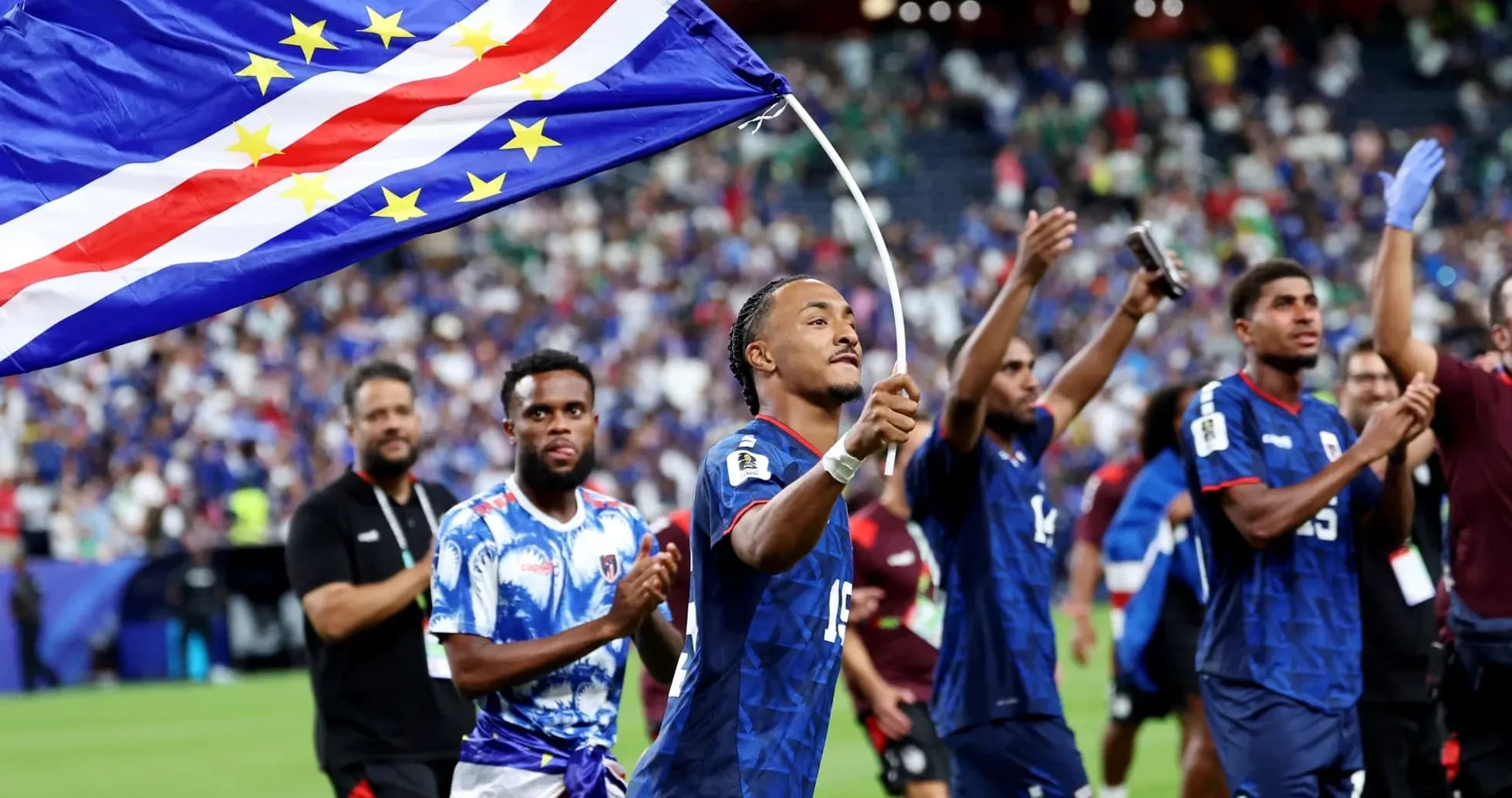
A goalless draw with Saudi Arabia in Houston was enough to haul the tiny Atlantic archipelago into the knockout rounds on debut, where Lionel Messi and defending champions Argentina now await in Miami on July 3. Not bad for a nation of just over half a million people, ranked 67th in the world when this all began.
A Point That Felt Like a Victory
The 0-0 in Texas will never make a classic reel, but for Cape Verde it might be the most important stalemate in their footballing history.
They kicked off the night knowing the group was on a knife-edge. Spain, already held 0-0 by Cape Verde in their opening game, were facing Uruguay in Guadalajara. Cape Verde’s task against Saudi Arabia was simple in theory, brutal in reality: avoid defeat, keep an eye on events in Mexico, and hold their nerve.
Bubista, the coach who has quietly engineered this astonishing run, rotated heavily with history looming. He changed half his starting XI, some of it enforced, but refused to touch the one position that has come to define this campaign. At 40 years old, goalkeeper Vozinha stayed in goal, still riding the wave from his heroic display against Spain.
He had single-handedly kept Cape Verde level against the European champions in that first-ever World Cup match. Then came the breathless 2-2 draw with Uruguay, two-time world champions, that turned a dream into a genuine route to the last 16. Suddenly, this was not just a nice story. It was a live threat to the established order.
Tension in Two Cities
As the ball rolled in Houston, the group twisted in Guadalajara.
Saudi Arabia, who had drawn 1-1 with Uruguay before being swept aside 4-0 by Spain, needed a spark. Cape Verde, by contrast, played with a calm that belied the stakes. They shaded the first half, nudging forward in waves rather than throwing everything at the Saudi back line.
The Saudis suffered a serious setback on 33 minutes when experienced defender Hassan al-Tambakti was stretchered off. It drained belief from a side already short on ideas.
Then came the roar from the stands in Houston that had nothing to do with what was happening on the pitch. News filtered through: Spain had taken the lead against Uruguay in Mexico. Cape Verde fans exploded in celebration. For a moment, the stadium felt like a neutral venue hijacked by a travelling island nation.
On the field, Willy Semedo curled an effort not too far wide of the Saudi post. Half-chances, nervous touches, but little in the way of clear-cut danger at either end. At the interval, the equation was simple: as it stood, Cape Verde were going through at Uruguay’s expense.
Cape Verde Push, Saudi Arabia Fade
Three minutes into the second half, the knockout dream almost became a formality.
Jamiro Monteiro found himself with a major chance from close range. The moment opened up, the angle was there, but the finish lacked conviction. His weak effort summed up a night where Cape Verde’s composure in everything but the final touch stood out.
Kevin Pina tried to take the decision out of everyone’s hands with a fierce strike from distance that skimmed just off target. The message was clear: Cape Verde weren’t clinging on. They were trying to walk through the front door.
The tension climbed as they entered the final quarter of an hour. This was supposed to be Saudi Arabia’s time to throw everything forward, to play with desperation. Instead, they offered almost nothing. For a side chasing the game and their own survival, they looked oddly blunt, short of invention in the final third.
When Cape Verde did wobble, Mohammed al-Owais stepped up. The Saudi goalkeeper produced a vital save in the 75th minute to deny Laros Duarte, who struck firmly and low. That stop kept Saudi hopes flickering, but only just.
The clock ticked down, the stakes rose, and yet the pattern held: Cape Verde, on debut, looked like the seasoned tournament side. Saudi Arabia looked like the ones feeling the weight of the occasion.
From Island Dream to Date with Argentina
By the closing minutes, the narrative had flipped completely. A point was all Cape Verde needed. They could have parked the bus, slowed the tempo, played for the whistle. Instead, they remained the more likely team to score as the match drifted towards its conclusion.
When the final whistle went, there was no explosion of wild celebration on the pitch, just a release of something deeper: disbelief, pride, and the dawning realisation of what comes next.
Spain, with seven points, topped Group H. Cape Verde, unbeaten, finished second on three. Uruguay and Saudi Arabia, both on two, packed their bags.
Spain now await the runners-up from Group J, either Algeria or Austria. Cape Verde, somehow, go to Miami to face Argentina and Messi in the knockout rounds of a World Cup.
For a nation scattered across islands off the west coast of Africa, whose football story has lived in the shadows for decades, this is no longer a fairytale backdrop. It is centre stage.
The question now is no longer whether they belong here. It is how much further this extraordinary run can stretch when the champions of the world are standing in their way.