Canada's Historic 6-0 World Cup Victory Over Qatar
Canada did not just win a World Cup match on Thursday night. It tore up a long-running script.
A country that would have quietly taken a scrappy 1-0 over Qatar instead watched Les Rouges deliver a 6-0 demolition in Vancouver, their first-ever World Cup victory and a statement that echoed far beyond the Pacific coast. A rout on the scoreboard, a rupture in the sport’s old hierarchy at home.
And yet, even on a night that felt like a coronation, there was a crack through the middle of it: Ismaël Koné’s broken leg, a tournament-ending injury to the midfielder who had become the pulse of Jesse Marsch’s side.
A city drenched in red
The day began like a festival and ended like a landmark.
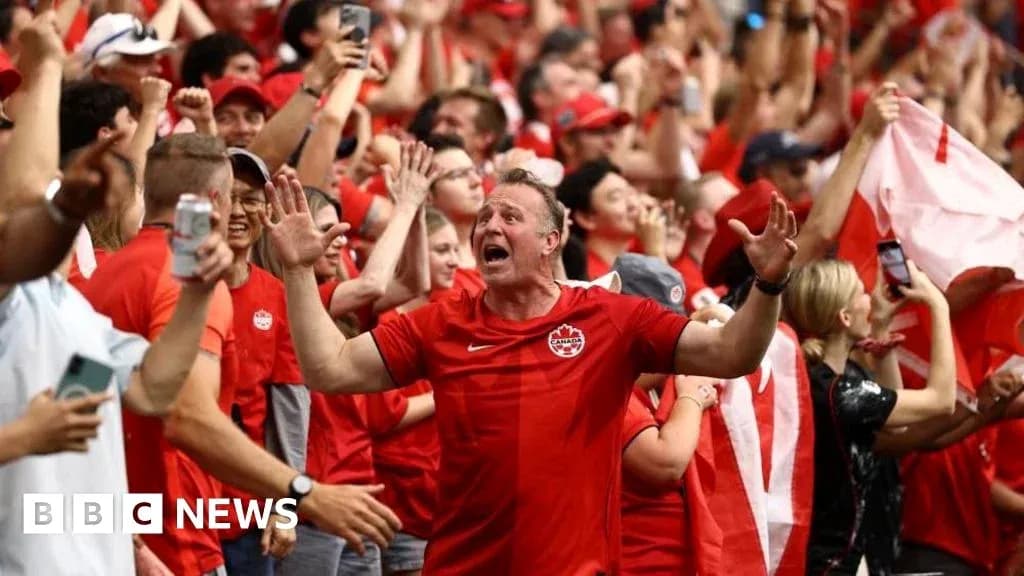
Hours before kick-off, thousands of fans poured along the “last mile” to the stadium, wrapped in red and white, swallowed by plumes of red smoke. Inside, 52,000 people filled the stands, a sell-out crowd that looked and sounded nothing like the half-empty, politely curious gatherings that used to follow this team.
Vancouver was the epicentre, but it was not alone. Granville Street turned into a rolling chorus of horns and flags. In Toronto, small neighbourhood bars did what Canadian football bars once rarely did: they packed out for the men’s national team.
One of those fans, Dave Di Cola, has followed Canada through the lean years. He admitted he arrived with “reserved optimism,” a phrase that has long summed up the national mood around this team. In football, anything can happen, and with Canada, it usually has.
Not this time.
A blowout, not a squeaker
From the opening whistle, the match belonged to Canada. The early exchanges quickly gave way to control, then dominance, then something bordering on disbelief.
Three goals before half-time turned tension into celebration. Qatar unravelled, and when two of their players were sent off, the night shifted from contest to showcase. Canada did not ease off. It accelerated.
By the final whistle, the scoreboard read 6-0. Qatar reduced to nine men. Canada, a country that has spent decades on the margins of the global game, had just authored a World Cup scoreline more often associated with the sport’s aristocrats.
For Di Cola and fans like him, this was not just about the margin of victory. It was validation. Proof that Les Rouges are not passengers at this tournament, but a threat.
“Canada soccer has always been kind of a joke. It’s always secondary,” he said. Watching the outpouring of support in Vancouver and across the country, he admitted it “nearly brought a tear” to his eye.
A hockey nation makes room
The images that flooded social media told their own story.
One photograph captured the shift in a single, improvised gesture: a supporter in a Connor McDavid ice hockey jersey, the “Mc” taped over and replaced by a “J” for Jonathan David. The Edmonton Oilers superstar’s name transformed into that of Canada’s hat-trick hero, the striker who scored half of his country’s six goals.
It was a small thing, but a telling one. A hockey nation, for so long defined by frozen rinks and winter heroics, is now bending its iconography toward football.
TSN reporter Matthew Scianitti walked through the delirious crowds in Vancouver and tried to put it into words. “As a Canadian, to sit there and watch it all, I will live in that forever,” he said, capturing the sense that this was not just another group-stage win, but a page being added to the country’s sporting memory.
Joy, interrupted
Then came the moment that silenced the stadium.
Koné went down under a challenge, and the noise dropped. Medics sprinted on. Teammates waved urgently for help. The diagnosis would come later: a leg break, his World Cup over before it had truly begun.
On the pitch, Canada’s players did what teams often promise and rarely deliver: they rallied around one of their own. They stood over him, confronted opponents, formed a protective ring as the stretcher came on.
Marsch did not hide what Koné meant to this side, describing the Ottawa native as “a big part of the heart of our team.” In a midfield that has powered Canada’s surge, he was the metronome and the enforcer rolled into one.
His replacement, Nathan Saliba, entered into a game that suddenly felt different. Minutes later, he drove in Canada’s fourth goal and lifted Koné’s jersey high, a simple tribute that cut through the celebrations.
On Friday morning, after surgery, Koné sent his own message. “What you guys did yesterday will stay with me forever,” he wrote on Instagram. The player whose tournament had ended was already anchoring the team in another way.
A prime minister in the dressing room
The scale of the occasion was not lost on those watching from beyond the touchline.
In the post-match dressing room, Prime Minister Mark Carney addressed the squad, praising their reaction to the shock of Koné’s injury. He spoke of “a level of character that some people never achieve,” pointing to the way the team had steadied themselves and then surged again.
“You showed it when the entire country and a good part of the world is watching,” he told them. “And if they didn’t watch they would have watched the highlights tomorrow.”
In a country accustomed to seeing its leaders turn up for hockey gold medals and Olympic closing ceremonies, the presence of the prime minister in a victorious football dressing room felt symbolic. This is where the spotlight is now.
A new chapter, not the final one
Canada’s sporting history is already crowded with defining snapshots: Sidney Crosby’s golden goal in Vancouver in 2010, the Toronto Raptors dethroning the Golden State Warriors in 2019, the women’s football team climbing to the top of the podium at the Tokyo Olympics.
Thursday night does not yet sit on that shelf. Di Cola is the first to say it. For him, this is smaller than those towering achievements, and Canada’s men still have “a long way to go.”
But this is how those journeys start: with a night that feels bigger than the stage it’s on.
The momentum is real now. The doubts have not disappeared, but they have been pushed to the edges of the conversation. A 6-0 win, a first World Cup victory, a nation that once rolled its eyes at men’s football now gathering in bars, on streets, and in sold-out stadiums to live every minute.
Next up is Switzerland, a step up in class and a different kind of test.
Canada has announced itself. The question now is whether this was a one-off eruption or the opening act of something that will demand a permanent place in the country’s sporting pantheon.