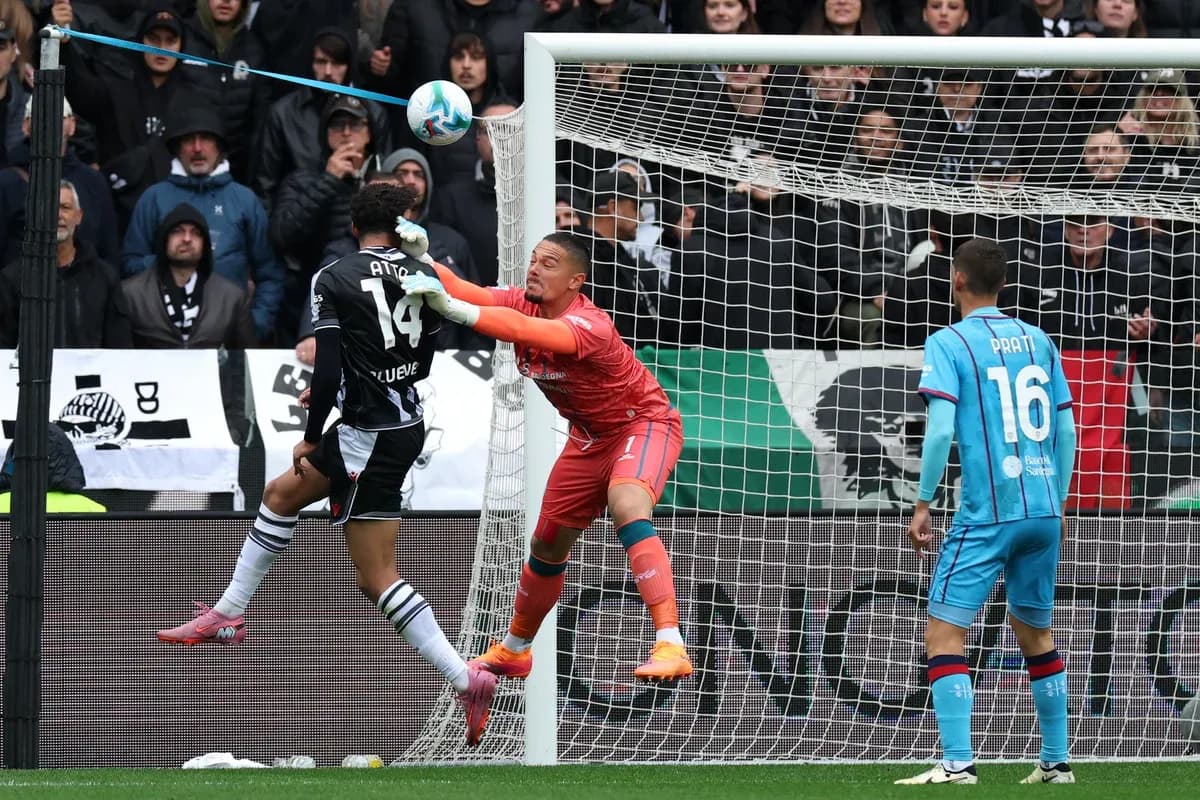
Cagliari vs Udinese: High-Stakes Serie A Clash on May 9, 2026
Unipol Domus stages a high‑stakes relegation skirmish in Serie A’s regular season on 9 May 2026 as 15th‑placed Cagliari host Udinese, who arrive in Sardinia sitting 11th. With three games left, the margins are thin: Cagliari are on 37 points, hovering just above the drop zone, while Udinese, on 47 points, are eyeing a top‑half finish and mathematical safety.
Context and stakes
In the league, Cagliari’s record across all phases reads 9 wins, 10 draws and 16 defeats from 35 matches, with a goal difference of -13 (36 scored, 49 conceded). Their form line of “DWLWL” underlines a season of volatility and narrow margins. At home, however, they have been more resilient: 6 wins, 4 draws and 7 losses from 17 games, with a perfectly balanced 20‑20 goal record.
Udinese travel south with more breathing space and a stronger body of work. Across all phases they have 13 wins, 8 draws and 14 defeats, scoring 43 and conceding 46 (goal difference -3). Their form (“WDLWD”) suggests a side that has stabilised and can still hurt opponents. Crucially, they have been a competent away team: 7 wins, 3 draws and 7 losses on the road, with 25 goals for and 26 against.
For Cagliari, this is about dragging themselves clear of danger before the final two matchdays. For Udinese, it is an opportunity to lock in mid‑table security and perhaps build towards a top‑10 finish.
Tactical landscape: Cagliari
Cagliari’s season statistics paint a picture of a team constantly searching for the right balance. They have used a wide array of systems, but one structure dominates: a back three. The 3‑5‑2 has been deployed 17 times, making it the clear default. Variants such as 3‑5‑1‑1 and 3‑4‑2‑1 appear sporadically, while four‑at‑the‑back shapes (4‑5‑1, 4‑3‑1‑2, 4‑3‑2‑1, 4‑3‑3, 4‑4‑2, 4‑2‑3‑1) have all been tested in shorter spells. That tactical restlessness reflects a coach trying to cover defensive frailties without completely blunting the attack.
Across all phases, Cagliari average 1.0 goal for and 1.4 against per game, which underlines why they sit in the lower half. At home, the numbers are slightly kinder: 1.2 scored and 1.2 conceded on average, with 6 clean sheets in 17 matches. That suggests they can keep things tight at Unipol Domus, especially when the back three is well protected by a hard‑working midfield.
Yet the attacking output remains streaky. Cagliari have failed to score in 13 of their 35 league games, and their biggest home win (4‑0) looks more like an outlier than a norm. The reliance on set pieces and transitional moments is high, and with several forwards injured, the capacity to change games from the bench is limited.
Discipline and intensity will matter. Cagliari’s yellow‑card profile spikes heavily between minutes 46‑60 and 76‑90, indicating an aggressive, often desperate second‑half approach. Both of their red cards have arrived late (76‑90), a warning sign in a match where nerves will be frayed.
From the spot, Cagliari are reliable: 2 penalties taken, 2 scored (100%). If they manufacture a penalty at home, history suggests they will take advantage.
Tactical landscape: Udinese
Udinese are structurally clearer. They have leaned heavily on a 3‑5‑2 (18 times) and a 3‑4‑2‑1 (8 times), occasionally shifting to 4‑4‑2 or hybrid back‑three systems. That continuity has underpinned a solid if unspectacular campaign.
Across all phases, Udinese average 1.2 goals scored and 1.3 conceded per game. Away from home, the attack improves to 1.5 goals per match, while the defence allows 1.5. They are more expansive on the road, capable of both scoring and conceding in flurries. Their biggest away win is a 0‑3, but they have also suffered a 5‑1 defeat, underlining how open their games can become when the tempo rises.
Defensively, Udinese have 10 clean sheets overall, 4 of them away, suggesting they can shut games down when needed. But they also show a disciplinary edge: 1 red card early in games (0‑15) and a heavy cluster of yellow cards between 61‑90 minutes, which may matter if they are protecting a lead in Cagliari.
From 12 yards, Udinese have been impeccable this season: 5 penalties, 5 scored (100%). Their primary reference point here is forward Keinan Davis, who has converted 4 penalties without a miss in the league, an important weapon in tight contests.
Key player focus: Keinan Davis
With Cagliari’s injury list long and their own attacking leaders not highlighted in the data, the standout individual in this fixture is Udinese striker Keinan Davis.
Davis has 10 league goals and 3 assists in 27 appearances (25 starts), operating as the focal point of the attack. His statistical profile is that of a complete centre‑forward: 35 shots, 22 on target, a strong duel volume (302 duels, 143 won), and 30 successful dribbles from 43 attempts. He draws fouls frequently (47 won), which is particularly relevant against a Cagliari side that picks up many second‑half bookings.
His penalty record this season is flawless: 4 scored from 4. In a match likely to be decided by fine margins, his presence in the box and reliability from the spot could tilt the balance.
Team news and depth
Cagliari are heavily depleted. Confirmed absentees include G. Borrelli, M. Felici, R. Idrissi, J. Liteta, L. Mazzitelli, L. Pavoletti and O. Raterink, with A. Deiola listed as questionable. That is a significant chunk of their attacking and midfield options, likely limiting rotation and forcing the coach to stick with a conservative 3‑5‑2 or 3‑5‑1‑1, prioritising solidity over flair.
Udinese also have a substantial list, though with slightly more spread across positions: N. Bertola, K. Davis, C. Kabasele, A. Zanoli and J. Zemura are out, while A. Atta and J. Karlstrom are doubtful. The headline here is Davis’s thigh injury; if he is indeed missing, Udinese lose their top scorer and penalty taker, forcing a reconfiguration of the forward line. Without him, expect Udinese to lean more on wing‑backs and attacking midfielders making late runs into the box rather than a classic target man.
Kabasele’s suspension also weakens their defensive leadership, possibly prompting a reshuffle in the back three and testing their depth in central defence.
Head‑to‑head narrative
Looking at recent competitive meetings (ignoring friendlies), the last five clashes between these sides span Serie A and Coppa Italia:
- October 2025: Udinese 1‑1 Cagliari (Serie A, Udine)
- May 2025: Cagliari 1‑2 Udinese (Serie A, Cagliari)
- October 2024: Udinese 2‑0 Cagliari (Serie A, Udine)
- February 2024: Udinese 1‑1 Cagliari (Serie A, Udine)
- November 2023: Udinese 1‑2 Cagliari (Coppa Italia, after extra time, Udine)
Across these five competitive fixtures, Udinese have 2 wins, Cagliari have 2 wins, and there have been 2 draws (the Coppa Italia tie was 1‑1 after 90 minutes before Cagliari won 1‑2 after extra time). The pattern is of fine margins and low‑scoring, attritional matches, often decided by one goal or by endurance over 120 minutes.
Cagliari’s most recent home meeting in May 2025 ended in a 1‑2 defeat, a result they will be eager to avenge. Udinese, meanwhile, can draw confidence from having taken 4 points from the two league meetings in the 2024‑25 cycle.
Tactical keys to the match
- Midfield density: With both sides favouring back‑three systems, the battle in central areas will be intense. Cagliari’s 3‑5‑2 will try to crowd Udinese’s build‑up, while Udinese’s wing‑backs will look to exploit the space behind Cagliari’s own wide midfielders.
- Set pieces and penalties: Both teams are 100% from the spot this season. In a tight, nervy contest, a single set‑piece or penalty could be decisive.
- Second‑half discipline: Cagliari’s late yellow and red card spikes versus Udinese’s tendency to draw fouls through physical forwards and runners could tilt momentum in the final 30 minutes.
- Injury‑driven adjustments: Cagliari’s thin attacking options may force them to sit deeper and play on counters. Udinese, if without Davis, might circulate more possession around the box but lack a killer presence inside it.
The verdict
Data and context point towards a finely poised, low‑margin encounter. Cagliari’s home record (20 scored, 20 conceded, 6 wins) and the urgency of their situation suggest they will be hard to beat at Unipol Domus, even with a long injury list. Udinese, however, are the more consistent side across all phases, with a stronger away record and clearer tactical identity.
If Davis were fit, Udinese’s extra cutting edge would make them narrow favourites. With him listed as missing, the attacking gap between the teams narrows considerably, and Cagliari’s need for points becomes a powerful intangible.
Expect a tight, tactical game, likely decided by a single goal or a set‑piece. On balance, the numbers lean slightly towards a draw or a marginal Udinese edge, but given Cagliari’s home resilience and desperation for points, a hard‑fought 1‑1 or a cagey 1‑0 either way feels the most logical outcome.