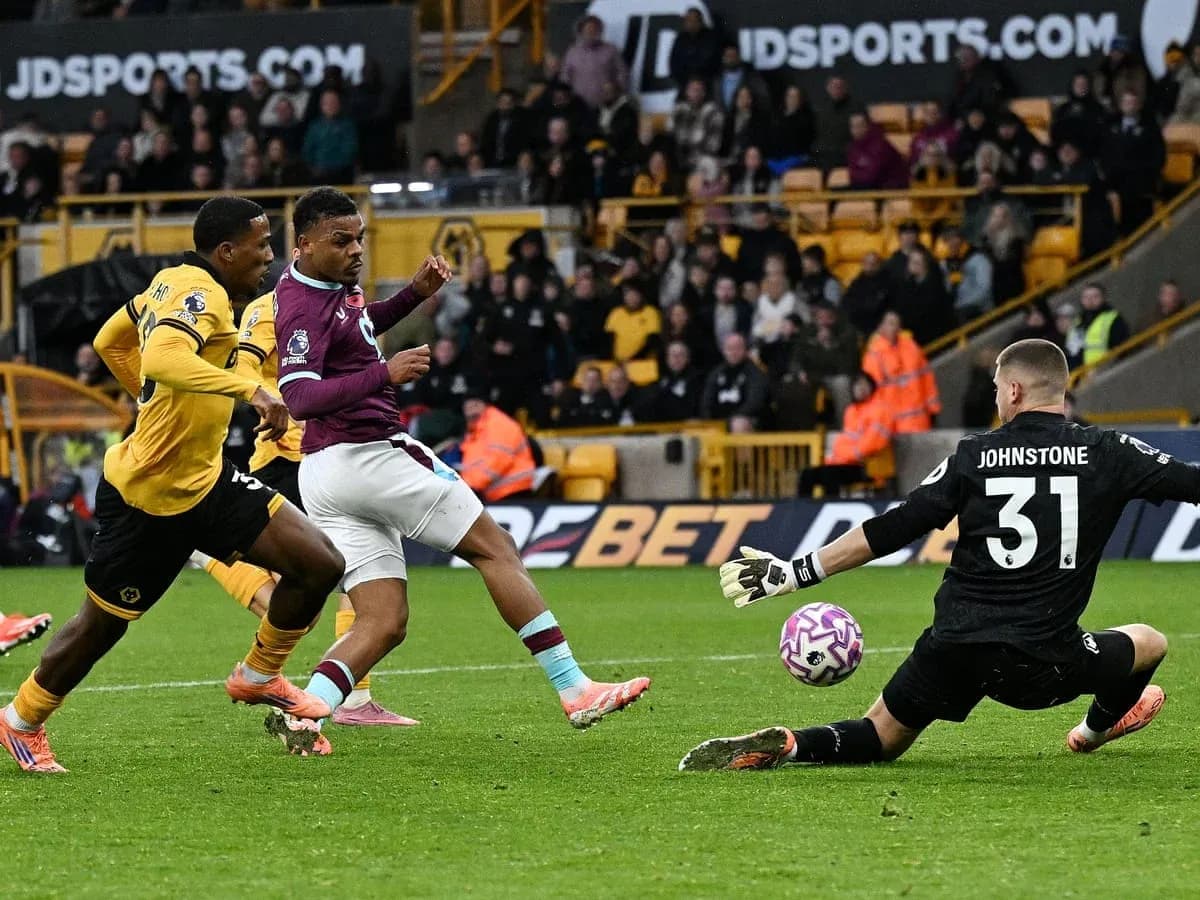
Burnley vs Wolves: Tactical Analysis of the 1-1 Draw
Burnley’s 1-1 draw with Wolves at Turf Moor unfolded as a clash of contrasting game models: Burnley’s structured, possession-heavy 4-2-3-1 against Wolves’ compact, transition-oriented 3-4-2-1. Across 90 minutes, the tactical story was Burnley’s territorial and ball control against Wolves’ vertical threat and superior chance quality, with both sides ultimately relying heavily on their goalkeepers to protect a point.
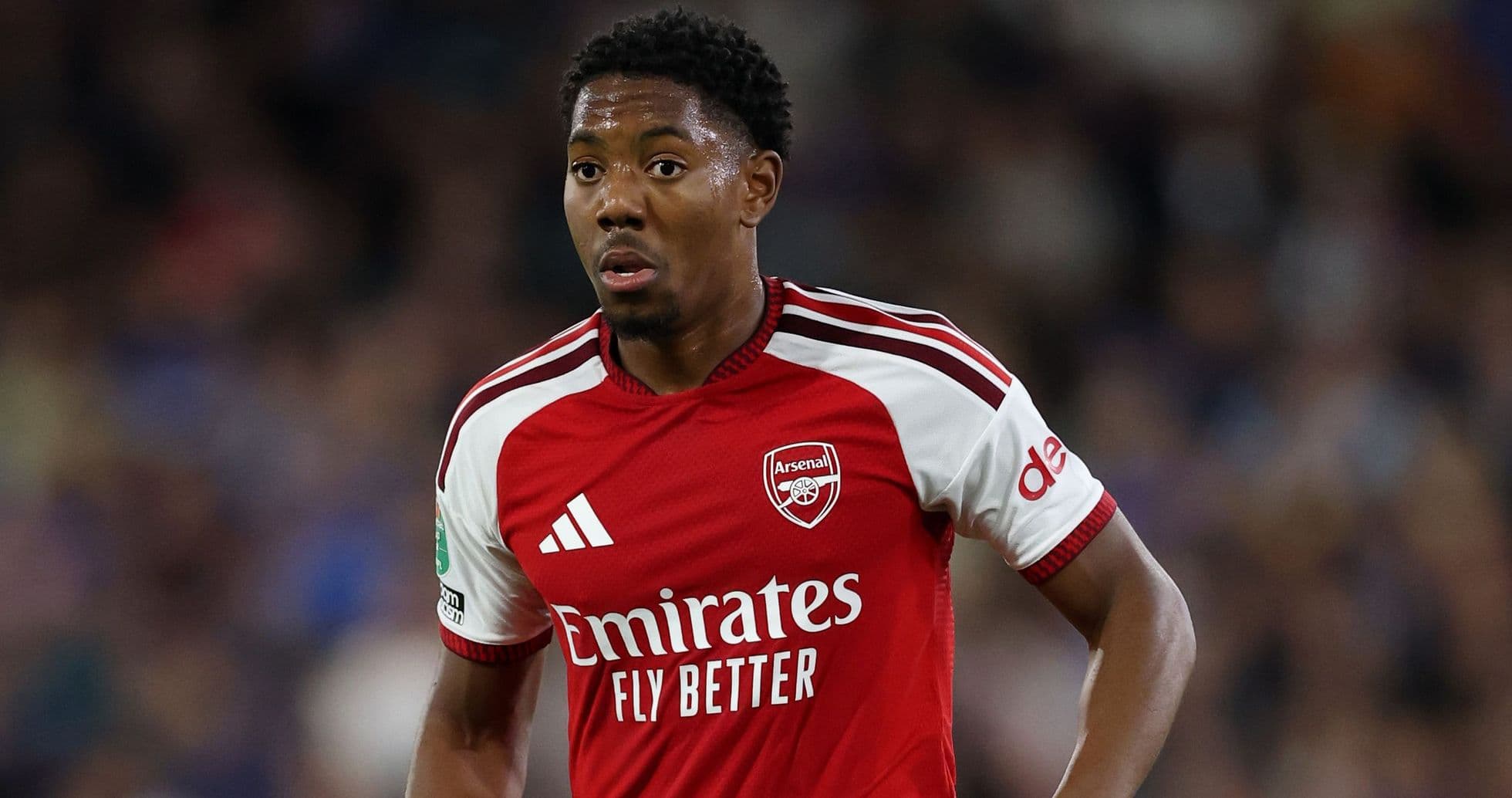
Mike Jackson’s Burnley set up in a clear 4-2-3-1, with M. Weiss (Burnley) behind a back four of K. Walker, A. Tuanzebe, B. Humphreys and Lucas Pires. The double pivot of Florentino and L. Ugochukwu (before his withdrawal) was designed to stabilise circulation and protect rest defence, while an advanced line of L. Tchaouna, Hannibal Mejbri and J. Anthony supported Z. Flemming as the nominal striker. The structure delivered dominance of the ball: 70% possession, 558 passes, and 87% pass accuracy (558 passes, 488 accurate, 87%). Burnley consistently built through short combinations, using the full-backs as width and Mejbri between the lines to connect.
However, the early tactical narrative belonged to Wolves. Rob Edwards’ 3-4-2-1, with J. Sa (Wolves) in goal behind a back three of Y. Mosquera, S. Bueno and L. Krejci, prioritised central compactness and aggressive pressing triggers. The wing-backs R. Gomes and D. M. Wolfe (later replaced) helped form a line of four in midfield, with Andre and A. Gomes screening and Hwang Hee-Chan plus M. Mane operating as narrow forwards around A. Armstrong. Within five minutes, this structure forced a decisive moment: a VAR-confirmed penalty following Ladislav Krejčí’s involvement, which Armstrong converted. That early 0-1 allowed Wolves to lean even harder into their plan: concede territory, but spring forward quickly.
Burnley’s response was methodical rather than frantic. They generated 16 total shots, with 8 on goal, but the shot profile underlined a recurring issue: only 7 efforts came from inside the box versus 9 from outside. Wolves’ back three, shielded by a diligent midfield, repeatedly forced Burnley into lower-quality attempts from range. The 6 blocked shots Burnley suffered also reflected Wolves’ commitment to defending the edge of the area, with centre-backs stepping out aggressively while the wing-backs tucked in.
The key attacking mechanism for Burnley became the left-sided triangle of Lucas Pires, J. Anthony and L. Tchaouna. By overloading that side and then switching play, Burnley tried to disorganise Wolves’ narrow 3-4-2-1. The equaliser early in the second half was a direct product of this positional play: L. Tchaouna found space to deliver for Z. Flemming, whose finish at 47’ rewarded Burnley’s insistence on combining around the box rather than simply crossing from deep. At that moment, the 1-1 scoreline finally reflected Burnley’s territorial control.
Yet the underlying numbers show Wolves remained more dangerous per attack. Despite only 30% possession and 223 passes (164 accurate, 74%), Wolves matched Burnley’s 16 total shots and actually produced a higher xG: 2.05 to Burnley’s 1.06. That differential illustrates how effectively Wolves turned limited ball time into high-quality chances, particularly via direct balls into A. Armstrong and the half-space runs of Hwang Hee-Chan and M. Mane. Wolves’ 10 shots inside the box versus Burnley’s 7 underline how often they managed to penetrate centrally once they broke the first press.
In goal, both keepers were decisive. M. Weiss (Burnley) made 3 saves and, according to the data, registered 0.29 goals prevented, indicating he performed slightly above expectation relative to the quality of Wolves’ attempts on target. At the other end, J. Sa (Wolves) faced sustained pressure and responded with 7 saves and the same 0.29 goals prevented figure. His shot-stopping was a central pillar of Wolves’ low-block strategy; without that reliability, Burnley’s volume of shots on goal would likely have turned the match.
The substitution pattern from both coaches reflected tactical fine-tuning rather than wholesale structural change. At 66’, Burnley removed Hannibal Mejbri for Z. Amdouni (Z. Amdouni (IN) came on for H. Mejbri (OUT)), trading some pressing energy and argumentative edge in midfield for a more direct threat between the lines. Wolves, at the same moment, freshened their midfield and back line: T. Arokodare (IN) came on for A. Gomes (OUT), and Toti (IN) came on for L. Krejci (OUT), reinforcing aerial presence and defensive legs as Burnley’s pressure grew.
Later, Wolves doubled down on transition potential with a double change at 74’: H. Bueno (IN) came on for D. M. Wolfe (OUT), and J. Abbey (IN) came on for A. Armstrong (OUT), slightly rebalancing the front line while keeping the 3-4-2-1 shell. Burnley, chasing greater incision, turned to J. Ward-Prowse and M. Edwards at 75’ to replace L. Ugochukwu and L. Tchaouna, seeking better delivery and one‑v‑one threat. Finally, at 84’, A. Barnes and J. Bruun Larsen entered for Z. Flemming and J. Anthony, giving Burnley a more traditional penalty-box presence and fresh wide running for the closing stages.
Discipline also carried tactical implications. Wolves’ first yellow came at 41’: Hwang Hee-chan (Wolves) — Off the ball foul, reflecting the physical edge of their pressing. Burnley’s midfield tension surfaced in first-half stoppage time at 45+9’: Hannibal Mejbri (Burnley) — Argument, a sign of frustration as they trailed 0-1 despite control. In the final minutes, tempers flared symmetrically: at 90+4’, Ashley Barnes (Burnley) — Argument and, moments later, Yerson Mosquera (Wolves) — Argument. The late bookings encapsulated a contest where both sides felt they had left something on the table.
Statistically, the draw looks like a clash between process and punch. Burnley’s overall form on the day, in terms of structure and control, was strong: heavy possession, high pass accuracy, and sustained territory. Wolves’ defensive index, however, was equally impressive: 7 blocked shots, a compact low block, and a goalkeeper in J. Sa (Wolves) who consistently bailed them out. xG tilting 2.05–1.06 in Wolves’ favour, despite their 30% possession, underlines how their transitions carved out clearer openings.
In the end, Burnley’s 1-1 home draw can be read as a validation of their possession framework but a reminder of the need for sharper final-third efficiency. Wolves, conversely, leave Turf Moor with a point that reflects the effectiveness of their counter-attacking model and defensive resilience, even if they might privately feel that their chance quality merited more than a single goal.