Burnley and Wolves: A Premier League Finale of Frailty
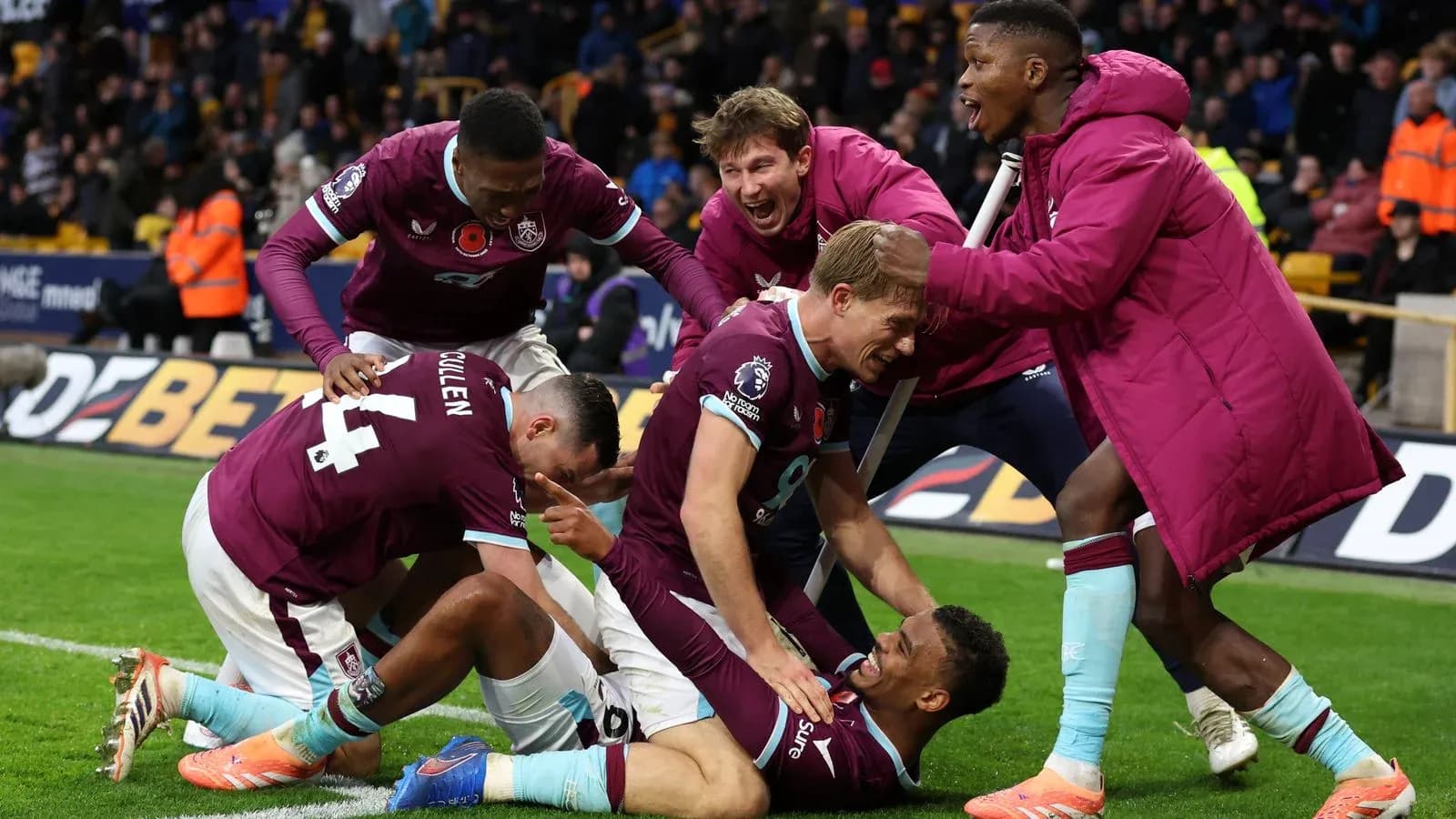
On a grey afternoon at Turf Moor, the Premier League season closed with a game that felt less like a finale and more like an autopsy of two broken campaigns. Burnley and Wolves, already condemned to relegation, shared a 1-1 draw that neatly encapsulated why they finished 19th and 20th respectively.
Final Score: Burnley 1 - 1 Wolves
Following this result, the table tells a stark story. Burnley ended on 22 points, with a goal difference of -37 after scoring 38 and conceding 75 overall. Wolves slipped beneath them on 20 points, their goal difference an even bleaker -41 from 27 goals for and 68 against. Both seasons were built on frailty: Burnley’s overall goals against average of 2.0 per match and Wolves’ 1.8 underline defensive structures that cracked too often, too easily.
Match Structure
Yet on the day, there was structure – and a clear tactical narrative.
Burnley set up in a 4-2-3-1, Mike Jackson leaning into the shape that has been his most-used this season, with 13 league appearances in that system. M. Weiss anchored them in goal behind a back four of K. Walker, A. Tuanzebe, B. Humphreys and Lucas Pires. In front, Florentino and L. Ugochukwu formed the double pivot, with L. Tchaouna, H. Mejbri and J. Anthony supporting lone forward Z. Flemming.
This was not a side built for expansive risk; it was a team trying to put a lid on a campaign that has seen them concede 29 goals at home and average 1.5 goals against per home game. The absence of J. Beyer (hamstring) and J. Cullen (knee) stripped Burnley of defensive depth and midfield control, pushing Florentino and Ugochukwu into heavy-duty screening roles.
Opposite them, Rob Edwards’ Wolves arrived in their familiar 3-4-2-1, a shape they have used 12 times this season. J. Sa sat behind a back three of Y. Mosquera, S. Bueno and L. Krejci. The wing line of R. Gomes, Andre, A. Gomes and D. M. Wolfe was narrow and industrious, while M. Mane and Hwang Hee-Chan operated off central striker A. Armstrong.
For Wolves, the absences list was telling: L. Chiwome (knee), M. Doherty (muscle), E. Gonzalez (knee) and S. Johnstone (knock) removed options in both boxes. A side that already failed to score in 19 league matches overall and averaged just 0.4 goals on their travels had even fewer solutions in the final third.
The Duel
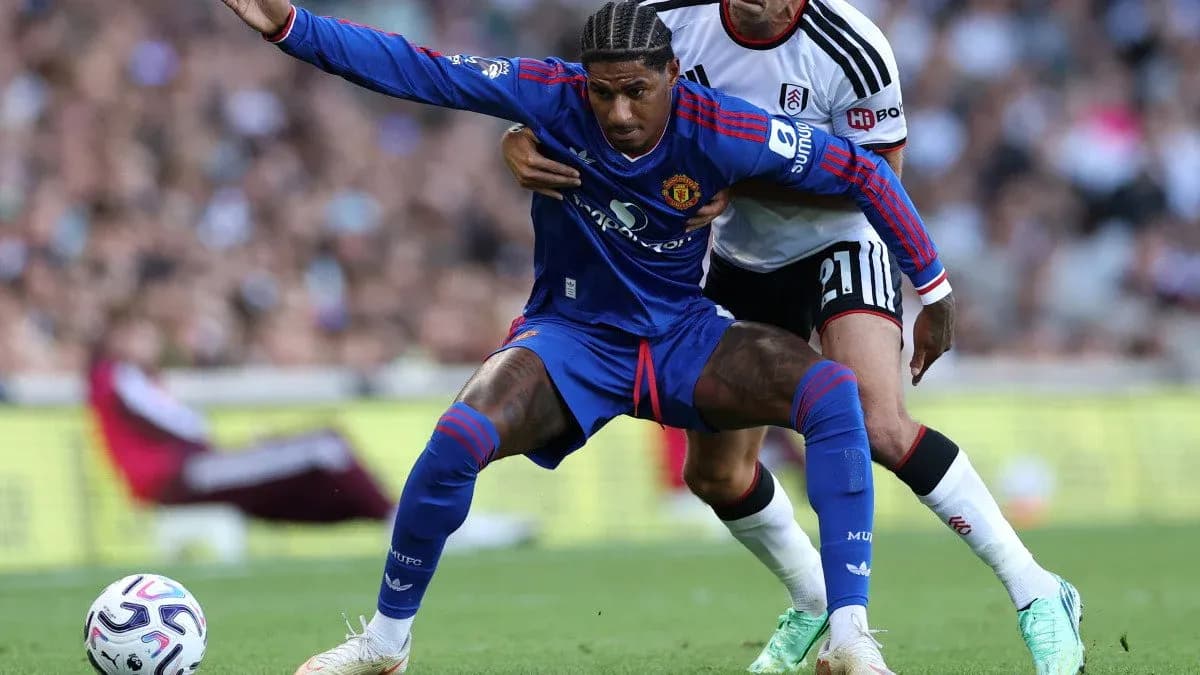
The “Hunter vs Shield” duel was always going to centre on Z. Flemming. Burnley’s top scorer closed the campaign with 11 league goals from midfield, a rare bright light in a team that averaged 1.0 goals per game overall. His duel was not just with Wolves’ defence, but with a system that has conceded 34 goals away – an average of 1.8 per away match.
Mosquera, one of the league’s most card-prone defenders with 12 yellows, was central to that resistance. Across the season he threw himself into 280 duels and blocked 17 shots; his role at Turf Moor was to step out aggressively into Flemming’s zones between the lines, risking fouls to deny him space. Every time Flemming drifted off the front, it was Mosquera or S. Bueno who had to break the line of three to meet him, leaving Wolves exposed to balls slid into the channels for Anthony or Tchaouna.
Burnley’s engine room was defined by contrast. Florentino and Ugochukwu offered ballast, but the creative and emotional centre was H. Mejbri. His season numbers – 1 goal, 4 assists, 21 key passes – mark him as Burnley’s most progressive midfielder. He also carried an edge: 10 yellow cards and a willingness to foul when transitions broke against his side. In a team whose yellow-card distribution spikes late – 18.18% of their yellows between 76-90 minutes and 19.70% between 91-105 – Mejbri personified that late-game volatility.
Across from him, Andre was Wolves’ metronome and enforcer rolled into one. With 1306 passes at 91% accuracy, 82 tackles and 13 successful blocks, he was the side’s stabiliser and breaker of play. His 12 yellow cards, though, underline the risk baked into his role. In a match where Wolves’ own card profile shows 27.50% of their yellows arriving between 46-60 minutes and 20.00% between 61-75, the middle third of the game was always likely to become a running battle between Mejbri’s forward surges and Andre’s interventions.
Pre-Match Prognosis
If this were a pre-match prognosis, the numbers would have pointed to a low-scoring, attritional contest. Burnley, with just 18 goals at home and an average of 0.9 goals per home match, are not a side that routinely overwhelm visitors. Wolves, with 8 goals away and an away average of 0.4, are even more blunt. Combine those attacking figures with Wolves’ tendency to fail to score in 12 away matches and Burnley’s 4 home clean sheets, and a cautious xG model would have leaned towards a narrow home edge or a draw.
Defensively, neither side had the solidity to dominate. Burnley’s 29 goals conceded at Turf Moor and Wolves’ 34 shipped on their travels suggest that any sustained pressure would likely yield chances. The tactical question was always whose structure would break first: Burnley’s fragile but familiar 4-2-3-1, or Wolves’ back three that has too often been dragged wide and exposed.
In the end, the 1-1 scoreline felt mathematically inevitable – the meeting point of two attacks that rarely rise above 1.0 xG and two defences that cannot quite hold a lead. It was a draw framed not by a single moment but by a season’s worth of evidence: two clubs whose tactical ideas were clear, but whose execution, over 38 games, was never quite enough to stay in the division.