Brooklyn Dominates Portland Hearts of Pine 5–1 in USL League One Cup
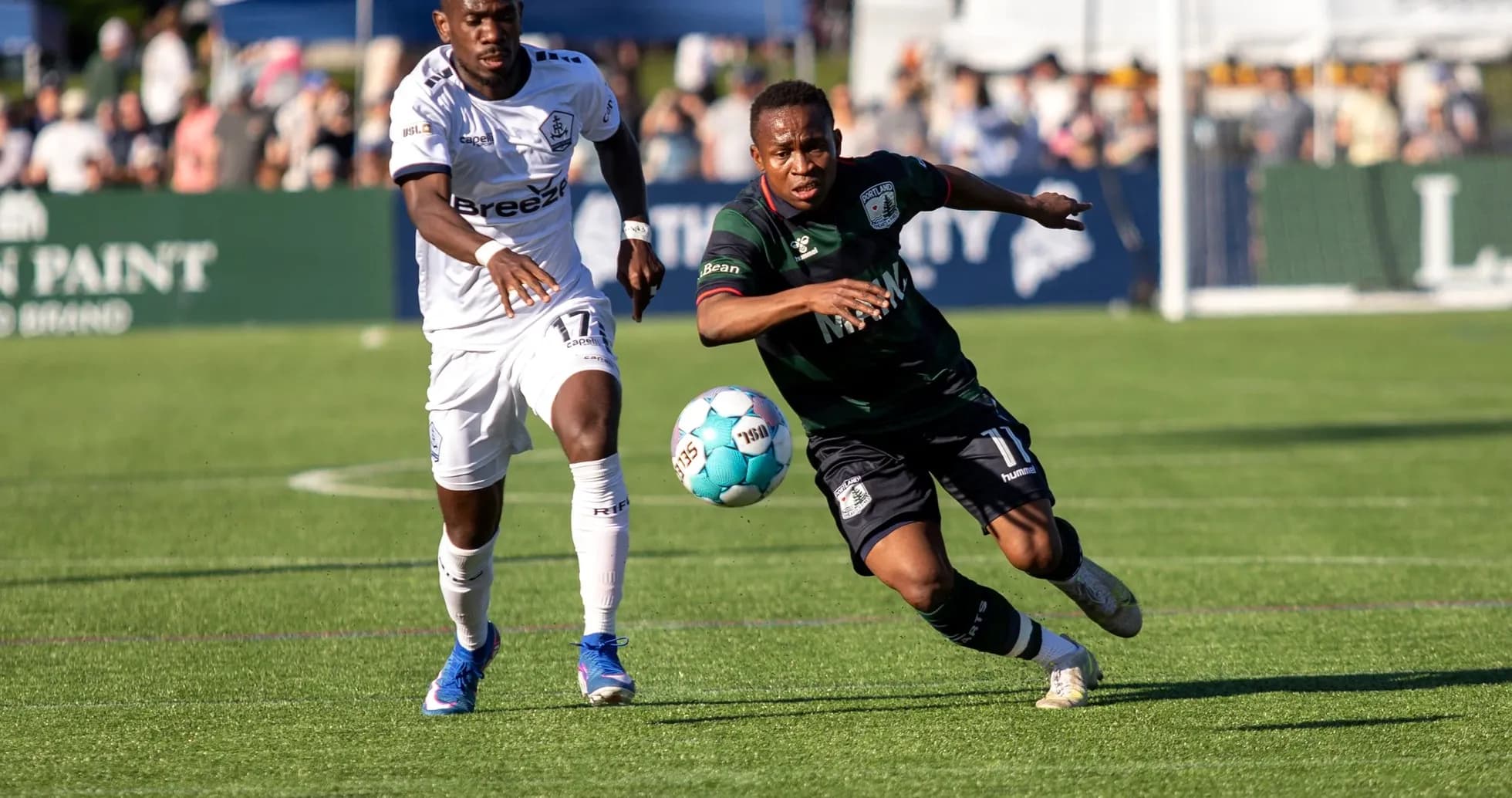
Under the lights at Maimonides Park, Brooklyn did not just win a group-stage tie; they authored a statement. A 5–1 dismantling of Portland Hearts of Pine turned a finely poised USL League One Cup Group 5 into a showcase of contrasting football identities: Brooklyn’s measured, high-impact control against Portland’s expansive but fragile ambition.
I. The Big Picture – Group 5 re-drawn at Maimonides Park
Following this result, Brooklyn sit as a side whose numbers now match the eye test. In total this campaign they have 8 goals for and 3 against across 3 matches, a goal difference of +5 that underlines their authority in Group 5. At home, they have scored 5 and conceded 3, a profile of a team that embraces risk but usually bends matches to its tempo.
Portland’s story is more chaotic. In total this campaign they have scored 9 and conceded 13, a goal difference of -4 that captures a side addicted to open games but unable to control the damage. On their travels, the numbers are stark: 3 goals for and 8 against in 2 away fixtures, an average of 1.5 goals scored and 4.0 conceded away. The 5–1 here in Brooklyn now stands as the heaviest illustration of that imbalance.
The scoreline at half-time – 3–1 to Brooklyn – told of a home side that started fast and never let go. The full-time 5–1 simply confirmed that Portland’s defensive structure could not live with the waves of pressure.
II. Tactical Voids – Discipline, risk and the missing stabilisers
There is no formal injury list in the data, but the tactical absences were structural rather than individual. Brooklyn lined up without a named coach in the official record, yet the side on the pitch had a clear internal hierarchy.
The disciplinary profiles of the two teams before this fixture already hinted at how the contest might tilt. Heading into this game, Brooklyn’s yellow cards were spread but with a clear late-game spike: 40.00% of their cautions arrived between 61–75 minutes, and another 20.00% in the 76–90 range. This is a team that pushes the edge of intensity as matches wear on, but crucially, they had no red cards recorded.
Portland, by contrast, carried a combustible edge. In total this campaign, 50.00% of their yellow cards came in the 61–75 minute band, with another 25.00% between 46–60. Most tellingly, they had already seen a red card in the 46–60 window, a sign that when games become stretched, their aggression can tip into self-destruction. That disciplinary volatility dovetails brutally with an away defence conceding 4.0 goals per match.
The void for Portland is obvious: there is no stabilising defensive presence or collective restraint once the game becomes transitional. Brooklyn exploited that relentlessly.
III. Key Matchups – Hunter vs Shield, Engine Room vs Enforcer
Without official top-scorer or assist charts, the roles must be read from the lineup and the flow of the match. For Brooklyn, the attacking “hunter” line was built around the fluid front and half-spaces occupied by P. Mangione, C. Olney JR and M. Anderson, supported by the experienced craft of T. McNamara.
The “shield” for Portland – a defence that in total this campaign had already conceded 9 and, away, 8 – was always going to be under siege. The back unit anchored by figures like K. Green and B. Evans, with K. Oladapo involved from deep, never found a compact shape. Brooklyn’s season-best home win, a 5–1 scoreline, had already been recorded in their statistical profile; the fact that this match reproduced that exact margin underscores how predictable Portland’s away vulnerabilities have become.
In midfield, Brooklyn’s engine room revolved around M. Pinto and the positional intelligence of T. Vancaeyezeele, with Gabriel Alves and V. Latinovich providing the platform from the back. Their task was to dictate tempo and protect transitions. They did both: Brooklyn’s in total goals-against average of 1.0 and their away clean sheet earlier in the group suggest a side that knows when to close the door.
Opposite them, Portland’s central operators – M. Mohamed, M. Kidd and D. Barbosa – were tasked with being both creators and enforcers. In theory, this is a unit capable of driving a team that, in total, averages 1.7 goals for per match. In practice, once Brooklyn’s press and rotations pulled them out of shape, they could not shield the back line or control the rhythm.
Up front, A. Camara and O. Wright symbolised Portland’s attacking threat. This is a side that has not failed to score in any match so far, and their penalty record – 1 taken, 1 scored, 100.00% – reflects a clinical edge when chances do arrive. But on nights like this, their “hunter” is left chasing from too far behind the play.
IV. Statistical Prognosis – Why 5–1 felt inevitable
From a numbers perspective, Brooklyn’s dominance at Maimonides Park was not an anomaly but an amplification of existing trends. At home they average 2.5 goals for and 1.5 against; Portland away concede 4.0 while scoring 1.5. Overlay those curves and a multi-goal Brooklyn win sits right at the intersection of expectation and execution.
Brooklyn’s overall goal difference of +5 after 3 games, combined with 2 wins from 3 and a single clean sheet, paints the picture of a side whose xG profile would likely be robust: frequent chance creation, occasional defensive concessions, but a net positive in almost every phase. Their biggest away win of 3–0 shows they can also travel with menace, which matters for the knockout horizon.
Portland’s -4 goal difference, zero clean sheets and high concession rate away suggest an xG model tilted heavily against them when they leave home. They are not sterile – 5 goals in total, 2.0 at home and 1.5 away – but their defensive xG against on the road must be punishing. When 50.00% of your yellow cards arrive between 61–75 minutes, precisely the period where fatigue and game-state pressure peak, late collapses become less a risk and more a pattern.
Following this result, the tactical narrative for the rest of Group 5 is clear. Brooklyn emerge as a side whose squad structure – Burns’ presence in goal, the defensive spine of Latinovich and Gabriel Alves, the midfield balance of Pinto and McNamara, the attacking elasticity of Mangione, Olney JR and Anderson, with options like S. Hundal, J. Servania and J. Obregon in reserve – is built for knockout football: varied threats, controlled aggression, and the capacity to turn home advantage into a siege.
Portland remain the group’s wild card: capable of scoring, brave in possession, but with an away defence and disciplinary profile that invites exactly the kind of ruthless punishment Brooklyn delivered. Unless the Hearts of Pine can harden their shield on their travels, nights like this 5–1 in Brooklyn will continue to feel less like shocks and more like the logical endpoint of the numbers.