Birmingham Legion and Loudoun United Draw 1-1 in USL Championship Clash
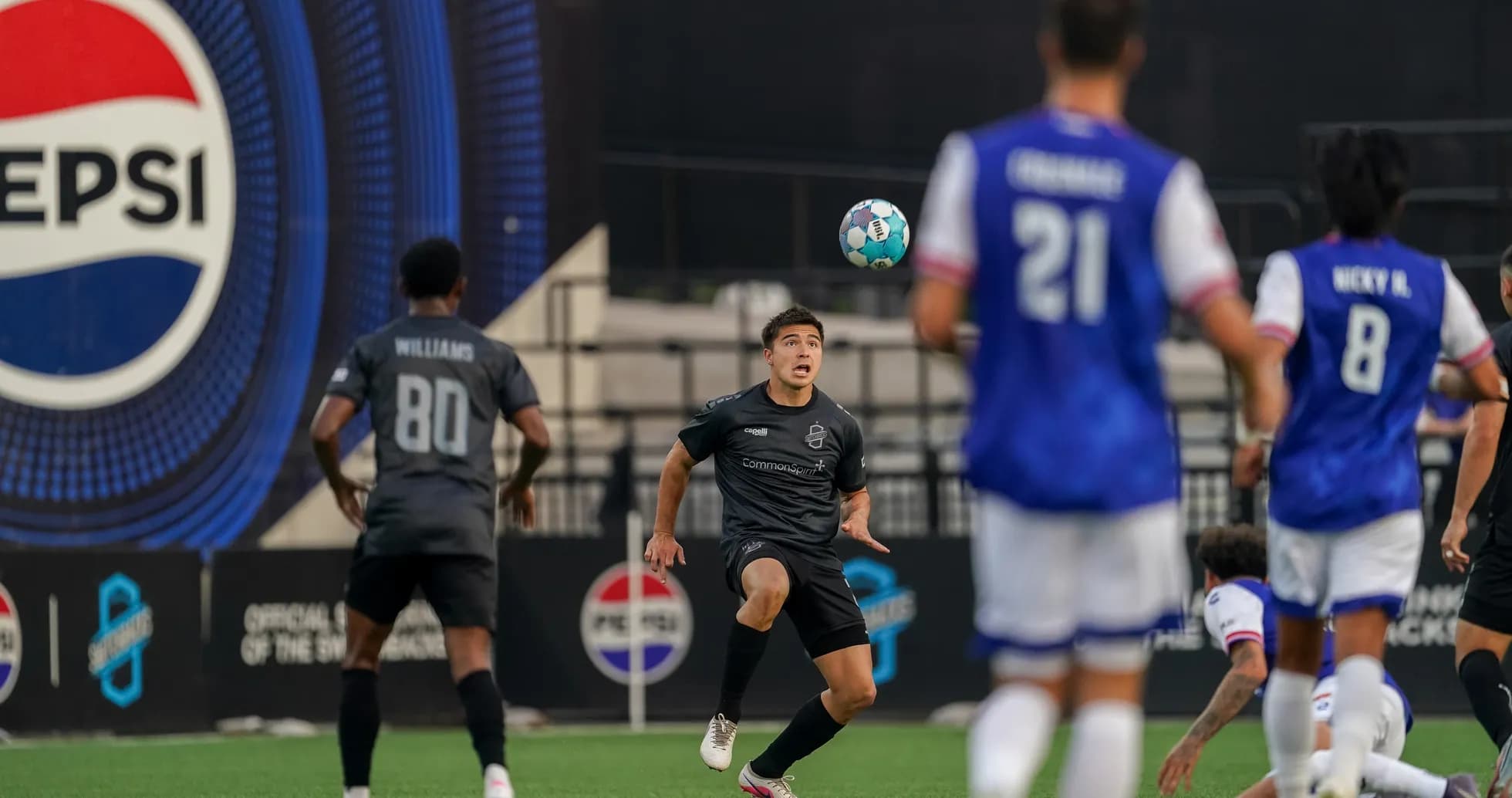
Under the lights at Protective Stadium, Birmingham Legion and Loudoun United played out a 1-1 draw that felt less like a settled argument and more like the opening chapter of a longer duel in the USL Championship’s Group Stage. Following this result, Birmingham remain 10th on 13 points with a goal difference of -2 (14 scored, 16 conceded), while Loudoun sit just behind them in 11th on 10 points with a goal difference of -8 (14 scored, 22 conceded). Two sides defined by stalemates and narrow margins once again found themselves locked together after 90 minutes.
For Birmingham, the story of the season has been balance without breakthrough. Overall they average 1.1 goals for and 1.2 goals against per game, numbers that explain their 7 draws in 13 matches as clearly as any tactical diagram. At home, that attacking output drops to 0.8 goals per match, and the full-time 1-1 scoreline here fits that pattern of low-scoring, tight encounters at Protective Stadium.
Jay Heaps set up a side that, on paper, has a strong spine. J. Koleilat in goal anchors a back line fronted by L. Duru, K. Hughes, R. Hamouda and A. Daley. In front of them, the technical pairing of S. Shashoua and S. Antwi offers control and progression, while the attacking band of T. Pasher, P. Vassell and G. Diarbian works to feed R. Williams as the central reference point.
What Birmingham do well is spread their threat across the game. Their minute distribution of goals for shows a broad curve: 28.57% of their goals arrive between 16-30 minutes, 21.43% between 46-60, and another 21.43% between 76-90. There is no single burst; rather, they probe in phases, growing into halves and finishing them with a late push. That late-game surge is particularly important because it collides directly with Loudoun’s most fragile window.
Loudoun’s defensive record tells a harsher tale. Overall they concede 1.8 goals per match, with 2.0 per game at home and 1.6 on their travels. The distribution of those goals against is revealing: 28.57% conceded between 16-30 minutes, and 23.81% in the 76-90 window. This is a team that can be rattled early and then wobbles again as legs tire and concentration frays. Against a Birmingham side that scores 28.57% of its goals between 16-30 minutes and 21.43% between 76-90, those intervals form the critical intersection of the matchup: Birmingham’s willingness to accelerate just as Loudoun tend to open up.
Yet Loudoun are not passive victims. Anthony Limbrick’s XI carries its own clear identity. E. Bandre in goal sits behind a defensive unit of N. Adnan, J. Erlandson, B. Akinyode and C. Torres. In midfield, A. Souper, J. Murphy and K. Awuah give the side a blend of energy and passing, while the front three of A. Ordonez, T. Ulfarsson and A. Aboukoura provide mobility and direct running.
Loudoun’s attacking minute map is almost the mirror image of Birmingham’s. Overall they score 1.2 goals per match, but their most dangerous periods are the early part of the second half: 26.67% of their goals come between 46-60 minutes and another 26.67% between 61-75. They are a classic “restart and surge” side, emerging from the interval with clarity and tempo. That matters because Birmingham’s defensive profile dips precisely there. While only 6.25% and 6.25% of Birmingham’s goals against arrive in the 0-15 and 16-30 windows, the 46-60 period accounts for 25.00% of their concessions, and the final 76-90 stretch another 37.50%. This is a back line that starts reasonably compact but is vulnerable when the rhythm of the game shifts and again when fatigue sets in.
The “Hunter vs Shield” battle is therefore a question of timing rather than a single star. Loudoun’s collective second-half press, led by the movement of Ordonez and Ulfarsson, is designed to stress that 46-60 window where Birmingham concede a quarter of their goals. In turn, Birmingham’s wide threats like Pasher and Diarbian are best placed to exploit Loudoun’s late-game looseness, when 23.81% of their goals against arrive in the final 15 minutes.
In the “Engine Room,” the duel is about control and fouls as much as creation. Birmingham’s yellow-card distribution shows a steady burn across the match with a clear spike late: 28.57% of their yellows arrive between 76-90 minutes, and there is a solitary red card in that same window, accounting for 100.00% of their reds. Loudoun’s discipline tells a similar story, with 25.71% of their yellows between 46-60 and a hefty 34.29% between 76-90. The closing stages between these two sides are not just about goals; they are about tired tackles, tactical fouls and the thin line between aggression and chaos.
From twelve matches, Loudoun have managed 4 clean sheets overall and failed to score only 3 times, suggesting that their xG profile is likely respectable even if the raw goal difference of -8 (14 for, 22 against) looks grim. Birmingham, with 3 clean sheets and 4 matches where they failed to score, are slightly more conservative, their goal difference of -2 (14 for, 16 against) reflecting tighter margins and a more controlled game state.
Following this result, the statistical prognosis for both clubs is paradoxically similar: they are hard to beat, but not yet hard to fear. The expected goals trends implied by their chance patterns point to matches that will continue to hover around the 1-1 and 2-1 corridors rather than wild scorelines. For Birmingham, the path forward lies in sharpening their late-game edge at home, turning that 0.8 home goals-per-game figure into something closer to their 1.6 on their travels. For Loudoun, the task is to protect their vulnerable 16-30 and 76-90 windows without losing the attacking thrust that makes them so dangerous after the break.
The draw at Protective Stadium, then, is less a conclusion than a diagnostic: two squads with defined rhythms and clear statistical fingerprints, each still searching for the ruthless streak that will turn tight narratives into decisive wins.