Aston Villa Triumphs in Europa League Final Under Unai Emery
Aston Villa’s long road back to Europe’s summit ended in a blaze of claret and blue light on the banks of the Bosphorus.
Forty-four years after toppling Bayern Munich to win the European Cup, they are continental champions again. The trophy is different, the era unrecognisable, but the architect of this new chapter is clear: Unai Emery, the man who has turned the Europa League into his own private playground.
Emery’s empire, Villa’s rebirth
The 54-year-old has now lifted this trophy five times with four different clubs. Sevilla, Villarreal, now Aston Villa. Only Carlo Ancelotti, with his five Champions Leagues, can match that haul in a major European competition. No one has done it with as many different teams.
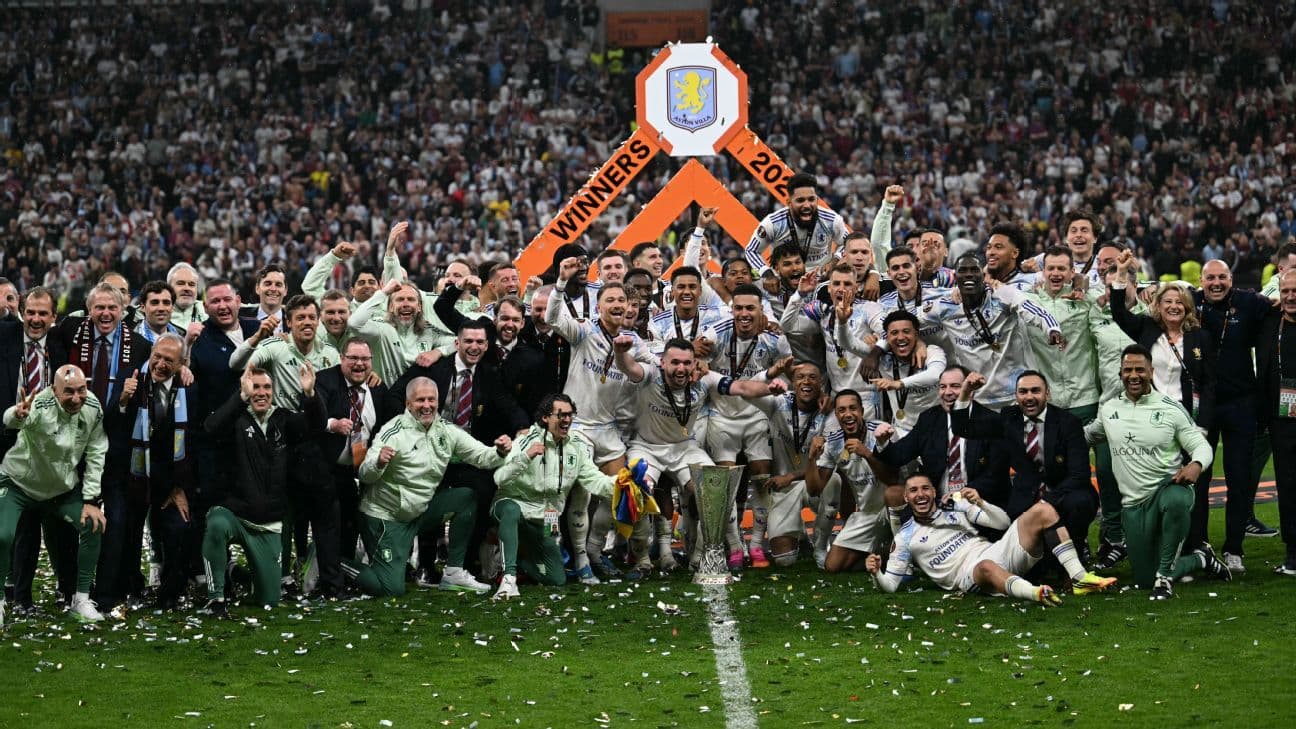
He rejects the title of “king” of this tournament. It rang a little hollow in Istanbul. In the claret and blue end of Besiktas Park, where 11,000 Villa fans roared and one of them happened to be future monarch Prince William, Emery stood as something close to royalty. Four years ago, Villa were 17th in the Premier League. On Wednesday night, they were lifting a European trophy.
This is not how their season was supposed to go. They failed to win any of their first four matches, did not score until the end of September. From that stuttering start, Emery has dragged them into the Champions League places and now onto a podium in Europe. His reputation as a modern coaching giant no longer needs a defence; nights like this are the argument.
The plan here was ruthless and clear. Freiburg would press, Villa would refuse to play the game on their terms. Long balls into Ollie Watkins, territory over rhythm, patience over panic. It was not pretty at first. It was brutally effective in the end.
From Preston midweeks to Istanbul nights
This triumph is not just about a coach with a magic touch in Europe. It belongs to a core of players who have carried Villa from the grind of the Championship to the glamour of a European final.
At the heart of it all, John McGinn. Seven years after helping Villa escape the second tier with victory over Derby County at Wembley, the Scot became the first from his country to captain a side in a major European final since Barry Ferguson with Rangers in 2008, and the first to do so for an English club since Graeme Souness with Liverpool in 1984. The image of McGinn, Europa League trophy raised high, is now part of Villa’s permanent memory bank.
He represents a journey shared by many. Tyrone Mings and Tammy Abraham were with him on that promotion day in 2019. Ezri Konsa, Emi Martínez, Watkins and Matty Cash followed in the next 12 months. Together they built a team that kept threatening to break through, only to find the door slammed shut.
Conference League semifinals in 2024. Champions League quarterfinals last season, where Paris Saint-Germain, the eventual winners, stopped them. Each near miss added a layer of scar tissue, but also a layer of experience. In Istanbul, all of that learning came together in a performance of cold control.
Freiburg, who actually ran 2.5km more as a team than Villa (102.9km to 100.4km), chased shadows. The German side huffed, puffed, fouled, pressed. Villa held them at arm’s length and waited for the moments that would define the night.
Tielemans lights the fuse, Buendía bends in brilliance
For 40 minutes, this final looked like it might drift. Fouls broke up any rhythm. Neither side imposed themselves. Villa’s insistence on going long to Watkins made sense tactically but did little for the spectacle.
Then Austin MacPhee went to work.
Villa’s set-piece coach has become an influential figure behind the scenes, and here his fingerprints were all over the opener. Lucas Digne trotted across for what appeared to be a routine corner. Instead of swinging it into the box, he went short, catching Freiburg asleep. Morgan Rogers took a touch, lifted his head, and floated a delicate ball towards the edge of the area.
Youri Tielemans arrived like a hammer.
His volley, struck with perfect timing, thundered past Noah Atubolu before the Freiburg goalkeeper could react. One clean swing, one ruthless finish, and the final snapped into life. The pressure had been simmering; Tielemans blew the lid off.
Villa have made a habit of scoring the spectacular this season, their goals often outstripping their underlying numbers. So when Emi Buendía picked up the ball on the edge of the box, there was a sense that something was coming, even if the angle and his weaker left foot suggested otherwise.
He ignored all that.
The Argentine curled a gorgeous shot around Atubolu’s outstretched hand and into the top corner, the ball kissing the side netting as if drawn there. It was a goal of rare beauty, the kind that silences a stadium for a split second before the roar crashes in. Referee François Letexier barely let Freiburg restart. He blew for half-time almost immediately, as if acknowledging that nothing could top what he had just seen.
Two goals. Two moments of pure, crafted quality. And with that, the final was effectively decided. History backs it up: the last three Europa League finals with a two-goal half-time lead have all ended 3-0. Atlético Madrid in 2012, Atalanta in 2024, and now Aston Villa in 2026.
Rogers seals it, a new name in the history books
If the first two goals were for the purists, the third belonged to the pragmatists. Rogers’ strike did not have Tielemans’ violence or Buendía’s artistry, but it had the same impact on the scoreboard.
Sharp movement, a composed finish, and the contest was over. Freiburg’s resistance finally cracked, their below-par display punished without mercy. Villa did not need to chase more. They simply managed the game, Emery on the touchline orchestrating every press, every reset, every clearance.
For Rogers, the moment carried its own slice of history. At 23 years and 298 days, he became the youngest Englishman to score in a major UEFA final since Steven Gerrard’s famous night for Liverpool against Alavés in the 2001 UEFA Cup final. To be mentioned in that company at this stage of a career is no small thing.
This was not the chaotic, scruffy decider that settled last year’s final between Tottenham Hotspur and Manchester United. Villa’s third completed a scoreline that felt fitting for the level of control they exerted. Clinical, decisive, unflustered.
A club stitched back into Europe’s fabric
Villa’s 44-year wait between major European finals is the third-longest of any club, behind Manchester City’s 51-year gap (1970-2021) and West Ham United’s 47 (1976-2023). That kind of absence changes a club. It alters how a fanbase sees itself, how the wider game talks about you.
This win changes that conversation again.
A 30-year trophy drought, stretching back to the League Cup win over Leeds United in 1996, is over. The ghosts of relegation in 2016, of midweek trips to Preston and the fear of stagnation, feel distant now. The names of McGinn, Martínez, Watkins, Tielemans, Buendía, Rogers and the rest will sit alongside Paul McGrath and Peter Withe in Villa folklore.
Even the broader landscape tilts slightly. With Spurs’ Europa League triumph last year, English clubs have now won this competition in consecutive seasons for the first time since the opening two editions of the UEFA Cup in 1971-72 (Spurs) and 1972-73 (Liverpool). Aston Villa have helped drag the Premier League’s depth back into sharp focus.
There was another small milestone in the background. Jadon Sancho, now in Villa colours, became the first player to appear in the final of three different major European competitions in three consecutive seasons: Champions League in 2023-24, Conference League in 2024-25, Europa League in 2025-26. A curious record, but one that underlines the level at which this squad now operates.
As the celebrations rolled around Besiktas Park, one question hung in the Istanbul night. If Emery can turn a relegation-threatened side into Europa League winners in four years, with this nucleus of players and this momentum, where exactly is Aston Villa’s ceiling now?