Cristiano Ronaldo's Movement Dilemma for Portugal
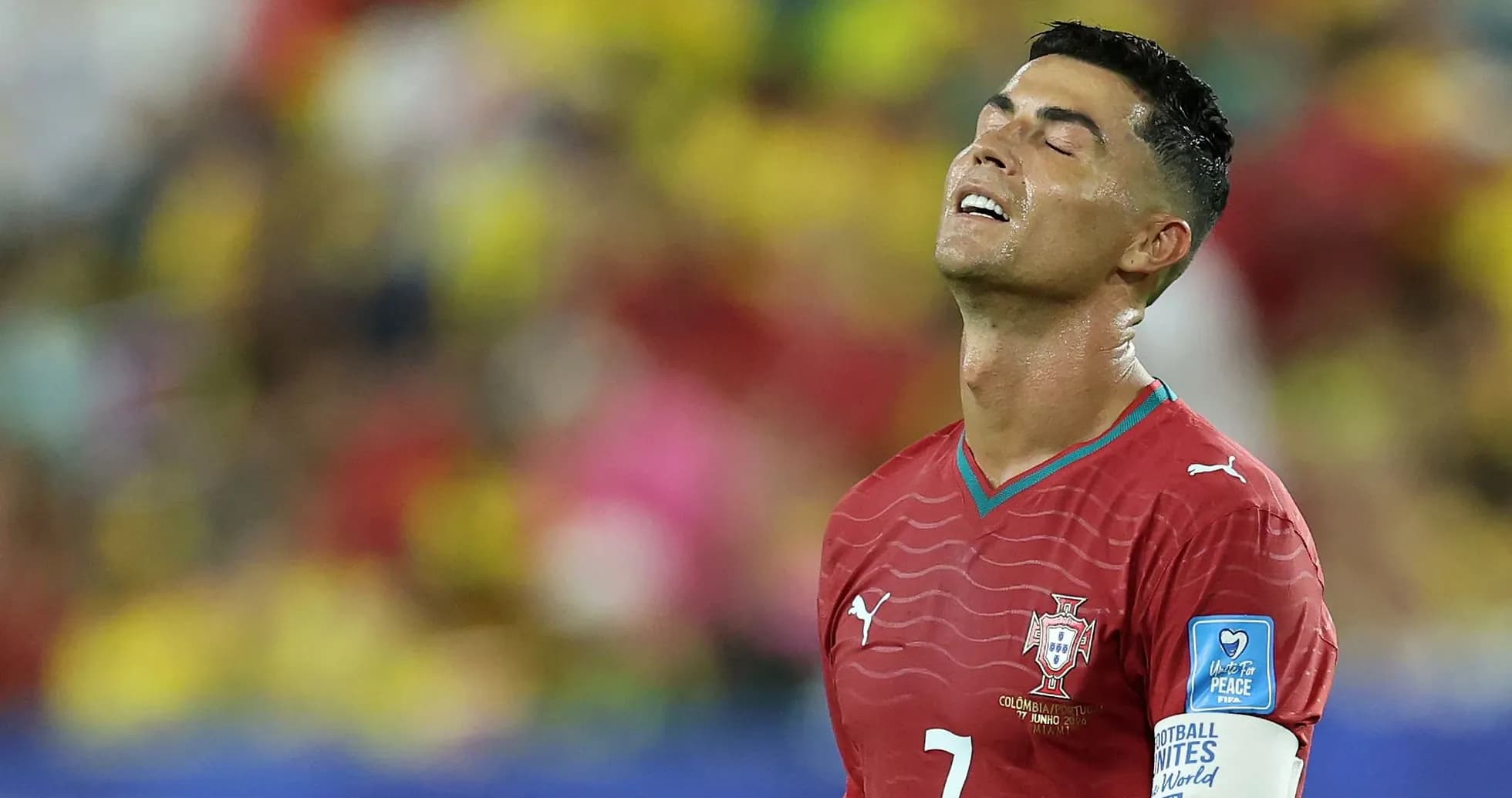
Cristiano Ronaldo has built a career on living where the goals are scored. Diego Forlan believes that, for Portugal right now, that’s exactly the problem.
The former Manchester United forward, speaking on ESPN’s La Casa del Kun, cut straight to the point. From one No.9 to another, his criticism was not about finishing, hunger, or ego. It was about movement — or the lack of it.
“He stays there to take advantage of the goal”
"I'm speaking as a striker, the problem is that Cristiano is in the center, he is who he is, he is there as a No.9, and he stays there to take advantage of the goal because he no longer goes out to look for the ball, but he ends up conditioning Portugal," Forlan said.
This is the crux of his argument. Ronaldo still lurks in the box like few others, still smells chances, still punishes mistakes. But when he plants himself between the centre-backs and refuses to budge, Forlan sees a team suffocating around him.
"It's the typical situation where we used to say, 'I'm staying here because I'm close to the goal to score,'" he continued. "But you don't understand that you end up hurting your team because both center backs stay there, you don't move. The center backs stay put, one becomes a reference point and the other is left out. You have no one who can get to you because you start closing down that space."
In other words, the very zone Ronaldo wants to dominate becomes clogged. The defenders don’t have to think. They don’t get dragged wide, pulled deep, or forced into awkward decisions. They hold their line, track one man, and watch Portugal’s attacks narrow into predictable patterns.
Talent waiting for space
That rigidity bites hardest when you look at the names around him. Bruno Fernandes. Bernardo Silva. Rafael Leao. Players who thrive when the pitch opens up, when passing lanes appear, when defenders are forced to turn and chase.
Forlan’s view is simple: Portugal are leaving some of that talent underused because their central reference point refuses to shift.
With a squad stacked with creative and dynamic attackers, he argues that a small tweak in Ronaldo’s mentality could unlock the rest of the side. Not a demotion. Not a revolution. Just movement.
"If he moved a little to the wings, the others could get in and he could be involved," Forlan said. That one line feels like a blueprint. Drag a centre-back with you, pull the block sideways, and suddenly the half-spaces open for Bruno, Bernardo, or Leao to drive into.
"That's where Portugal falters because they don't explode because everything ends up going to one side, which is actually a funnel. I wouldn't say it's a problem, it's about making him understand. Telling him: 'Move, get out of there so you can do something'.
The “funnel” image is telling. Attacks funnelling into one congested zone, easy to read, easy to contain. Forlan isn’t attacking Ronaldo’s status; he’s challenging his habits.
Martinez, Ronaldo and a knockout dilemma
All of this lands at a delicate moment. Portugal are through to the round of 32, where Croatia await. The stakes rise, the margins shrink, and every tactical flaw gets punished more ruthlessly.
Roberto Martinez now carries a very modern coaching dilemma: how do you manage a legendary captain who still scores, still draws defenders, still commands dressing rooms and stadiums, yet also shapes your entire attacking structure around his limitations?
Ronaldo has already shown in this tournament that his instincts in front of goal remain sharp. The net still ripples when the ball drops his way. That’s not in doubt. The concern, as Forlan outlines, is what happens in the long stretches between those moments.
Against elite opposition, a “static reference point” can be a gift. Centre-backs love a forward who stays in their shadow. They can hold their line, block the central lanes, and wait for hopeful crosses. Portugal risk becoming exactly that: a team feeding one man, in one area, in one way.
Forlan’s advice doesn’t ask Ronaldo to become the tireless wide runner of his early years. It asks him to move just enough — to the wings, into channels, away from the centre — to let others crash into the gaps he leaves behind.
As Croatia loom and the knockout tension tightens, the question hangs over Portugal’s campaign: will their greatest-ever player adjust his game one more time, or will he stand his ground and force the rest of the team to bend around him?