England's World Cup Journey: Seeking Stability Amidst Uncertainty
England’s World Cup run is gathering pace, but one thing is crystal clear: this is not a settled side. Not even close.
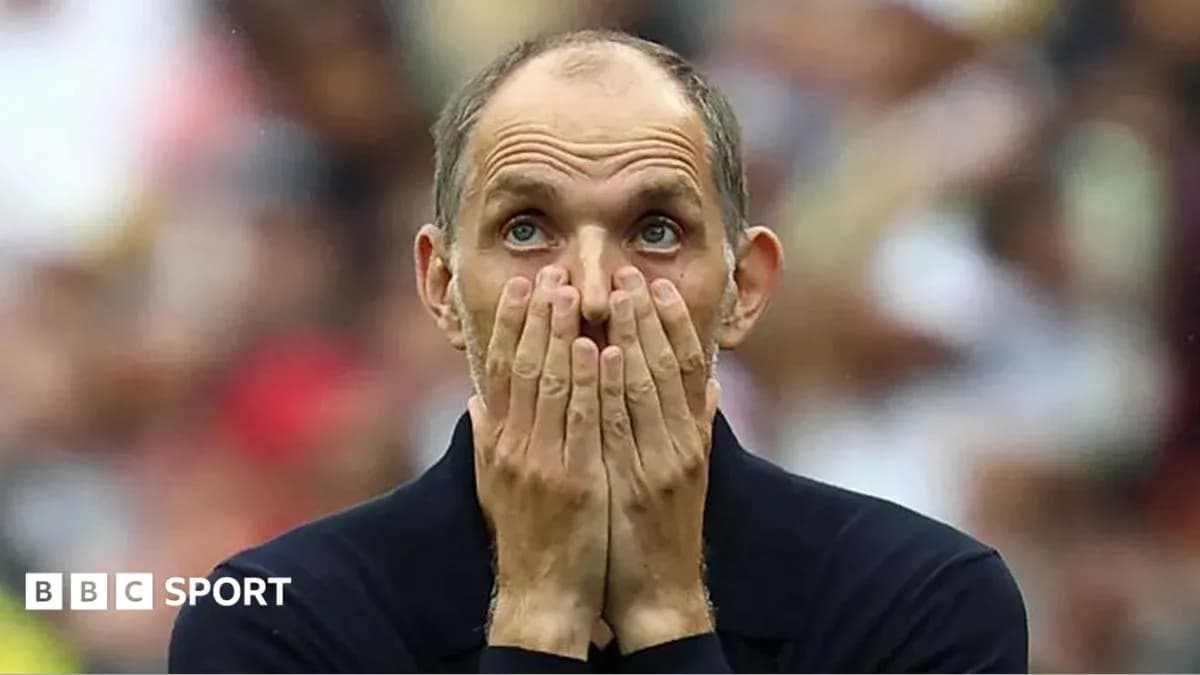
They have done the first job, topping the group and booking a place in the last 32. The table looks healthy. The performances tell a different story. Three games in, Thomas Tuchel still looks like a coach rummaging through the toolbox, searching for the right piece, the right shape, the right balance.
A Team Still in Draft
Tournament football usually rewards rhythm. England have offered turbulence instead.
Tuchel has rotated heavily, especially in the wide and full-back areas, and the consequence is obvious: no one can say with certainty what England’s best XI looks like. The search has been relentless on both flanks, with nine different full-back–winger combinations in just 270 minutes, involving eight players.
That is not experimentation at the edges. That is a manager still trying to solve the basics.
Injuries have played their part. Losing Reece James and Jarell Quansah at right-back has stripped away options and continuity, while Bukayo Saka has been playing short of full fitness. Yet the constant reshaping has come at a cost. England have not offered a steady, reliable threat out wide, and the back four has never looked entirely at ease.
Whenever opponents have gone at them, England have flinched. For a side with ambitions of going deep into a World Cup, that is a red flag.
Stars Shining Through the Static
Amid the uncertainty, a core has emerged. A spine you can trust.
Elliot Anderson was outstanding against Panama, dictating play and driving England forward. Jude Bellingham, again, looked like the player who bends games to his will, taking the man-of-the-match award on a day when England badly needed someone to seize control. Harry Kane scored, as he so often does, and with Jordan Pickford and Declan Rice, that group forms the backbone of this team.
Those are the players you can lean on when the structure around them creaks. Even when the system misfires, they carry the threat of a game-changing moment.
That was exactly what Bellingham delivered against Panama. England were not flowing, not slicing through lines, not pinning their opponents back with wave after wave of attacks. Then came a set-piece, Saka’s corner, and Bellingham turned an ordinary delivery into a decisive moment.
It was not a perfect ball. It did not need to be. Bellingham made it look better than it was with his timing, strength, balance and technique. He forced the issue. Once that header hit the net, there felt like only one winner.
You cannot build a whole tournament plan on moments of individual brilliance, but you cannot do without them either.
Wide Play Without an Edge
The next step is obvious: England need more from their structure, especially in wide areas.
Too often against Panama, Marcus Rashford and Saka drifted inside and swung in inswinging crosses – Rashford cutting in from the left onto his right foot, Saka doing the same from the opposite side. Those balls are meat and drink for centre-backs facing play. Easy to read. Easy to clear.
England looked more dangerous when they stretched the pitch instead, when wingers went on the outside and delivered from there. That is how Bellingham created Kane’s goal: a run, a driven cross, and a centre-forward who knew exactly when and where to attack the ball.
That is the pattern England must rediscover. Wide players committing defenders, full-backs offering overlaps, crosses delivered early enough for Kane and company to time their runs, not just hope for a deflection.
The feeling persists that there is more to come from this attack. The concern is that while everyone waits for the attacking fluency to click, the defensive issues keep flashing.
Fragile at the Back
Every game so far has exposed England at the back.
Croatia carved them open in the first half and scored twice. Ghana and Panama both created chances and found space in worrying areas. England survived those moments, but the warning signs are loud.
The deeper you go in a World Cup, the more ruthless the opposition becomes. The same mistakes that went unpunished in the group stage will not be forgiven in the knockouts. Better forwards will not need a second invitation.
In previous tournaments, even when England’s defence did not look world-class on paper, it at least felt settled. Partnerships were clear, roles understood, relationships built over time. This time, the back line has been in flux from the start.
That looks set to continue against DR Congo. Another new configuration is likely. Djed Spence could return at right-back, or Ezri Konsa may be asked to shuffle across from centre-back, with John Stones potentially coming in alongside Marc Guehi if he is fit enough to start.
Some of these changes are enforced. Some are gambles. Tuchel knew he was taking risks with players who have a history of injuries, and the tournament is now presenting the bill.
DR Congo and the Next Test
DR Congo will not surprise England with their approach. They are expected to follow a similar blueprint to Ghana and Panama: defend deep, pack bodies behind the ball, then break quickly when the chance comes.
For England, that means another test of patience and creativity. Another night where breaking down a low block will decide the mood around the team.
Something as simple as the quality and angle of crosses into the box could be decisive. Get it right, and Kane, Bellingham and Anderson will find chances. Get it wrong, and DR Congo will grow into the game, sensing the same defensive frailty others have already probed.
Tuchel needs more than a result now. He needs clarity. He needs a back four he can trust for more than 90 minutes at a time. The constant shuffling cannot continue if England are serious about going beyond the next couple of rounds.
The expectation inside the camp will be clear: take care of DR Congo, and then deal with Mexico or Ecuador. But if England are to turn that expectation into reality, the experimentation has to give way to stability – especially at the back.
The World Cup does not wait while you keep searching for your best team.