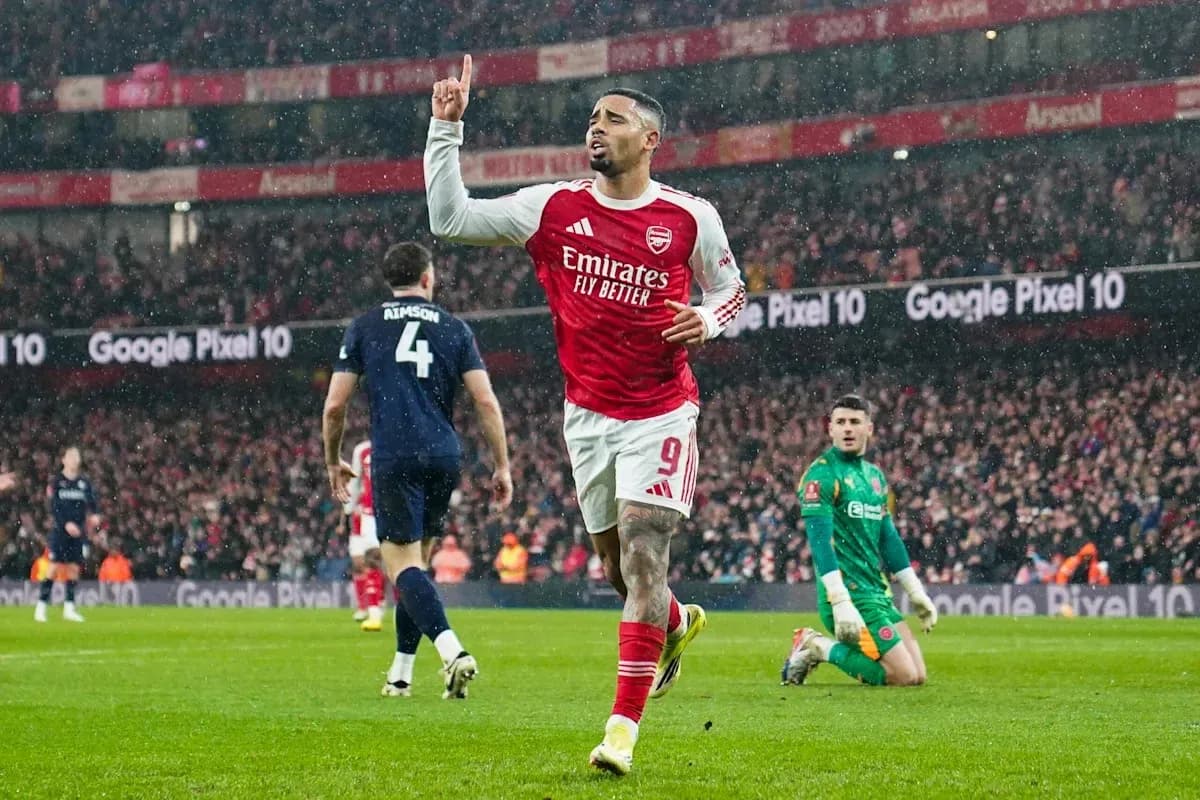
Arsenal Sets £20 Million Price for Gabriel Jesus Transfer
Arsenal have drawn a clear line in the sand over Gabriel Jesus. Pay around £20 million, or don’t bother calling.
David Ornstein’s report for The Athletic that the Premier League champions value the Brazilian at between £18m and £20m is more than a transfer tidbit. It’s a statement. Multiple clubs have asked the question about a 29-year-old whose role has shrunk, whose contract is ticking down, yet whose reputation inside elite dressing rooms remains strong.
This is not a fire sale. It’s not sentiment, either. It’s Arsenal behaving like what they now are: champions, setting their own market.
A Contract Clock That Doesn’t Dictate the Story
Jesus has 12 months left before his deal runs to June 2027, and Arsenal know exactly what that means. Letting him drift into the final year would chip away at their leverage. They also know his value to Mikel Arteta has never been measured solely in goals.
Six goals in 27 appearances last season, after a serious knee ligament injury, won’t dominate any highlight reel. One of them mattered deeply, though: the opener in the 2-1 win over Crystal Palace on the final day. Rust still on the boots, rhythm not quite there, yet the instinct remained. He still finds big moments.
Across his Arsenal career, the numbers read 32 goals and 22 assists in 123 games. Not the return of a ruthless, penalty-box killer. Not what you’d expect from the main striker at a club chasing Champions League glory and domestic dominance.
But Jesus has never been just that. His pressing, his angles of movement, his ability to drift, link, drag defenders into places they hate – these have always been part of the package. So has the emotional charge he brings to a team, the way he plays on the edge and drags others with him.
Arsenal’s stance is simple: they will not sell him cheaply. Not now. Not even with the contract situation looming into view.
“Unfinished Business” and Changing Standards
Back in December, Jesus cut through the noise himself. Asked about his future and the suggestions he should head to Saudi Arabia or back to Brazil, he was clear.
He spoke of Palmeiras as a dream for “one day”, but not now. He talked about “unfinished business” at Arsenal and said he did not want to leave.
That phrase has stuck. It chimes with how supporters see him. When he arrived from Manchester City in 2022, alongside Oleksandr Zinchenko, he didn’t just bring goals; he brought a mentality. He walked into a young dressing room with five English top-flight titles behind him and showed them what living at the summit looked like.
Arsenal changed with him. From hopeful to hardened. From promising to genuinely threatening.
But football never pauses. While Jesus has been battling injuries and form, the squad has evolved. Viktor Gyokeres and Kai Havertz now sit ahead of him in the pecking order. This season, Jesus started only three Premier League games. That tells its own story.
Sentiment stretches a long way at a club that remembers what he sparked. It doesn’t stretch far enough to override the reality of a title-winning squad trying to stay ahead of the pack.
Business, Not Brutality
So what does a summer exit look like? Not ruthless. Just logical.
If Arsenal receive close to £20m, it is shrewd work. They bank a solid fee for a player who cost significantly more, who has given them two intense seasons, and who is no longer central to the project. They free space and wages in a forward line that has moved on.
If no one meets that valuation, Arsenal keep an experienced, tactically flexible forward who can cover across the front line in a season that will again stretch resources to the limit. There is no panic here, no pressure sale. Only a clear price.
Clubs circling know the context. They see the contract. They see the injury history. They also see a forward with Premier League titles, Champions League minutes, and a sharp understanding of how to operate in the most demanding systems.
That combination is rare. It’s why Arsenal can stand firm.
More Than a Line on a Balance Sheet
For Arsenal supporters, Jesus is not just a number on a spreadsheet or a name on a departures list. He is one of the players who helped restore belief, who made the Emirates feel like a place where big days were returning, not fading into memory.
Yes, the injuries grated. Yes, the missed chances could infuriate. But the work was never in doubt. He pressed like a man chasing lost time, battled centre-backs, peeled wide to knit attacks together, and turned routine afternoons into uncomfortable ones for defenders.
At his sharpest, Arsenal looked faster, more vicious, more alive with him on the pitch.
But standards at London Colney have shifted. Arsenal are champions now, not chasers. If Gyokeres and Havertz are ahead of him, Jesus faces a stark choice: accept a squad role, or go somewhere he can lead the line again.
A £20m fee feels like the middle ground between respect and realism. It protects Arsenal’s position and acknowledges what Jesus has given them. It says: you mattered, you still matter, but the team can no longer be built around you.
If he stays, he will still have nights to influence, games to tilt, youngsters to guide. If he goes, he should leave to applause, not argument.
Because long before the trophies arrived, Gabriel Jesus helped Arsenal believe they were coming. The question now is whether his story in north London has one more chapter, or whether the “unfinished business” he spoke about gets completed somewhere else.