Arsenal's Challenge as Defending Champions: Can They Stay on Top?
Arsenal climb the mountain again. The question now is whether they can stay on the summit.
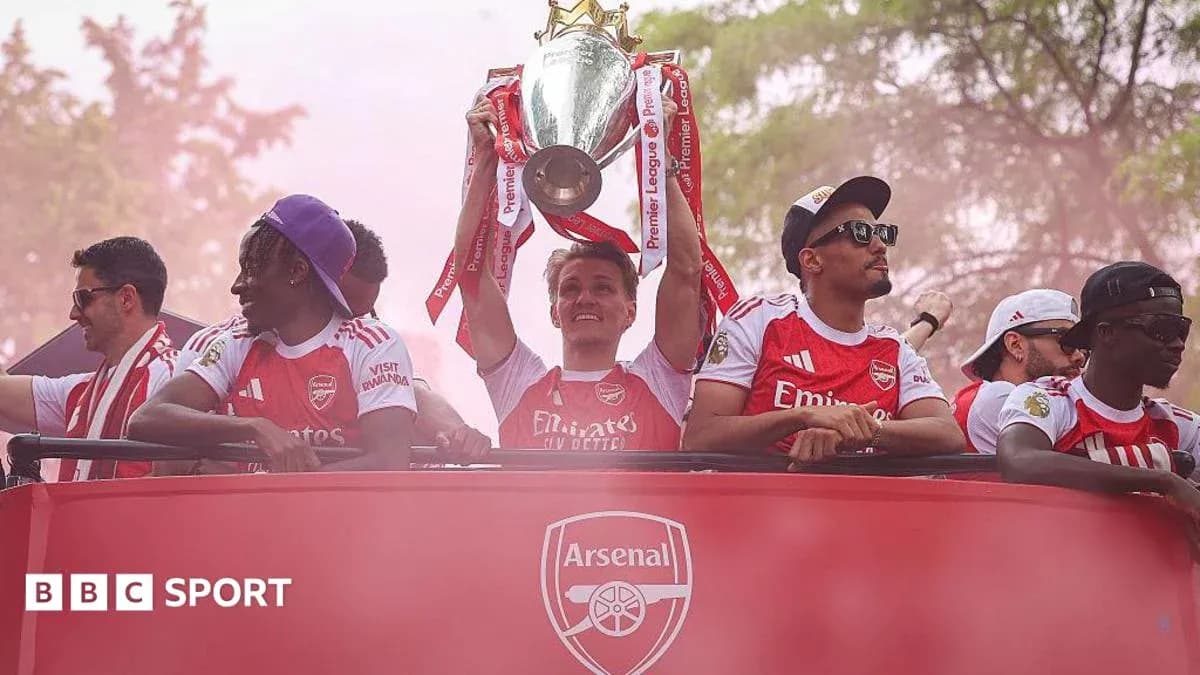
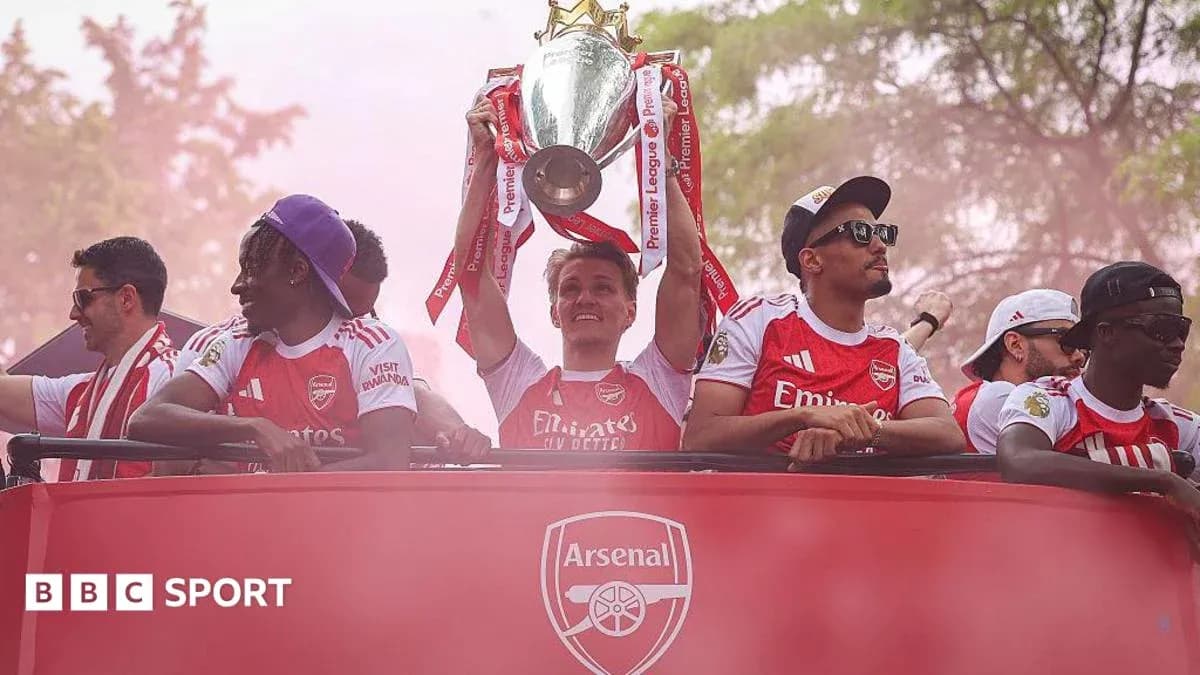
Last season ended a 20-year wait for a Premier League title and dragged the club out of the long shadow of the Invincibles. This one begins with something they have not felt since 2004-05: the weight and edge of being champions everyone wants to beat.
Arteta’s side are favourites. History, though, is far less generous.
Life as the hunted
Defending the Premier League used to be a rare art. Then Pep Guardiola walked in and made it look routine.
From his first title with Manchester City in 2017-18, he reeled off four successful defences before walking away this summer. Before him, only Sir Alex Ferguson at Manchester United and Jose Mourinho at Chelsea had ever managed back-to-back titles in the Premier League era.
Between 2009 and 2017 the trophy changed hands every single year. Eight straight seasons. No one could nail it down.
That is the landscape Arsenal are walking into. They are not just chasing excellence again; they are fighting the natural drop-off that comes once the medal ribbons are packed away.
The psychological strain is real. A title run is nine months of relentless focus, tension and pressure. The release when it’s done is enormous. Then, within weeks, the same players are told to summon the same fury and intensity, this time with a bullseye on their backs.
Leicester City felt that brutally after their 2015-16 miracle. From fairy tale champions to flirting with relegation a year later. One Foxes player captured it perfectly to the Guardian: winning the title was like climbing Mount Everest, only to be told, once you’ve staggered back down, to go straight up again.
Former Premier League winger Andros Townsend sees that same challenge staring Arsenal in the face.
"The last two times Liverpool have won the title the next season they have not been able to replicate it. They have had relatively poor seasons," he told BBC Radio 5 Live, pointing to Liverpool’s third- and fifth-place finishes after their recent triumphs. His question hangs over Arsenal too: once you finally get over the line, do you go into the summer with the same aggression, the same mentality?
Continuity in a season of upheaval
If there is an advantage for Arsenal, it sits on the touchline.
Manchester City, Liverpool and Chelsea all start this campaign under new managers. At Tottenham and Manchester United, Roberto de Zerbi and Michael Carrick are about to experience their first full seasons in charge after stepping in mid-campaign last year.
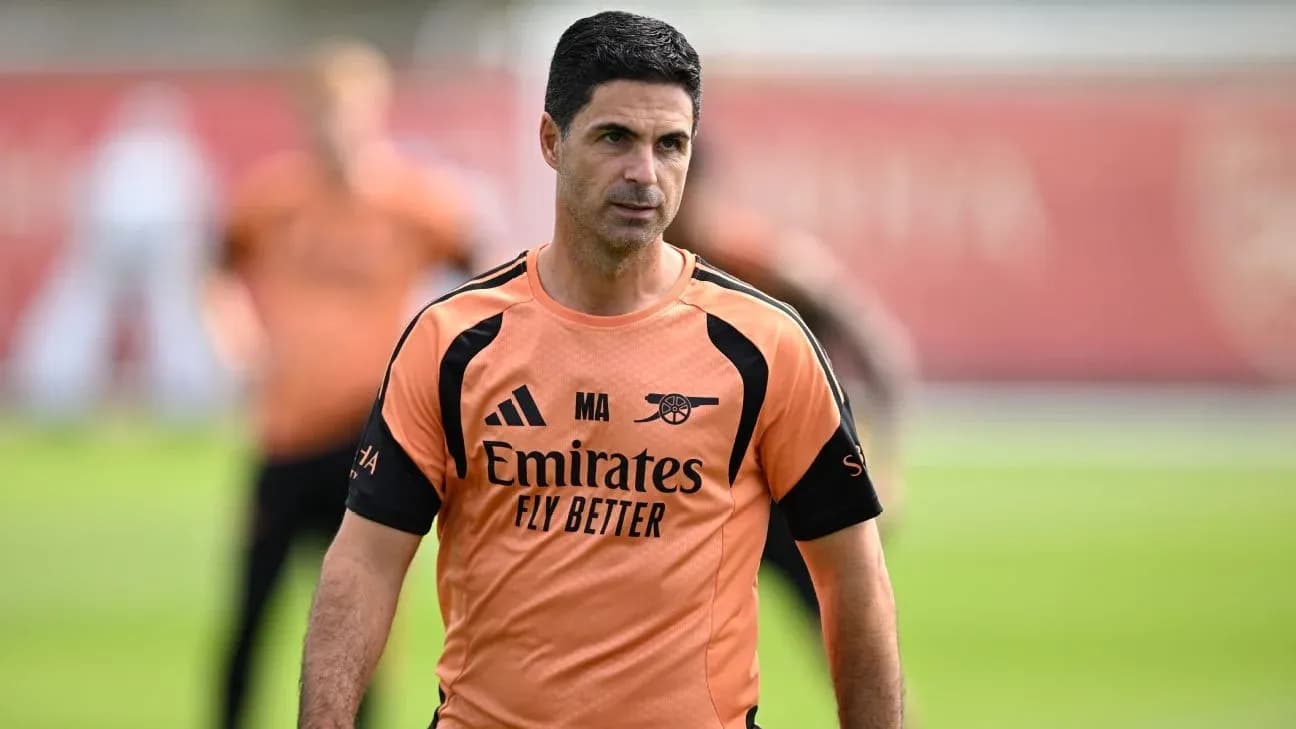
Uncertainty swirls around the dugouts of their rivals. Arsenal, by contrast, roll into August with Mikel Arteta still at the controls and a squad that looks more refined than rebuilt.
The champions have moved selectively. Greece forward Christos Tzolis arrives from Club Brugge for £34m, but the headline act is Bruno Guimaraes, prised from Newcastle United for £75m.
Arteta is convinced the Brazilian changes the temperature of his team.
"I think he describes himself as a warrior," the manager said. "I think he's a warrior with a tremendous quality as well and intuition and leadership and charisma that is going to help us, that is going to really ignite something different in the team.
"We want to go to the next level and are very, very much convinced that we're going to need players with such a personality, desire and character to push everybody inside the organisation to go even higher."
Guimaraes is the kind of signing you make when you are not just protecting what you have, but trying to stretch away from the pack.
Yet Arsenal’s preparations are not flawless.
Saliba’s shadow
The champions have taken a significant hit at the back. William Saliba is set to miss an “extended period” with a back injury suffered at the World Cup.
His partnership with Gabriel Magalhaes underpinned Arsenal’s defensive consistency last season. They were the calm at the heart of the storm. Even with a move for Ezri Konsa in the works, the length of Saliba’s absence could shape the entire title race.
You can replace legs. Replacing that understanding, that timing, that quiet authority, is another matter.
Rivals reshaped
While Arsenal lean into continuity, the clubs chasing them have chosen disruption.
Chelsea have gambled big on one of the most coveted young coaches in Europe. Xabi Alonso arrives with his reputation still glowing from a historic, unbeaten domestic double with Bayer Leverkusen in 2023-24. He now has a Chelsea squad that looks far more coherent than in recent chaotic summers.
England forward Morgan Rogers, 24, has smashed the club’s transfer record with a £117m move from Aston Villa. France defender Maxence Lacroix, 26, strengthens the back line for £52m. New £47m full-back Marco Palestra, 21, has been one of the standout performers in pre-season. Around that young core, two Premier League veterans, Jordan Henderson, 36, and Danny Welbeck, 35, have been brought in to knit a youthful dressing room together and enforce standards.
At Manchester City, Enzo Maresca inherits a dynasty and a problem. He has the structure, the culture and a squad used to winning. He also faces the likely loss of Rodri, Spain’s World Cup player of the tournament and the heartbeat of City’s midfield. Elliot Anderson has joined from Nottingham Forest for £116m, and Chelsea’s Enzo Fernandez could yet arrive to fill Rodri’s role, but that is a huge personality and skill set to replace in one summer.
Manchester United have moved with a different kind of precision. They weakened a direct rival by taking Youri Tielemans from Aston Villa for £35m and added Andrey Santos from Chelsea for £48m, with the Brazilian impressing in pre-season. Carrick’s midfield looks more balanced, more varied, and crucially, more his.
Aston Villa, Europa League winners just three months ago, have been ripped and rewired. Rogers, Tielemans and Lucas Digne – all starters in that final – have gone. In their place: Johan Manzambi from Freiburg for £59.5m, Joao Gomes from Wolves for £38m, and Alejandro Garnacho on loan from Chelsea. Behind the scenes, three coaches have departed, including set-piece specialist Austin MacPhee, who has followed the money and the project to Chelsea.
Liverpool, champions two seasons ago, now belong to Andoni Iraola. His side has been bolstered by centre-back Jeremy Jacquet from Rennes for £60m, versatile defender Ronald Araujo on loan from Barcelona, and 22-year-old forward Victor Munoz. The pieces are intriguing; the pre-season results have been mixed. Iraola’s Liverpool might need time before they look like contenders again.
Tottenham, after a couple of years drifting, are trying to punch their way back to the elite. De Zerbi has sanctioned more than £200m in spending, bringing in Sandro Tonali from Newcastle for £100m, Mateus Fernandes from West Ham for £85m and Jan Paul van Hecke from Brighton for £52m. The intent is loud. The question is whether it clicks quickly enough.
The opening stretch
Titles are not won in the first month, but they can be complicated there.
Opta’s global power rankings, which grade more than 13,500 domestic teams worldwide, have been used to measure the difficulty of every Premier League club’s first five fixtures. Among the likely contenders, Manchester United come out with the softest landing.
Arsenal and Manchester City, the two heavyweights of last season’s race, are rated to have identical levels of difficulty in their early run.
Arsenal open by hosting Coventry, then travel to Aston Villa, face Chelsea at home, and go to Sunderland and Brighton. It is not brutal, but it is not a stroll either. Villa away and Chelsea at home will test their sharpness and their nerve as defending champions.
City start with Bournemouth at home, then head to Crystal Palace, host Coventry, go to Old Trafford for the Manchester derby, and finish that block against Sunderland at the Etihad. Maresca’s first statement as City manager will be judged in that stretch.
So the stage is set. Arsenal stand at the foot of the same mountain they just conquered, this time with everyone watching, everyone plotting, everyone swinging for the champions.
Can Arteta’s “warriors” go again, or does the Premier League’s old habit of toppling kings reassert itself?