Argentina's Journey to the Final: Messi and Lautaro Shine
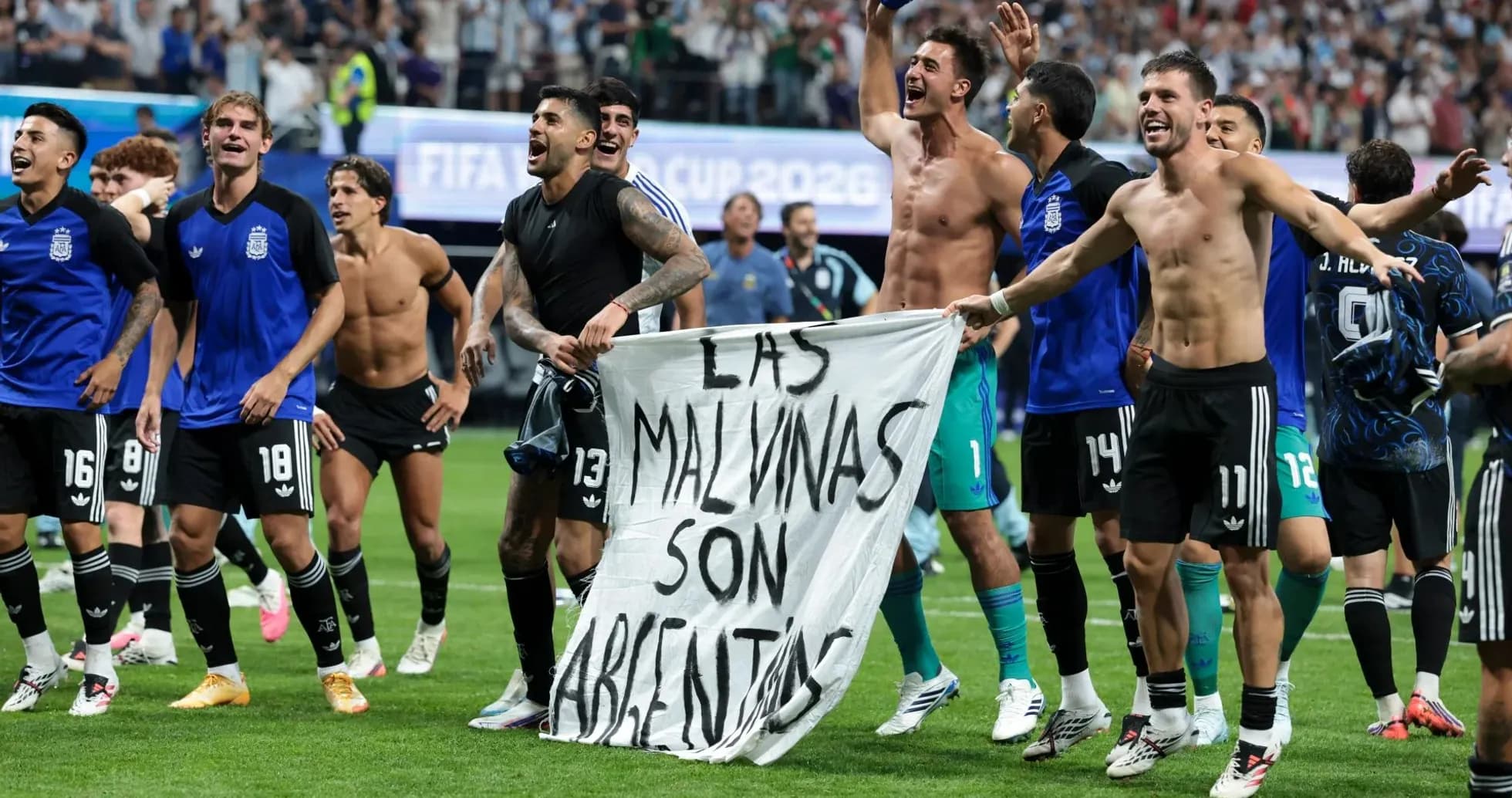
Argentina are back where they believe they belong: in a final, chasing another trophy, still dragged there by the left foot of Lionel Messi and the ruthless instincts of Lautaro Martínez.
Against England it looked, for long stretches, like the story might finally change. It didn’t. Not even close.
Another comeback, another scar for England
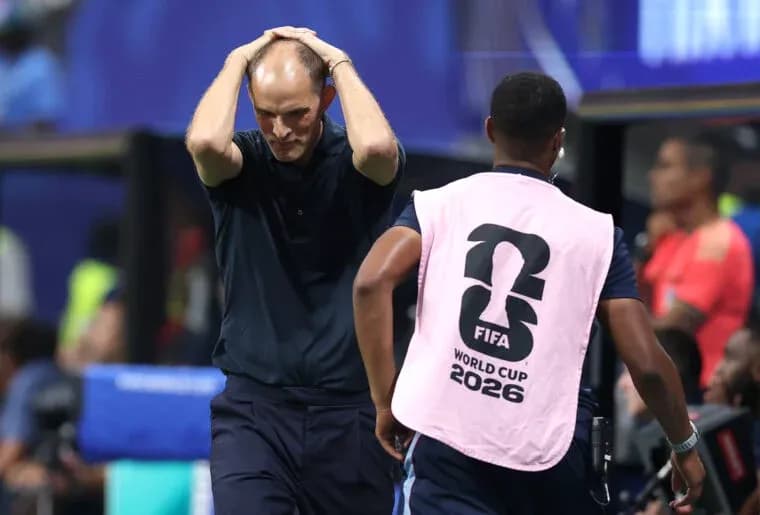
Anthony Gordon’s goal had tilted the semi-final England’s way, a rare moment when Argentina’s back line lost its bearings and paid for it. England smelled blood. The game slowed to their rhythm, the crowd started to believe this might be the night they finally flipped history on its head.
Then Messi decided otherwise.
The captain, once again, did not dominate from the first minute. He waited. He measured. He picked his moments with the cold precision that has defined the late phase of his career. When the pressure on Argentina seemed to be suffocating, he slipped the first knife in: a brilliant assist that opened the door for Enzo Fernández in the 85th minute.
The equaliser shattered England’s control. It did more than level the score; it shifted the entire emotional weight of the match. England, who had been managing the lead, suddenly had to live with the ghosts of every collapse, every near miss, every “what if” that follows them into tournaments.
Argentina, by contrast, smelled the familiar scent of chaos – and they thrive in it.
El Toro’s moment
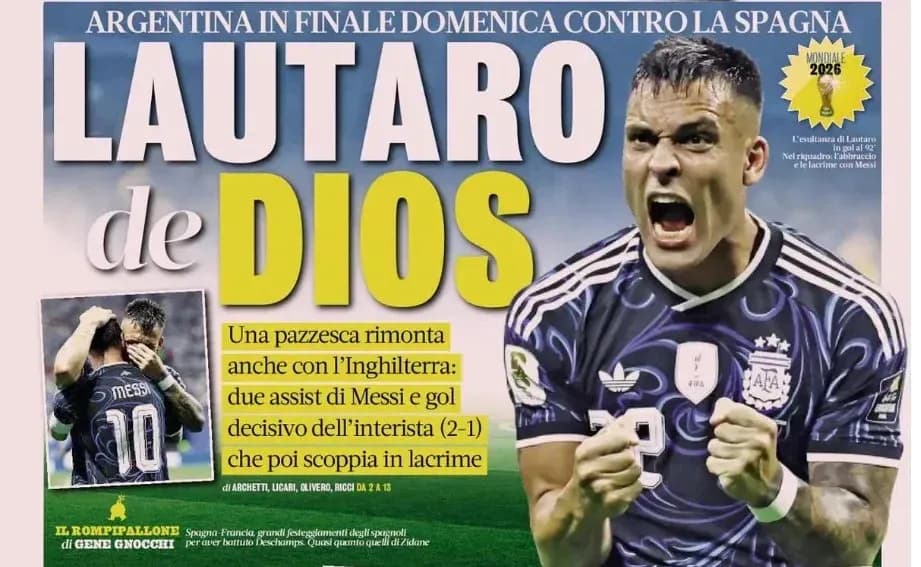
The winner came the way it so often does for this team now: Messi supplying, Lautaro finishing. Another assist from the No. 10, another decisive touch from the Inter striker, this time with his head. A 2-1 turnaround, carved out in the dying minutes, with Argentina again walking that tightrope between desperation and destiny.
Lautaro’s reaction told its own story. When the final whistle went, the match-winner broke down in tears. This was not just another goal. This was the strike that sent Argentina into a final against Spain on Sunday, the continuation of a cycle that started in Qatar and refuses to fade.
For England, it was a brutal echo of old wounds. For Argentina, it was confirmation: this team still knows how to suffer, still knows how to hurt you when it matters most.
World champions against European champions
Now the stage shifts to East Rutherford. On Sunday, Argentina, the reigning world champions, will face Spain, the European champions, in a final that feels like a clash between two fully formed footballing ideas.
Spain do not flinch. Under Luis de la Fuente, they have built a system that looks drilled and confident, a structure that keeps producing solutions when matches tighten. The lessons of their recent past have hardened them, not broken them. They arrive without the emotional chaos that surrounds Argentina, but with a calm, winning mechanism that has carried them this far.
Argentina arrive with something different. They bring Messi’s aura, Lautaro’s edge, and a squad that has made late comebacks and high-wire escapes feel almost routine. They also bring the weight of expectation: world champions expected to confirm their status against Europe’s finest.
One misstep, and that whole narrative shudders.
Messi, still the axis
Messi remains the axis around which everything turns. Two assists against England, both at the precise moment Argentina needed clarity. He no longer runs every minute of every match. He doesn’t have to. He chooses his interventions, and when they come, they tilt games, tournaments, destinies.
Behind him, Lautaro has grown into the role of decisive finisher. The Inter forward’s goal did not just decide a semi-final; it underlined his transformation into a leader in the most unforgiving moments. When the ball fell his way, there was no hesitation, only the certainty of a player who now expects to decide the biggest matches.
On Sunday, they will face a Spanish side that does not fear names, only spaces and structures. De la Fuente’s work has given Spain a clear identity and a series of automatisms that rarely break under pressure. They will test Argentina’s defensive balance and emotional control in ways England could not sustain for 90 minutes.
Italy watches its own battles
While Argentina and Spain prepare for a heavyweight final, Italian football moves to its own tense rhythm.
At national-team level, Paolo Maldini has made his choice: he wants Andrea Pirlo. The technical director has identified the former midfield maestro as his preferred option for the future of the Azzurri bench. The decision, though, does not rest solely with him. The ball now rolls into the court of Giovanni Malagò and the federation, with Serie A clubs watching on and harbouring their doubts about the direction and timing of such a move.
In the transfer market, the usual summer chessboard is starting to light up.
Juventus are working on multiple fronts. There is movement around Franck Kessié, with talks progressing on the basis of a discounted deal and an offer of around 4.5 million in salary on the table. The club is also hunting funds to move for Jhon Lucumí, with defensive reinforcements a clear priority.
Up front, Juve’s attack continues to provoke debate. Fabrizio Ravanelli has thrown a grenade into the conversation, calling for the club to “sign Emegha” and to draw a line under the Dusan Vlahovic chapter. At the same time, there is an embrace of sorts between Rasmus Hojlund and Massimiliano Allegri, a nod to the coach’s appeal for a forward who fits his demanding tactical framework.
Between the posts, the first choice remains Emiliano “Dibu” Martínez, but the Aston Villa wall is complicated to move. That reality has pushed Juve to explore an alternative: Guglielmo Vicario. Contacts have been made with the Tottenham goalkeeper through Luciano Spalletti’s staff, a sign that the national-team environment and club strategies are starting to overlap. In attack, an agreement for Parma’s young striker is edging closer, another piece in a squad that needs both renewal and reliability.
Inter, for their part, have launched a swift operation of their own. The Nerazzurri have moved decisively for Djed Spence and Romero, seeking to reinforce depth and athleticism in key areas. Spence has already said yes to Cristian Chivu’s project, a step that underlines Inter’s intent to stay ahead in a league where every top side is recalibrating.
Pressure, protests and temptations
Away from the giants, the tension is no less real.
At Torino, the fans’ anger has erupted. Discontent that had been simmering has finally boiled over, fuelled by frustration at the club’s sporting direction and perceived lack of ambition. The atmosphere around the Granata has turned heavy, and the coming weeks will test the board’s ability to respond with more than just words.
In Milan, the waters are far from calm. Christian Pulisic has stirred the environment, his presence and performances adding both excitement and pressure to a club still trying to find its exact path in the post-Scudetto cycle. At the same time, Nicolò Zaniolo has emerged as a temptation for the Rossoneri, a talent with obvious upside but a complex recent history. It is the kind of move that could redefine a season – in one direction or the other.
And while all this unfolds, Ferdinand has made his prediction clear: Manu Koné, he insists, will join Manchester United. Another piece in a transfer market that is becoming more aggressive by the day.
A game that never stops
On Sunday in East Rutherford, Argentina will try to confirm their status as world champions against a Spain side that has rebuilt itself into a ruthless machine. One team leans on emotion and genius, the other on structure and repetition.
Somewhere between Maldini’s bet on Pirlo, Juve’s pursuit of Dibu and Vicario, Inter’s blitz for Spence and Romero, Torino’s fury and Milan’s temptations, Italian football will be watching.
If Argentina lift another trophy and Messi and Lautaro write one more chapter, how long can the rest of Europe pretend this era is fading rather than tightening its grip?