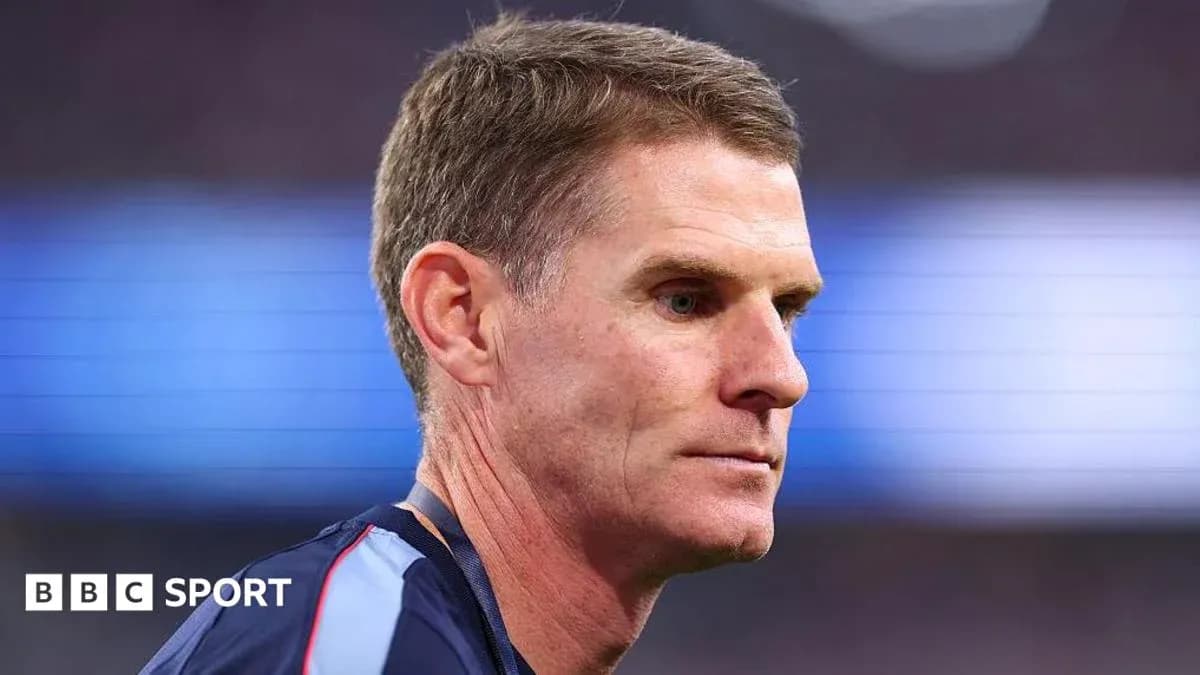
Anthony Barry's Candid Insights During World Cup Half-Time
Anthony Barry will continue fronting England’s televised half-time interviews at the World Cup, despite his strikingly blunt assessment of the team’s first 45 minutes against Croatia.
The assistant coach did not sugar-coat what he had seen in Dallas with the score locked at 2-2. His words cut through the usual World Cup gloss and caught plenty of viewers off guard. Yet inside the England camp, there is no sense of a problem – and no plan to change course.
Honest voice in a tight window
The new broadcast feature, where teams are asked – but not compelled – to provide a coach or player for a brief interview during the interval, has been handled in different ways across the tournament. Some nations send the head coach, some a substitute, some treat it like a formality, others like a genuine insight.
England have made a clear call: Thomas Tuchel’s precious half-time window will not be spent in front of a camera. Nor will that burden fall on players trying to reset for the second half. Barry, trusted and tactically central, has been given the job.
Tuchel is understood to welcome the arrangement and, crucially, the tone. The England head coach sees value in Barry’s candour rather than risk in it. His assistant’s comments after the chaotic first half against Croatia have not raised any internal alarm.
“Complicated and confusing”
Asked live on air to assess the opening period in Dallas, Barry delivered a cool, detailed critique.
“Overall, a complicated and confusing first half from us really,” he said, pointing to “a lot of nervous energy early on” and suggesting that such tension might be “accepted and maybe expected in the opening game of a World Cup.”
From there, he highlighted decision-making as the main fault line. England, he argued, repeatedly chose the wrong option on the ball: going long when the situation called for a short pass, playing short when the space begged for something more direct. They failed to exploit the gaps that would have allowed them to “accelerate our game the way we wanted to.”
The pressure of the occasion seemed to cling to them. Even the early penalty, which might usually loosen shoulders and clear minds, did not bring the freedom he wanted to see. “You’d think the penalty would free us up and allow us to play more like us and look more like ourselves,” he said, “but again we fall back into some fearful patterns.”
Set-pieces, long a reliable weapon for England, again offered a lifeline. The second goal arrived from dead-ball strength and Barry admitted there was a hope that would finally unlock the performance. Instead, Croatia’s late equaliser before the break left England with problems to address and little time to do it.
“Now we have to speak about that at half-time,” he concluded, summing up the mood as much as the tactical brief.
England ultimately surged to a 4-2 victory in the second half, but the rawness of Barry’s mid-game appraisal lingered. Outside the camp, some questioned whether such openness was wise. Inside it, his words were seen as an honest reflection of what the staff were already discussing.
For now, the plan remains: Barry will keep talking. The cameras will keep rolling. And England will keep using those 15 minutes in the dressing room exactly as they see fit.
Rashford fitness under watch
Away from the touchline and the television mics, England’s medical team are monitoring Marcus Rashford ahead of Tuesday’s meeting with Ghana.
The forward stepped off the bench in Dallas to score England’s fourth goal, capping the comeback and underlining his value as an impact option. After the game, though, he reported muscle discomfort and some soreness.
There is optimism that the issue is minor and should not rule him out of contention against Ghana, but his workload will be managed carefully in the coming days as England balance short-term needs with the demands of a long tournament.