AC Milan vs Atalanta: Key Serie A Clash for Champions League Spots
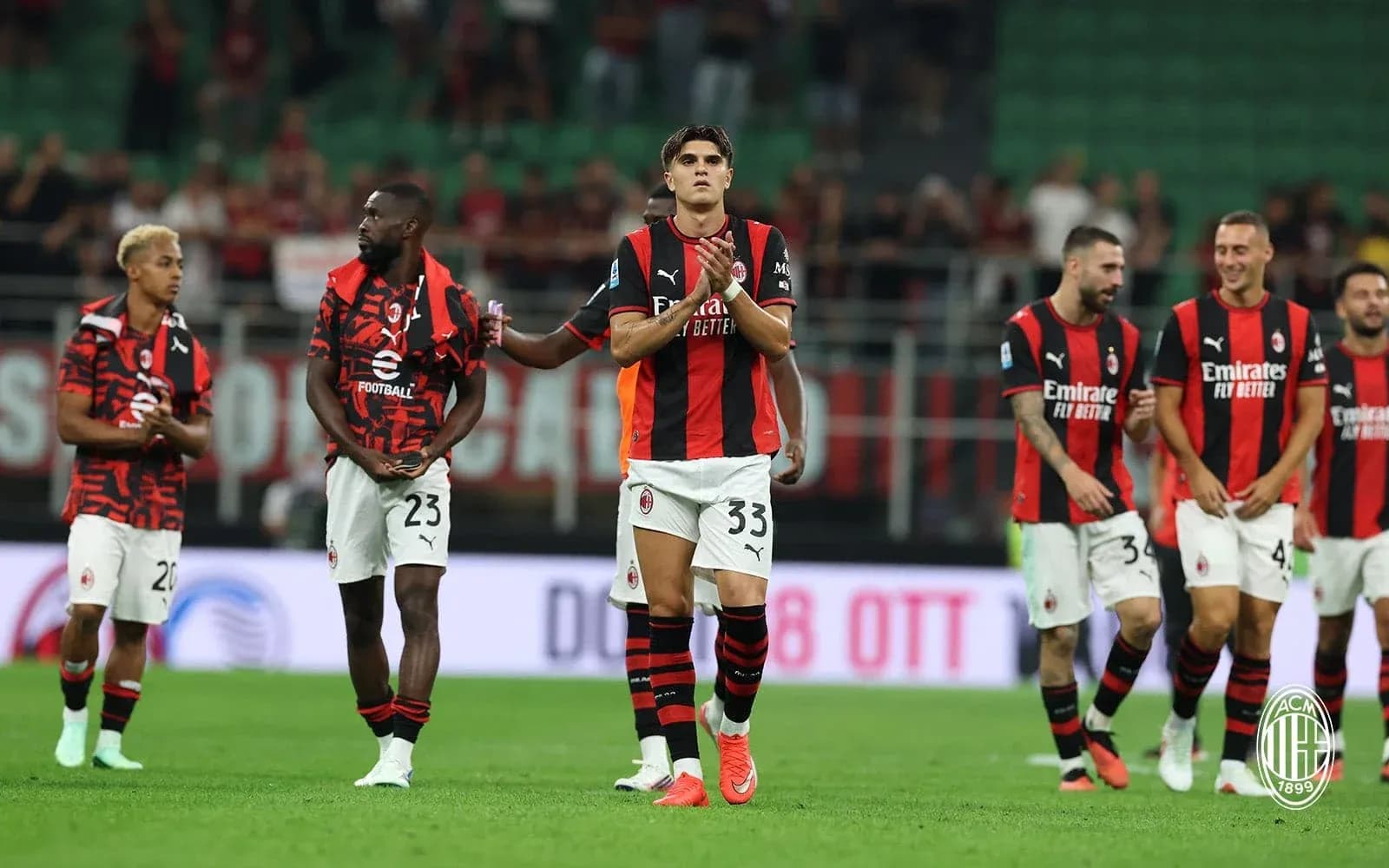
With three rounds left in Serie A 2025, AC Milan host Atalanta at Stadio Giuseppe Meazza in a high‑leverage Regular Season - 36 clash. In the league phase, Milan sit 3rd on 67 points with a +19 goal difference (48 scored, 29 conceded), needing to lock in Champions League qualification and keep faint title hopes alive. Atalanta, 7th on 55 points with a +15 goal difference (47 scored, 32 conceded), are chasing European spots, so this is a pivotal late‑season six‑pointer for both sides.
Head-to-Head Tactical Summary
Recent meetings show a finely balanced but slightly Atalanta‑tilted matchup. On 28 October 2025 at Gewiss Stadium in Serie A (Regular Season - 9), Atalanta and AC Milan drew 1-1, with a 1-1 scoreline already at half-time. Earlier in 2024 Serie A, on 20 April 2024 at Stadio Giuseppe Meazza (Regular Season - 33), Atalanta won 1-0 after a 0-0 first half, underlining their ability to manage tight away games in Milan. On 6 December 2024 at Gewiss Stadium (Regular Season - 15), Atalanta again edged it 2-1, having been level 1-1 at the break. Going back to 25 February 2024 at Stadio Giuseppe Meazza (Regular Season - 26), the sides drew 1-1, with the same 1-1 score at half-time. In cup play, Atalanta knocked Milan out of the Coppa Italia on 10 January 2024 in the quarter-finals at Stadio Giuseppe Meazza, winning 2-1 after a 1-1 first half. Across these five matches, Atalanta have two wins (one league, one cup), three draws, and have repeatedly found a way to score in Milan, suggesting a matchup where Milan’s home advantage is not decisive on its own.
Global Season Picture
- League Phase Performance: In the league phase, AC Milan’s 3rd place is built on 19 wins, 10 draws and 6 losses from 35 games, with 48 goals for and 29 against, reflecting a controlled defense (0.8 goals conceded per match) and a solid but not explosive attack (1.4 goals scored per match). Atalanta, 7th, have 14 wins, 13 draws and 8 losses, with 47 goals for and 32 against, indicating a balanced side with similar attacking output (1.3 goals per match) but slightly looser at the back (0.9 goals conceded per match).
- All-Competition Metrics: Across all phases of the competition, Milan’s profile is that of a compact, efficiency‑oriented team: 48 goals scored and 29 conceded over 35 fixtures, averaging 1.4 goals for and 0.8 against, plus 15 clean sheets and only 7 matches without scoring. Their card profile shows concentration of yellow cards late in games (notably 23.21% in minutes 76-90), hinting at rising defensive intensity under pressure. Atalanta, across all phases, mirror Milan’s attacking volume with 47 goals in 35 matches (1.3 per game) but concede slightly more at 32 (0.9 per game), with 13 clean sheets and 7 matches without scoring. Their yellow cards also spike in the final quarter (24.07% in minutes 76-90), consistent with a team that defends aggressively in closing phases. Both sides show strong penalty efficiency, converting 100% of their spot-kicks so far (Milan 5/5, Atalanta 3/3), which reinforces the importance of penalty‑area incidents in a tight contest.
- Form Trajectory: In the league phase, Milan’s immediate form string of “LDWLL” signals a downturn: one win, one draw and three losses in their last five, pointing to a team that has recently regressed from its season-long defensive solidity and consistency. Atalanta’s “DLDLW” form is also mixed, with one win, two draws and two losses in the last five league matches, but the higher draw frequency underlines their tendency to keep games close and accumulate points even when not at peak performance. Milan enter this match as the higher‑performing side over the full season but with more negative recent momentum; Atalanta arrive less consistent overall yet tactically resilient.
Tactical Efficiency
Across all phases of the competition, Milan’s efficiency is defined by a strong defensive base (0.8 goals conceded per game and 15 clean sheets) and a moderately productive attack (1.4 goals per game), aligning with a profile of a controlled, low‑risk side that often wins by narrow margins. Atalanta’s 1.3 goals scored and 0.9 conceded per match show a slightly more open game state, with a marginally weaker defense but comparable attacking output. Without explicit numerical attack/defense indices from the comparison block, the qualitative picture is that Milan’s “defense index” is higher relative to their attack, while Atalanta’s indices are more evenly balanced, with a small tilt toward offensive risk‑taking. In a probabilistic framework, this typically translates into Milan having a higher likelihood of low‑scoring wins and Atalanta having a higher likelihood of matches drifting into score draws or 2-1 type outcomes. The recent head-to-head data, with multiple 1-1 results and narrow Atalanta wins (2-1, 1-0), is consistent with these season-long efficiency patterns.
The Verdict: Seasonal Impact
For AC Milan, a home win would be season‑defining: it would consolidate 3rd place in the league phase, keep them firmly on course for Champions League qualification, and potentially maintain pressure on the top two if results elsewhere open a late window in 2026. Dropped points, however, would extend a poor recent run and risk pulling them into a congested Champions League race, where their earlier defensive excellence (29 goals conceded) might not be enough to offset a loss of momentum. For Atalanta, victory at Stadio Giuseppe Meazza would significantly boost their push toward European qualification, narrowing the gap to the top six and leveraging their strong head-to-head record in Milan. A draw would keep them in contention but likely leave them needing near‑perfect results in the final two rounds. Given both teams’ similar attacking output across all phases and Milan’s superior defensive numbers, the seasonal impact is clear: Milan are playing to protect and validate a Champions League‑level campaign, while Atalanta are playing to transform a solid, balanced season into one that finishes inside the European places. The match is therefore a high‑impact late‑league fixture with direct consequences for the Champions League and broader European race, even if it is unlikely to be decisive in the title fight itself.