2026 World Cup: Seven Nations Battle for Glory
Seven nations remain. One World Cup to win. And as the 2026 tournament hits its sharpest edge on North American soil, Europe has formed a near-monopoly on the final stretch — with one luminous exception in sky blue and white.
Argentina stand alone for South America. The rest of the contenders come from a continent that treats this trophy like family silver.
What’s left now are giants, rising powers, and a couple of sides who were never supposed to get this far.
France – Mbappé chasing history
France are already waiting in the semi-finals, job done early after a controlled 2-0 dismissal of Morocco on Thursday. Two-time world champions, unbeaten, and now within two wins of a historic hat-trick of titles.
Les Bleus have cut a clean path through this World Cup. They swept Group I with a ruthless calm: Senegal beaten 3-1, Iraq brushed aside 3-0, Norway taken apart 4-1. In the knockouts, they barely flinched. Sweden folded 3-0, Paraguay were edged 1-0, then Morocco were pushed out of the way.
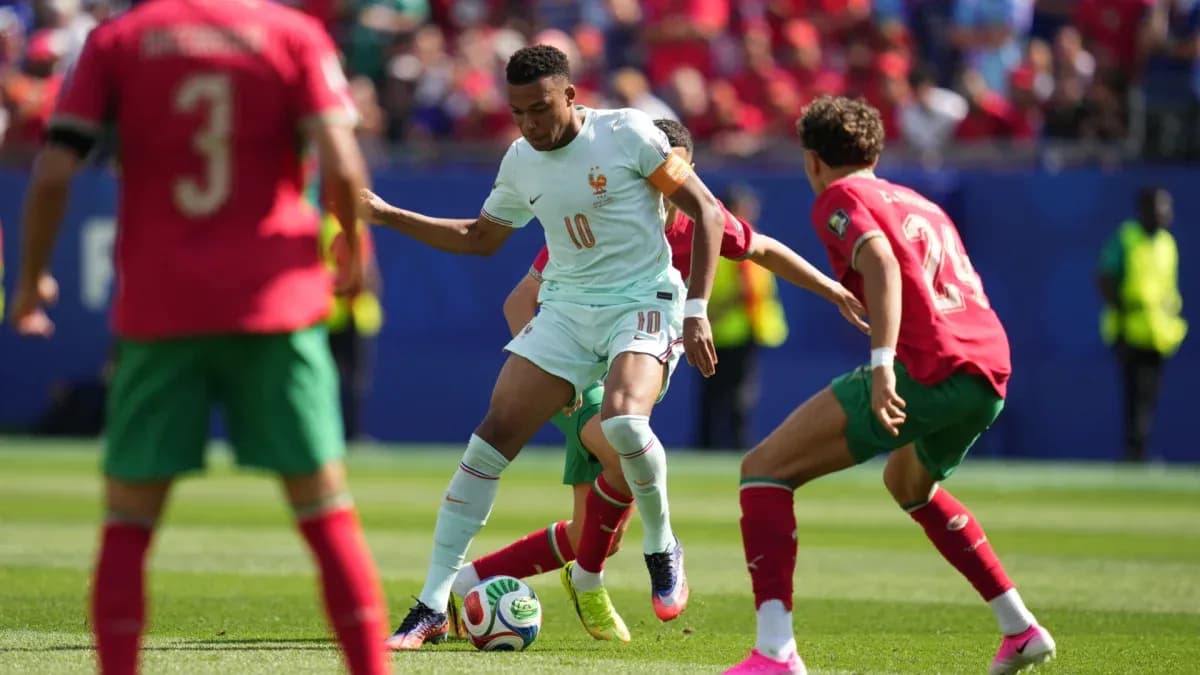
At the centre of it all, as always, is Kylian Mbappé.
France’s captain is already his country’s all-time leading scorer, and in this tournament he has gone into overdrive. No player has scored more goals at this World Cup so far, and he has now drawn level with Lionel Messi on 17 non-penalty World Cup goals across his career. That is territory usually reserved for myths, not 27-year-olds still accelerating through their prime.
He insists Messi and Cristiano Ronaldo remain above him. On current evidence, he is sprinting in their slipstream.
Mbappé did scare France for a moment with an ankle injury against Morocco, but he has declared himself “completely fine.” For France, and for a tournament that increasingly feels like it’s bending towards his orbit, that matters.
Next stop: AT&T Stadium in Dallas on Tuesday, July 14. The only detail missing is the name of the team brave enough to stand in front of him — Spain or Belgium.
Spain – La Roja’s new era, Yamal’s stage
Spain arrive at SoFi Stadium on Friday with the familiar weight of expectation and a sense that something is building again.
La Roja, world champions in 2010, are officially the second-best team on the planet according to FIFA’s rankings, behind only Argentina. Their campaign has been steady rather than spectacular, but it has the feel of a side growing into the tournament.
Group H started with frustration: a 0-0 stalemate with Cabo Verde. Then the engine warmed. Saudi Arabia were swept aside 4-0, Uruguay squeezed out 1-0. In the knockouts, Spain found a more ruthless edge, dismantling Austria 3-0 and edging out Portugal 1-0 in a heavyweight Iberian clash.
Now comes Belgium in Los Angeles, with a semi-final against France the prize.
The name on everyone’s lips is Lamine Yamal. Just 18, the right winger has only recently come back from a hamstring issue and admitted before the tournament that he was still short of being able to play 90 minutes at full throttle. It has barely mattered. His talent has already been evident in previous competitions, and every touch in this World Cup carries the sense of a career about to explode.
Spain have had great midfielders, metronomes, pass masters. This time, their cutting edge might come from a teenager on the flank.
Belgium – Lukaku against the doubters
Belgium were supposed to be past their golden generation. Too late, too old, too often disappointed. Then they walked into a packed American stadium and tore up the script.
Their 4-1 demolition of the United States on Monday did more than silence a home crowd. It ripped the hosts out of their own World Cup and ignited Belgium’s campaign in one ferocious night.
That match carried its own circus. Folarin Balogun’s red card suspension was lifted by FIFA so he could play, a decision Donald Trump publicly claimed a role in. Betting markets swung towards the U.S., the narrative primed for a heroic home win.
Belgium ignored all of it.
They had already navigated a tricky Group Stage with draws against Egypt (1-1) and Iran (0-0), before a 5-1 thumping of New Zealand reminded everyone what they can do when they click. In the knockouts, they edged Senegal 3-2 and then dismantled the U.S. 4-1.
Rudi Garcia’s words after that win were telling: “Everyone thinks [they] are going home.” His players clearly heard it as a challenge.
At the heart of their resurgence is Romelu Lukaku, still the country’s all-time top scorer and still rewriting records. He has scored in each of Belgium’s last three World Cup matches, all from the bench, making him the first player in World Cup history to score as a substitute in four separate games.
He is no longer the fresh-faced prodigy. He is something more dangerous: a forward with a point to prove and a taste for proving it.
Spain await. So does the chance to meet France. Lukaku has never been one to shy away from a stage like that.
Norway – Haaland drags a nation into the light
Norway were not meant to be here. Not really. Not in the quarter-finals, not one game away from a World Cup semi-final, not rewriting their own history with every whistle.
Yet here they are, preparing to face England at Hard Rock Stadium in Miami on Saturday, July 11, in what is already their best-ever World Cup performance.
Drawn in Group I with France, Norway took an early punch, losing 4-1 to the reigning champions. Instead of folding, they sharpened. Iraq were beaten 4-1, Senegal edged 3-2. In the knockouts, Côte d’Ivoire were sent home 2-1, Brazil followed by the same scoreline. Each step has carried a sense of a team discovering its own ceiling — and then stepping through it.
The reason is obvious, and yet it still feels astonishing.
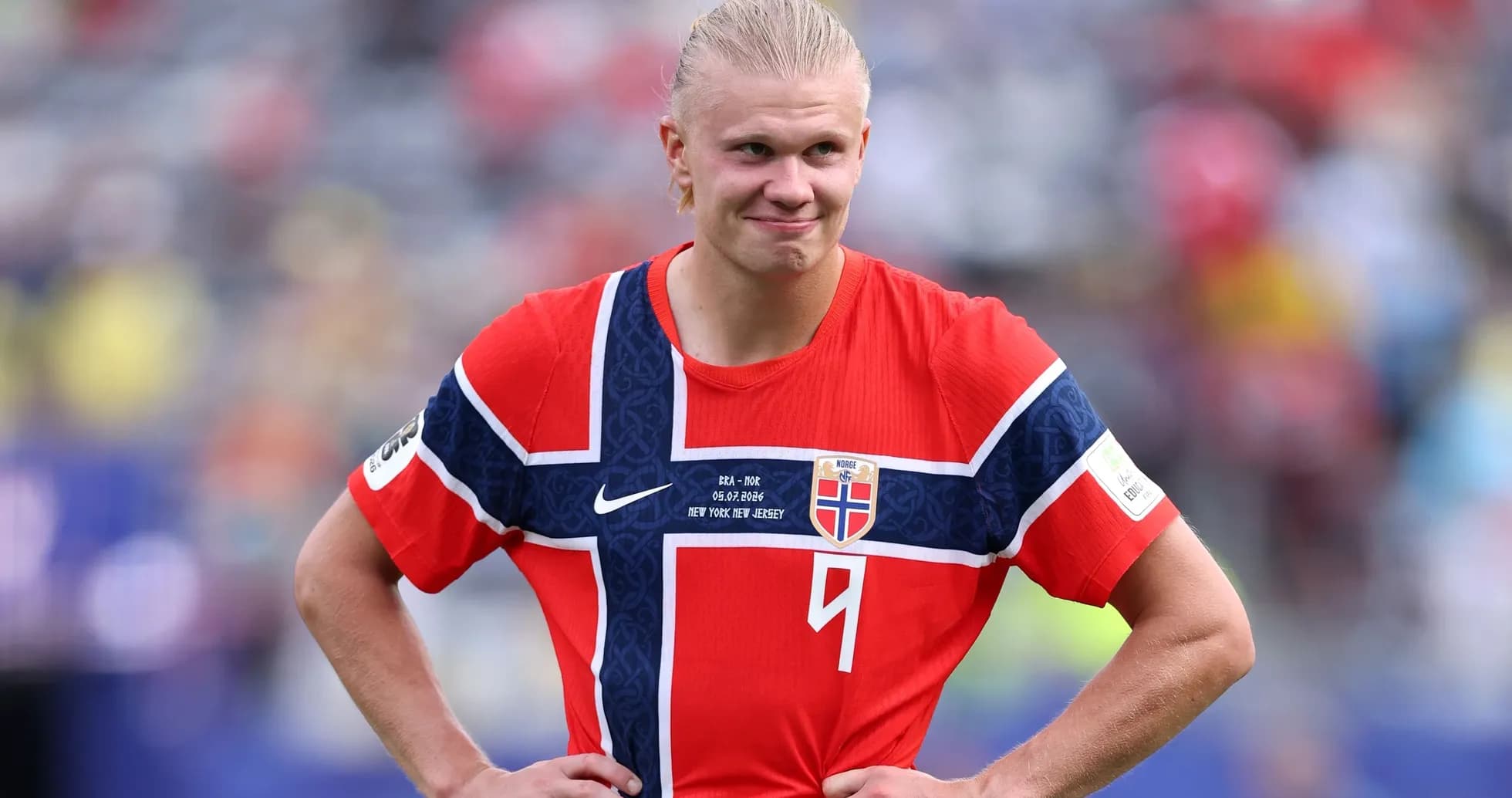
Erling Haaland has turned Norway from plucky outsiders into genuine threats. The striker is already his country’s all-time top scorer and has produced a staggering return at international level: 60 goals in 53 senior games. He reached his 60th in the win over Côte d’Ivoire. Messi and Ronaldo both needed more than double that number of matches to hit the same mark.
He brushes away comparisons with those two icons, just as Mbappé does. The numbers refuse to be polite.
Haaland has become the spearhead of a team that suddenly believes it belongs on this stage. Now he walks into a quarter-final against England, with the chance to tilt the tournament on its axis.
England – Kane’s chase for one more crown
England have spent years talking about “the next World Cup.” Now they are three wins from making this one theirs.
The Three Lions arrive in Miami knowing exactly what is at stake: beat Norway on Saturday and they will face the winner of Argentina vs Switzerland for a place in the final.
Their route through Group L was workmanlike, occasionally slick, occasionally stubborn. Croatia were beaten 4-2 in a wild opener, Ghana held them to 0-0, Panama were handled 2-0. In the knockouts, England showed their resilience, edging the Democratic Republic of Congo 2-1 and then surviving a 3-2 battle with Mexico.
Harry Kane, predictably, stands at the centre of their ambitions.
The captain and striker is already England’s all-time leading scorer and has six goals at this World Cup, sitting fourth on the tournament charts behind Mbappé, Messi, and Haaland. He knows this territory. He won the Golden Boot in 2018 and has come into this World Cup off a staggering 2025-26 season, in which he has already scored 73 goals — a total bettered only by Messi’s legendary 2011-12 campaign.
Kane has carried England through tournaments before. This time, with so many elite forwards lighting up the knockout rounds, he is fighting to ensure his name stays in that conversation to the very end.
Argentina – Messi’s last great march?
Argentina stand alone, the only non-European team left in the tournament, ranked No. 1 in the world and playing like a side that expects to win everything in front of it.
Their quarter-final against Switzerland at Arrowhead Stadium in Kansas on Saturday feels like a collision between status and stubbornness: the top-ranked giant against a side that refuses to accept its place in the food chain.
La Albiceleste have moved through this World Cup with the authority of champions. Group J saw Algeria beaten 3-0, Austria 2-0, Jordan 3-1. The knockout rounds have been tighter, but Argentina still found a way, edging Cabo Verde 3-2 and Egypt 3-2 in back-to-back thrillers.
At the heart of it all, still, is Lionel Messi.
Head coach and captain, Argentina’s all-time leading scorer, and for many the greatest footballer to ever play the game, Messi continues to stack records onto a career that already looked complete. He was the first player to win the World Cup’s Golden Ball twice, and in this tournament he has gone further, becoming the top scorer in World Cup history. That tally now stands at 21 goals. He has also become the first player ever to score in eight consecutive World Cup matches.
His presence alone alters the psychology of a knockout tie. For Argentina, he remains the compass. For everyone else, he is the storm on the horizon.
Switzerland – Xhaka and the art of resistance
Switzerland know exactly what they are walking into. Argentina. Messi. The world’s No. 1 team. A quarter-final that most neutral fans already see as a coronation step for the champions of South America.
Nati have no intention of playing along.
Ranked 19th in the world, Switzerland have quietly put together one of the most impressive runs of this World Cup. Group B began with a 1-1 draw against Qatar, then opened up with a 4-1 win over Bosnia and Herzegovina and a 2-1 victory against Canada. In the knockouts, they took down Algeria 2-0 and then outlasted Colombia, surviving a 0-0 stalemate before winning 4-3 on penalties.
This is a team built on structure and stubbornness, led by a captain who thrives in the chaos between defence and attack.
Granit Xhaka, the defensive midfielder at the heart of this side, has already guided Switzerland to their first World Cup quarter-final since 1954. He rarely appears on the scoresheet, but his influence is everywhere else. He breaks lines with his passing, snaps into tackles, and sets the tempo for those around him.
The Swiss players have been open about their excitement at facing Messi. They are even clearer about their desire to beat him.
Argentina will expect to dominate the ball. Switzerland will expect to bend but not break. Somewhere in that tension, a place in the semi-finals will be decided.
Seven nations remain. Mbappé, Yamal, Lukaku, Haaland, Kane, Messi, Xhaka — seven leaders carrying seven different stories into the sharpest week of the World Cup.
Soon enough, only four will be left. Who blinks first?