World Cup Group Stage Drama: Key Matches and Insights
The World Cup’s group stage is reaching its boiling point.
On Friday, Groups G, H and I complete their fixtures, and with them comes a scramble for survival, status and seeding. Thirteen Round of 32 places remain. Some giants are jostling for first place, others are simply trying to stay in town for another week.
At the heart of it all: a heavyweight duel in Boston, a European champion under pressure in Guadalajara, and a clutch of desperate nations clinging to probability models for hope.
France and Norway: A straight fight for Group I
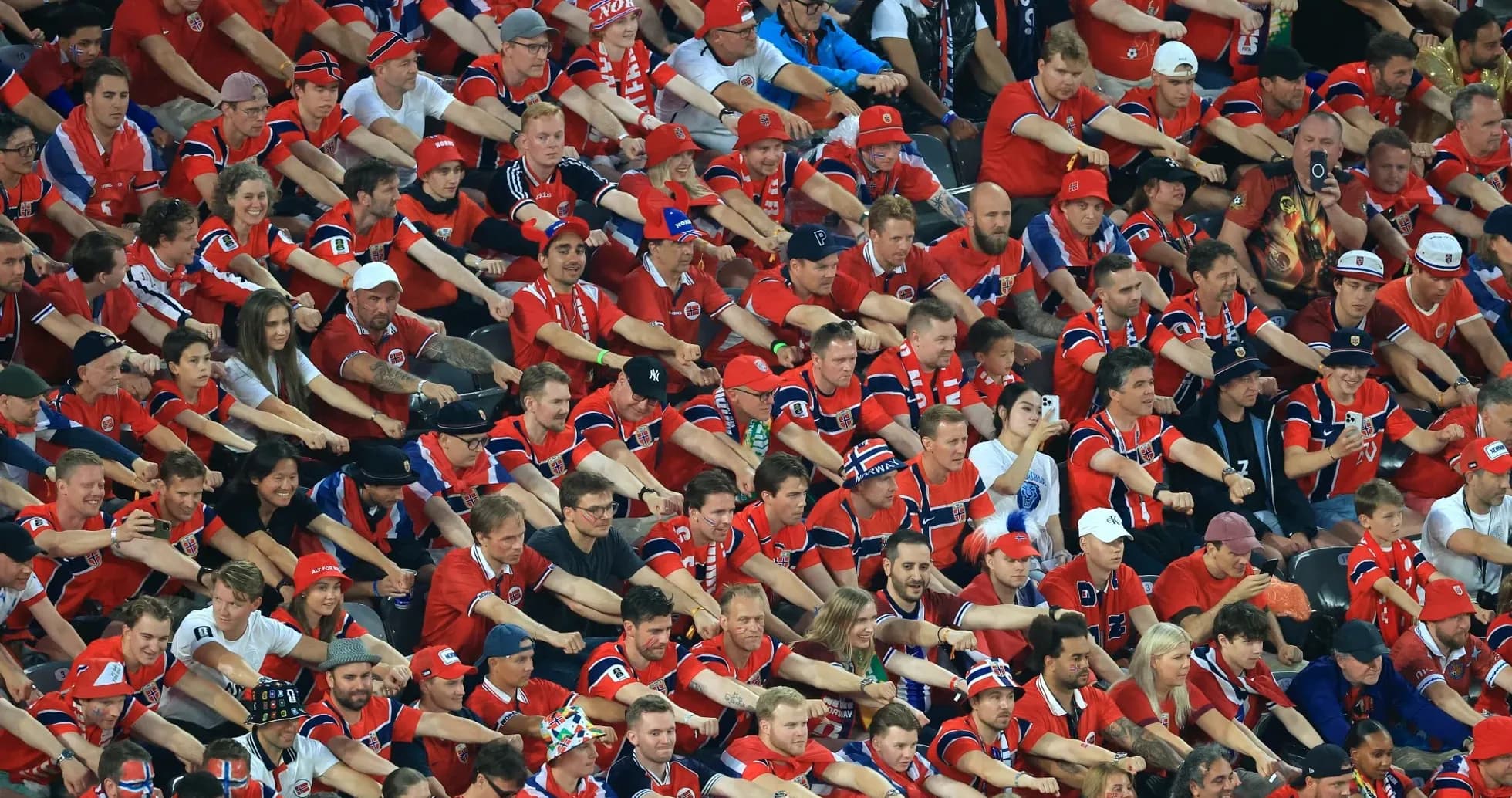
Boston Stadium stages the headline act: Norway vs France at 3pm EDT.
The history leans heavily blue. France have dominated this fixture, winning comfortably in a 4-0 friendly the last time they met in 2014 and generally dictating the rivalry across 15 previous encounters. Norway’s last competitive win over Les Bleus dates back to a European Championship qualifier in 1987.
The numbers are even harsher. Norway have never beaten European opposition at a World Cup. Five attempts, three defeats, two draws. France, by contrast, arrive on a run of five straight World Cup wins against European teams.
Opta’s supercomputer reflects that imbalance. It gives France a 59.4 percent chance of victory. A draw, rated at 20.6 percent, would still be enough for Didier Deschamps’ side to lock up top spot in Group I. Norway are handed a 20 percent chance of a statement win.
Both are already through. But first place is everything: a smoother path, a different kind of pressure, and the psychological edge of finishing as group winners.
Senegal’s big chance, Iraq’s thin hope
At the same time in Toronto, Senegal and Iraq meet for the first time at a World Cup.
Senegal know this terrain. They have never lost to AFC opposition at the tournament, having drawn with Japan in 2018 and beaten Qatar in 2022. Iraq, by contrast, have never faced an African side on this stage.
The stakes are clear. Senegal can no longer top Group I, but their route to the last 32 is wide open: Opta gives them a 72.2 percent chance of progressing. Iraq, clinging to the margins of possibility, sit at just 1.1 percent.
On the pitch, the model is brutal. Senegal are overwhelming favourites, with a 77.2 percent chance of victory. Iraq are given 8.6 percent, the draw 14.2 percent.
For Senegal, it’s a test of composure rather than romance. For Iraq, it’s one last swing at a miracle.
Cape Verde vs Saudi Arabia: a knife-edge in Houston
Houston Stadium hosts one of the night’s most delicately balanced fixtures: Cape Verde vs Saudi Arabia at 7pm CDT.
The nations have never met at a World Cup, yet Saudi Arabia bring a useful piece of history. They have lost only one of their five previous World Cup games against African opposition, winning two and drawing two.
The probabilities, though, lean slightly towards the islanders. Cape Verde are given a 40.8 percent chance of victory, Saudi Arabia 33.9 percent, with the draw at 25.3 percent.
The qualification picture is just as tight. Cape Verde’s chances of reaching the last 32 sit at 66.7 percent. Saudi Arabia’s are 33.3 percent. One moment of quality, one mistake, and those numbers will swing wildly.
Uruguay vs Spain: history of draws, weight of expectation
In Guadalajara, two former world champions cross paths again. Uruguay vs Spain at 6pm CST, their first World Cup meeting in more than 30 years.
The past offers a curious symmetry. In 1950, they shared a 2-2 draw in the final round. At Italia ’90, they cancelled each other out in a goalless stalemate. Two World Cup games, two draws, two very different eras.
This time, the reigning European champions travel with the backing of the algorithms. Opta’s supercomputer ran 25,000 simulations and Spain came out on top in 62.4 percent of them. Uruguay won just 15.7 percent, while a draw appeared in 21.9 percent.
Spain chase first place in Group H. Uruguay chase respect, relevance and a place in the knockouts. The matchup feels like a classic: one side built on control and precision, the other on grit and timing.
Egypt vs Iran: fine margins in Seattle
Seattle Stadium stages a fascinating clash of styles and histories as Egypt meet Iran at 8pm PDT.
They have only met once before, at the 2000 LG Cup in Tehran. That ended 1-1, Egypt winning 8-7 on penalties, with Hossam Hassan on the scoresheet and Ali Daei providing the response. Now Hassan returns as Egypt’s coach, carrying that shared past into a much bigger arena.
Iran’s World Cup record against African sides is impressive. They are unbeaten, having beaten Morocco in 2018 and drawn with Angola in 2006 and Nigeria in 2014.
Even so, Egypt are given a narrow edge by Opta: 42.9 percent to win. A draw comes in at 32.2 percent, Iran’s win probability at 24.9 percent. It’s the sort of game where one set piece or one lapse could decide not only the result but the direction of two footballing projects.
New Zealand vs Belgium: history on the line in Vancouver
In Vancouver’s BC Place, New Zealand and Belgium meet for the first time at a World Cup at 8pm PDT.
New Zealand arrive with a quiet, stubborn record against European opposition. In 2010, they drew with both Slovakia and Italy, and left the tournament unbeaten despite going out in the group stage.
Belgium, though, carry both pedigree and a strange piece of potential trivia. They could become the first European side since their own 1998 team to draw all three group matches at a World Cup.
The numbers don’t suggest a stalemate. Opta makes Belgium overwhelming favourites, giving them an 80.3 percent chance of victory. A draw is rated at 11.8 percent. New Zealand win just 7.9 percent of simulations.
If Belgium misfire again, the story will not be about probability. It will be about a generation that keeps flirting with underachievement.
The table: who’s already safe, who’s still sweating
By Friday, June 26, six groups are done. The rest of the field is still sorting itself out.
Mexico stand alone as the only team with a perfect nine points. They top Group A and have done so with authority.
They are joined in the Round of 32 by South Africa, Switzerland, Canada, Bosnia and Herzegovina, Brazil, Morocco, USA, Australia, Germany, Ivory Coast, Ecuador, Netherlands, Japan, Sweden, France and Norway. Seventeen nations with their tickets already stamped.
The remaining drama is concentrated in Groups G to L.
- Group G: Egypt lead with 4 points. Iran and Belgium sit on 2, New Zealand on 1.
- Group H: Spain top with 4 points, Uruguay and Cape Verde trail with 2 each.
- Group I: France and Norway are through, but first place is still on the line.
- Groups J, K and L wrap up on Saturday.
Thirteen knockout places remain. One bad half, one rash tackle, and months of preparation can evaporate.
Turkiye stun the US in a wild Group D finale
Not all drama this week has come with qualification on the line.
In Group D, Turkiye struck a 98th-minute winner to beat the United States 3-2 at SoFi Stadium. The result changed nothing in the standings: the US had already secured top spot, Turkiye were already out.
It didn’t feel meaningless inside the stadium. Nearly 70,000 fans watched an open, high-tempo game as Mauricio Pochettino rolled the dice, making nine changes and handing seven players their first World Cup starts.
For those on the fringes of the US squad, it was a rare audition. For Turkiye, it was a final, furious flourish before heading home.
African surge: six into eight?
Africa’s presence at this expanded 48-team World Cup is already being felt.
Ten African nations qualified. Two – Morocco and South Africa – are already safely through, joined by Ivory Coast, who have also booked their place in the Round of 32.
Five more – Egypt, Algeria, DR Congo, Ghana and Cape Verde – enter their final group games with qualification still in their own hands. As many as eight African teams could reach the knockouts, a landmark that would echo far beyond this tournament.
The continent has flirted with a collective breakthrough before. This time, the numbers and the performances hint at something more substantial.
A Colombian gesture that captured the tournament
Not every defining moment has involved a ball.
Before Colombia’s Group K match against DR Congo, the stadium fell into an unusual hush. Thousands of Colombian fans, known for their colour and noise, went quiet so that a lone DR Congo supporter could sing his country’s anthem without interruption.
He finished. The Colombians roared, applauded, embraced him. Cameras caught the scene; social media carried it around the world.
Colombia then did what they came to do, winning 1-0 to secure their place in the Round of 32. Yet it was the pre-match silence, and the explosion of respect that followed, that will linger longest.
The Infantino double: one president, two screens
On another night, the conversation turned to something stranger.
During the final Group E fixtures, fans at Ecuador vs Germany and Curacao vs Ivory Coast both saw FIFA President Gianni Infantino appear on their big screens. The games kicked off at the same time in different cities, yet the same man seemed to be present in both.
Clips spread quickly online. Jokes about cloning and teleportation followed. With stadiums scattered across the US, Canada and Mexico, supporters were left guessing how the optics had been managed.
While they argued, Ecuador stunned Germany 2-1 and Ivory Coast beat Curacao 2-0 to book their own spot in the knockouts. The football was gripping. The images off the pitch were just as hard to ignore.
Mexico’s perfect start and Kansas City’s orange takeover
Mexico’s World Cup is unfolding exactly as their fans dreamed it would.
At the Azteca, they completed a flawless Group A campaign with a 3-0 win over Czechia. Already assured of top spot, they still found another gear in the second half. Mateo Chavez broke the deadlock, Julian Quinones added his second goal of the tournament, and substitute Alvaro Fidalgo finished the job.
Czechia’s hopes of reaching the last 32 ended there. Mexico’s reward is maximum points and a Round of 32 tie against one of the best third-placed teams.
North of the border, another co-host nation’s supporters made their own statement. In Kansas City, more than 35,000 Netherlands fans turned downtown into a block of orange, marching from the Power & Light District behind the iconic bus towards the FIFA Fan Fest.
Songs, flags, chants. Locals joined in, neutrals adopted orange for a day. It was one of the biggest fan marches of the tournament, a reminder that the World Cup is as much about the streets as the stadiums.
Borders, visas and the limits of “unity”
Amid the colour and noise, a different story has been unfolding in the background.
Speaking on The Take, journalist Boima Tucker described how this World Cup has laid bare the tension between football’s language of global unity and the hard lines of modern border policy.
Travelling through host cities, he found Moroccan and Senegalese communities celebrating in New York, Cape Verdean supporters in Massachusetts, thousands of Ghanaians at a watch party in Toronto. People opening their homes, their stories, their flags.
“It’s been wonderful to get an intimate look at how the World Cup has affected people in their homes,” Tucker said. “People are excited to talk about their teams and their countries.”
Yet many of those same communities have faced hurdles simply to be present. Iran’s national team have been based in Tijuana, crossing into the US only for matches. Officials, family members and supporters from several nations have struggled with visas.
“When you’re an athlete, you want to be locked in. You want to be concentrating on the field, on the results,” Tucker said. “If you have to jump through hurdles, that’s definitely going to affect the field of play.”
For him, the tournament mirrors a wider reality. “We live in a global system that restricts people’s movement,” he said, warning that even high-profile reunions will not “lead to systemic change.”
Yet he still sees something rare and fragile in these weeks. Immigrant communities celebrating side by side, strangers sharing food, songs and nerves. The World Cup, he argued, allows people to cross lines that normally hold firm.
“I hope people remember this World Cup as one in which people across ethnic lines, national identities and class lines were able to briefly mingle and learn something about each other,” he said. “More than anything, those borders that we have in our daily lives were briefly overcome.”
The question now is simple: as the stakes rise on the pitch and the knockouts loom, can that brief crossing of borders last longer than the final whistle?