World Cup Drama: Storms, Banned Flags and Historic Wins
The World Cup rolled into another chaotic day in North America, where the drama off the pitch threatened to overshadow the football itself.
France–Iraq under storm threat
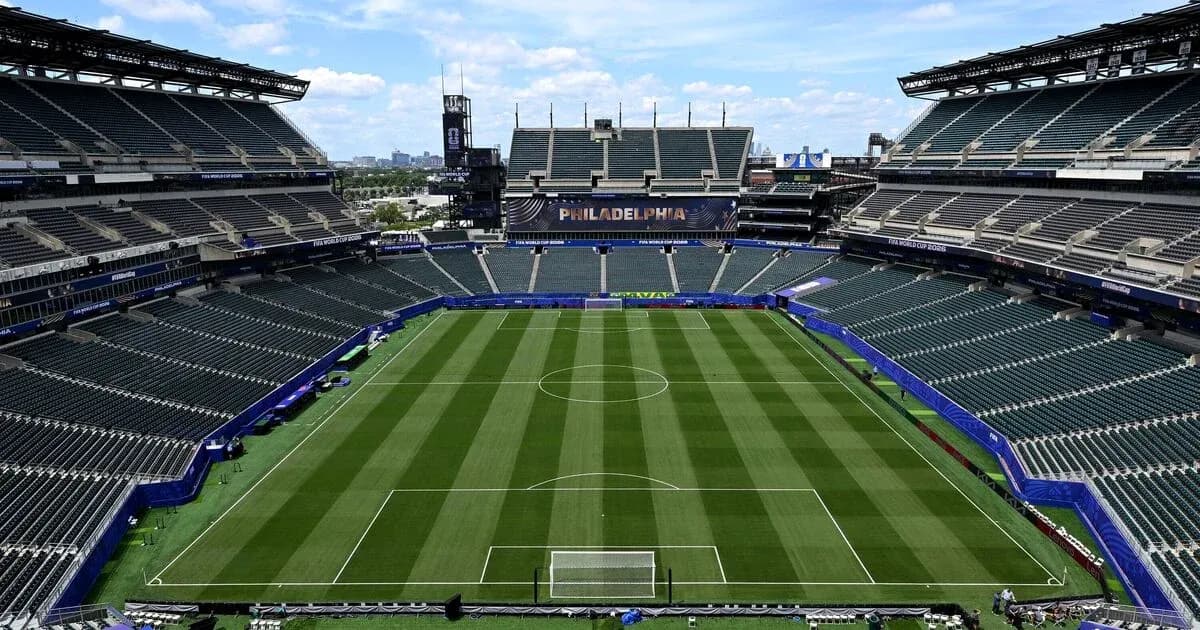
France’s late kick-off against Iraq in Philadelphia is staring down the barrel of serious disruption, with local forecasts warning of “apocalyptic” thunderstorms around the stadium.
Under FIFA protocol, a single lightning strike within eight miles of the ground is enough to halt play. At that point, everyone leaves their seats.
“They'll start to evacuate the stadium to the main concourse and seek emergency shelter,” explained Lauren Lambrugo, chief operating officer of Philadelphia Soccer 2026. “And then it has to wait 30 minutes prior to them bringing everybody back on the field.”
Several storms are expected to be severe, with damaging winds, intense lightning and even a risk of isolated tornadoes. This is not a routine rain delay. Outdoor events across the city are braced for postponements, and France’s showdown with Iraq is firmly in the firing line.
England flag banned at the World Cup
Elsewhere, England supporters have run into a different kind of barrier.
An England flag featuring a submarine was refused entry for the Three Lions’ opener against Croatia, falling foul of FIFA’s strict ban on military imagery inside stadiums. Security staff blocked the banner at the turnstiles.
The incident rippled back home. Barrow FC, whose nickname and imagery are tied to the submarine industry, responded with a tongue-in-cheek post on social media, blurring out the submarine on their own design. The joke landed, but the rule is no laughing matter for travelling fans, who now know exactly how tight the regulations are.
Salah leads Egypt into history
On the pitch, the day belonged to Egypt.
In Vancouver, Mohamed Salah dragged his country to their first ever World Cup victory, a 3-1 comeback win over New Zealand that rewrites a small but stubborn piece of their football history.
New Zealand had the script in their hands at half-time. Finn Surman rose to thump home a textbook header from a corner, his movement and timing straight out of a coaching manual. Egypt looked flat, their talisman limited to a curling free-kick that drifted wide.
Then the game flipped.
Egypt flew out after the interval. Wave after wave. New Zealand clung on until Ziko finally forced the equaliser as the hour mark approached, a goal that had been coming from the moment the second half kicked off.
The pressure broke the dam. Salah, inevitably, delivered the moment the country has been waiting for. A neat one-two, a low, precise finish, and Egypt were suddenly in front, hurtling towards that elusive first win.
Trezeguet’s late strike, Egypt’s third, turned relief into joy. New Zealand, chasing their own first World Cup win in a ninth attempt, were left shell-shocked as the Pharaohs “turned on the style” and ran away from them.
The celebrations told the story. Footage later emerged from Vancouver’s streets: Salah, no longer the composed figure under stadium floodlights, singing and dancing among fans as Egypt savoured a landmark night.
Cape Verde refuse to blink against Uruguay
In Miami, Cape Verde’s remarkable debut campaign continued with another fearless performance, this time in a 2-2 draw against Uruguay.
They didn’t just hang in. They struck first.
Kevin Pina detonated the game with a thunderous free-kick from around 30 yards, a laser that flew past Fernando Muslera and left Uruguay stunned. For a while, the South Americans looked rattled.
The response came late in the first half. A ball into the area was nodded against the post, rebounding perfectly for Araujo to hurl himself at a diving header and level. Minutes later, Uruguay flipped the scoreline, Araujo again involved as he headed a deep cross back across goal for Canobbio to tuck home from close range.
Cape Verde could have folded. They did the opposite.
Helio Varela stepped off the bench and needed only three minutes to punish a calamitous moment from Muslera, who was stranded in no man’s land. Varela pounced on the loose ball and rolled into an empty net for 2-2, another historic goal for a nation refusing to play the underdog.
They might even have stolen it at the end.
For Marcelo Bielsa and Uruguay, the inquest will be fierce. Two draws from two, a fractured camp by local reports, and now a final group game against Spain with no margin for error. Lose to the European champions and, if either Cape Verde or Saudi Arabia win their own clash, Uruguay are staring at third place and likely elimination.
Cape Verde, by contrast, know exactly what is at stake. Beat Saudi Arabia and they are through.
Spain reset, Yamal arrives on the World Cup stage
Spain, stung by a goalless draw against Cape Verde in their opener, responded with authority in Atlanta. A 4-0 dismantling of Saudi Arabia put their campaign back on track and showcased the player many expected to define their tournament.
Lamine Yamal.
Restored to the starting XI, the Barcelona prodigy needed only a few minutes to stamp his mark. Mikel Oyarzabal drove a ball across the box and Yamal arrived to tap home his first World Cup goal, fulfilling a dream he later admitted began when he watched the last tournament on a classroom screen.
Spain surged from there. Oyarzabal, criticised after the opener, flipped the narrative with two goals before the first drinks break. From a side searching for answers, Spain suddenly looked every inch the European champions again.
After the interval, they eased off without ever losing control. Marc Cucurella’s effort led to Hassan Al Tambakti turning into his own net for Spain’s fourth, the eighth own goal of these finals. A late fifth was chalked off by VAR for offside against Ferran Torres, but by then the damage was long done.
The boos inside the closed-roof stadium weren’t for Spain. They came when the referee stopped play for a hydration break despite the indoor conditions, a rare moment of frustration on an otherwise comfortable evening.
Spain now have one foot in the knockouts. Yamal, finally on the World Cup scoresheet, looks ready to drag them deeper into the tournament.
Belgium, Iran and a night that never caught fire
In Los Angeles, Belgium and Iran played out a 0-0 draw that left both sides stuck on two points and the crowd searching for inspiration.
Iran thought they had it when Mehdi Taremi found the net in the first half, only for VAR to intervene and rule the goal offside. The warning was clear, but Belgium never really shifted through the gears.
The second half briefly threatened to ignite. A chaotic goalmouth scramble saw three Belgian players swing at chances inside the six-yard box, only for Iran’s defenders to somehow keep the ball out. Then came the game’s turning point.
Nathan Ngoy hauled down Taremi just beyond halfway, with no covering defender in sight. The referee reached straight for red, and VAR backed him up. Down to ten men, Belgium were left clinging to the point they already had.
Roy Keane, watching on ITV, did not hold back. He labelled the quality “rubbish”, criticising the passing, movement and decision-making from both sides, and suggesting Iran looked more comfortable when they were simply sitting deep and defending.
Belgium now face New Zealand in their final group game. Iran meet Egypt, who arrive with momentum and a sense of history made.
Injuries, selection calls and a brewing storm in Boston
Back in the England camp, Thomas Tuchel’s plans for Tuesday’s clash with Ghana in Boston are being shaped by fitness and discipline in equal measure.
Bukayo Saka, nursing an Achilles issue that required individual work on Saturday, trained fully in a closed session in Kansas City on Sunday. The winger has managed the problem throughout Arsenal’s title run-in and insists he is fine, but Tuchel had previously hinted he might not risk him until the final group match against Panama. Now, the temptation to use him earlier is very real.
Declan Rice remains a doubt after hobbling off in the win over Croatia. With qualification and potentially top spot in the group on the line, Tuchel is weighing risk against reward.
Off the pitch, the manager has imposed a strict curfew on his squad. Defender Dan Burn revealed that some players had to leave a concert early to make it back in time. England’s camp might be relaxed enough for cowboy hats and country music, but the rules are non-negotiable.
England fans have already begun to filter into Boston, eager to see whether their team can match the noise generated by Scotland’s travelling support earlier in the tournament. The atmosphere is building. So are the expectations.
Respect, family and a World Cup culture war
Away from the touchline, the tournament continues to wrestle with questions of respect and priorities.
Brazil’s Lucas Paqueta struck a measured tone ahead of their Group C meeting with Scotland. A draw would be enough for both sides to reach the last 32, but Paqueta dismissed any suggestion of easing off.
“All the teams at the World Cup deserve respect,” he said. “We have great respect for Scotland, but we also know we need to play our game and follow what the coach asks of us. Regardless of the opponent, our goal in every match is to win.”
The word “respect” has echoed elsewhere for very different reasons.
Belgium’s Jeremy Doku, absent against Iran with a chest infection, remains in the spotlight for his desire to leave camp next month for the birth of his first child. He has made his stance clear: he wants to be there. “It’s my first child, so I definitely want to be there,” he said, acknowledging the competing demands of football and family.
His position drew a fierce backlash from French presenter France Pierron, who described the birth as a “disgusting moment” where the father is “useless” and argued that leaving a World Cup would be abandoning a once-in-a-lifetime privilege. She has since apologised and been suspended, according to reports in France.
Within the game, though, Doku has found support. England striker Ollie Watkins, himself a father of two, backed the winger’s choice.
“It only happens once, your first child,” Watkins said. “Welcoming them into the world is a blessing, and you don't get that opportunity again. There are a lot of times when you're away from family and friends during the season, and it's a very difficult period, so to miss that would be tough. I don't think it's anyone else's business. If he goes back and does that, that's fair enough.”
The divide is stark: one camp sees the World Cup as untouchable, the other views life beyond football as non-negotiable. The debate will not end with Doku.
Iran’s anthem, protests and a team caught in the middle
Iran’s national team remain in the crosshairs of politics and protest.
Their national anthem was booed again at the World Cup, with demonstrations continuing in and around stadiums. Outside the ground in Los Angeles before their opener against New Zealand, dissenting fans made their stance clear.
“This is very political,” one protester told the Daily Mirror. “If you interview with the team, they would say that this is not political. It is political because they support the regime. So it is very much political, both for them and for us. And we're here to actually send our message to the world. First, we want the fall of the Islamic Republic. And second, that team is not our team and they don't represent us and we don't support that team.”
Inside the camp, captain Alireza Jahanbakhsh tried to bridge the divide.
“We play for all the Iranians in Iran, outside Iran, with whatever ideology, whatever preferences they have,” he said after their latest match. “We make sure to make them happy, because I'm sure at the end of the day, they love Team Melli from the heart, and we respect them all. The most important thing we can do as a team is to perform well, to make sure we put our heart on the pitch, and to do everything to make them happy.”
He refused to be drawn into the politics of the anthem, stressing only that the players must “respect people, whatever idea they have” and focus on football.
Between the protests outside and the scrutiny inside, Iran’s squad are walking a tightrope no tactics board can solve.
From lightning threats in Philadelphia to history in Vancouver, from banned flags to boiling debates about family and nation, this World Cup is stretching far beyond 90 minutes. The football keeps coming. So do the storms.