World Cup 2026: Key Moments and Emerging Themes
World Cup 2026 has finally kicked into gear, and with it comes the first real fault lines, flashpoints and statements of intent.
From Australia’s selection headaches to England’s stalemate, from Cristiano Ronaldo’s defiant resurgence to a brutal reality check for the USA, this World Cup day had everything but calm.
Socceroos lose key wing-back on eve of Paraguay showdown
Australia’s margin for error was already slim. Now it’s thinner.
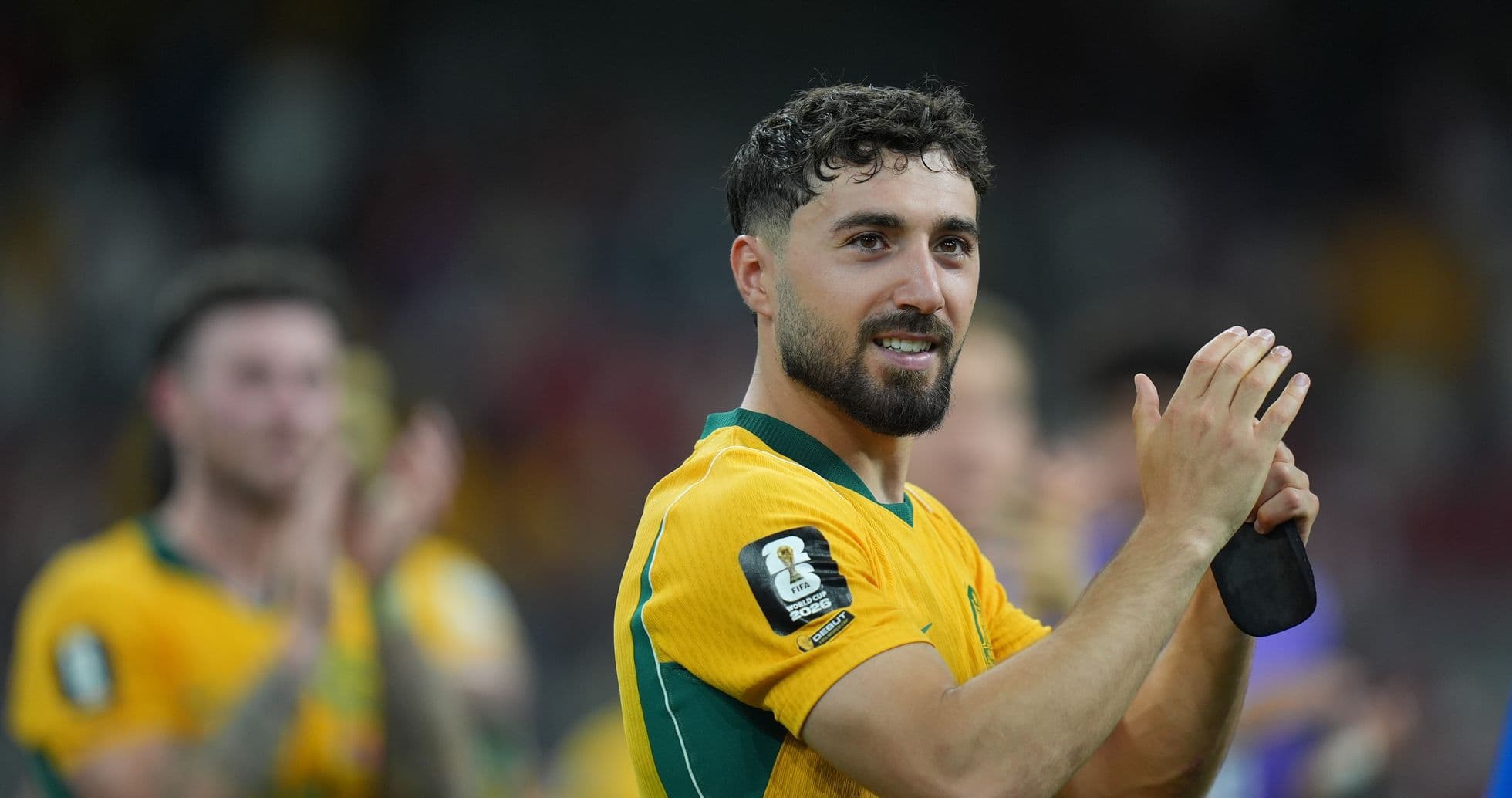
Alessandro Italiano, who had started both of the Socceroos’ matches so far, is set to miss their crucial clash with Paraguay through injury, joining Mat Leckie on the sidelines. It’s a significant blow for Tony Popovic, not just in personnel but in structure.
Italiano stepped in for the injured Lewis Miller and rapidly made the right wing-back role his own. He ran himself into the ground to keep Turkiye scoreless on Matchday 1, then went the full 90 against the USA. In a system that leans heavily on width and work rate from the flanks, losing him changes the dynamic.
Australia’s second outing, a 2-0 defeat to the USA in Seattle, exposed the downside of Popovic’s natural caution. The Socceroos sat deep, conceded twice before the break, and only came alive when Connor Metcalfe, Nestory Irankunda and Cristian Volpato were unleashed in the second half. The game flipped. Too late.
Craig Foster, speaking on 1170 SEN Breakfast, wants that lesson to stick.
He acknowledged Popovic’s success — automatic qualification, something Australia had not managed “for some time” — and called his record “brilliant”. But he didn’t hide his preference.
If Australia are to beat Paraguay and push through the group, Foster believes the young attackers must be trusted from the start.
He described Volpato’s brief cameo as “phenomenal” and said it “has to make a statement to the coach”. In his view, both Volpato and Irankunda should feature in the first half, injecting pace and incision before the game drifts into the cagey rhythm Popovic’s sides often settle into.
The formula, as Foster sees it, is simple enough: get ahead, then lean on a defensive structure that has already shown it can be “very, very difficult to break down”. The harder part is creating and finishing those chances without some of the squad’s most experienced attackers available.
Popovic now has to balance his instinct to control risk with the reality that this World Cup group is unforgiving. Conservative might not cut it.
Colombia climb, Congo cling on
In Group K, Colombia took a firm step towards the knockouts thanks to an unlikely match-winner.
Right-back Daniel Muñoz struck in the 76th minute, the only goal of the game, to send Colombia top of the group with six points. Efficient, disciplined, and ruthless when it mattered.
Congo, by contrast, are still alive but only just. They sit on one point, hanging on “by the skin of their teeth”, and must beat Uzbekistan on Sunday to have any hope of squeezing through as one of the best third-placed sides.
Croatia rise, Panama fall away
Over in Group L, Croatia finally have lift-off.
They’ve opened their winning account at this World Cup and moved up to third with three points, behind England and Ghana, who both sit on four. It keeps the group tight and the stakes high.
Croatia face Ghana on June 28. Victory sends them into the Round of 32. A draw leaves them sweating on the third-place rankings.
Panama, meanwhile, are already out. Their meeting with England on June 28 is now about pride and nothing more. The tournament has moved on without them.
England hit a Ghanaian wall
If England’s 4-2 win over Croatia hinted at a side ready to surge through the group, Ghana dragged them straight back to earth.
At Foxborough, Ghana parked the bus and refused to move it for 95 minutes. England had the ball, but not the answers. The contest turned scrappy, overly physical, with refereeing that did little to calm either side. Declan Rice’s yellow card, born of pure frustration, summed up the mood.
The goalless draw keeps England top of Group L on goal difference, with Ghana second, but the performance drew sharp words.
Micah Richards did not sugar-coat it. He felt England “weren’t brave enough” on the ball, accusing them of too many “safe passes” against a low block that demanded risk and imagination. When a team sits deep, you have to force the issue. England didn’t.
Harry Kane explained his own muted impact. Marked closely by Thomas Partey for much of the game, he found little room to drop off and then arrive late in the box, a pattern that worked so well against Croatia. Ghana’s compact shape clogged the middle, forcing England wide and into a barrage of crosses that rarely found a decisive touch.
Kane felt England grew into the game, starting to win more one-on-ones out wide as the match wore on, but acknowledged they had come up against a disciplined, awkward opponent in a World Cup setting where margins are thin and patience is tested.
Wayne Rooney, watching a Carlos Queiroz-coached side do exactly what he expected, saw a familiar script. Organisation, defensive discipline, limited space. He stressed the importance of crosses as England’s main route to goal and urged calm, insisting there is still “a great chance” of finishing top of the group and no reason to drift into negativity.
But the contrast with the Croatia win lingers. Which England will turn up next?
Bellingham and Queiroz in the heat of the moment
The frustration of that 0-0 in Boston also spilled over on the touchline.
Jude Bellingham and Carlos Queiroz were seen in a heated exchange as the teams walked off. It followed a heavy Bellingham tackle on Jerome Opoku right in front of the dugouts — a challenge that escaped punishment but lit the fuse.
Queiroz later explained that Bellingham had “a bad reaction with some bad names” after the incident. The veteran coach said his first intention had been to calm things down, worried about his player’s condition, but admitted that in the heat of the moment, the swearing “created more tension”.
He played it down in the end, calling it “nothing special” and a normal by-product of an emotional game. “Football is not dancing in a saloon with tuxedos. It's not a show,” he said, in a line that captured his view of the sport’s raw edge.
Bellingham, for his part, labelled it “a silly tackle” as he tried to win the ball, accepted he had caught Opoku, and revealed he spoke to the player afterwards. He said the opposition bench had leapt up to push for a yellow card, and that he simply recognised Queiroz from his Manchester United days, stressing the “great respect” between them and framing it as nothing more than competitive fire.
The flashpoint fizzled out quickly. The questions about England’s creativity did not.
Ronaldo roars back as Portugal smash Uzbekistan
Cristiano Ronaldo arrived at this World Cup under a cloud. A 1-1 draw with DR Congo in Portugal’s opener triggered a familiar debate: at 41, should he still start? Was Roberto Martinez too wary of dropping a legend?
Against Uzbekistan, Ronaldo tore up the doubts.
Portugal’s 5-0 demolition job was the performance they needed, and Ronaldo’s two goals were the response he clearly craved. The result all but secures their place in the knockout rounds and reasserts his relevance on the biggest stage.
It came on the back of a remarkable run of individual displays: Lionel Messi, Kylian Mbappé and Erling Haaland had all scored braces the previous day. Ronaldo, never one to sit out a headline, duly joined the party.
He spoke of a “difficult, dark week”, saying it had felt “like I was already retired from football”, but insisted he held on through belief in hard work. “God helps those who work hard,” he said, framing the performance as a reward for persistence rather than nostalgia.
Roy Keane, his former Manchester United teammate, never thought he had gone anywhere. Keane bristled at the idea of doubting “genius”, called Ronaldo “the man” and compared his stature to Tom Brady’s in the pantheon of sporting greats. The Irishman hailed both goals and reminded everyone that the hardest part of the game is still putting the ball in the net — a skill Ronaldo retains in abundance.
At 41, he is not the future of Portuguese football. But on this evidence, he remains central to its present.
Grief in the France camp
Away from the pitch, France were hit by a personal tragedy.
Didier Deschamps has left the national team camp after the death of his mother. The French Football Federation confirmed he will miss training sessions and will not be on the bench for Friday’s final Group I match against Norway.
With the agreement of FFF president Philippe Diallo, assistant coach Guy Stephan will take charge of the squad until Deschamps returns.
It is a stark reminder that even in the relentless bubble of a World Cup, life intrudes. France must now navigate a key fixture without the man who has defined their modern era from the touchline.
FIFA to tweak the tension of penalty shootouts
A quieter but significant change is coming for the knockout rounds.
FIFA are set to alter the way penalty shootouts are set up. At present, two coin tosses decide the key variables: one for which end the penalties are taken into, and another for which team shoots first.
The new system will use a single toss. The winner will choose either to kick first or to select the end; the other captain will take whichever decision remains.
The aim is to balance the psychological and environmental factors more fairly. Arsenal’s Champions League final experience — losing both tosses, then shooting second into a stand full of PSG fans before losing the shootout — remains a stark example of how stacked things can feel.
From the Round of 32 onwards, when drawn matches go through extra time and then to penalties, that solitary flip of a coin will carry even more weight.
US expectations meet a brutal verdict
Across the Atlantic, the USA’s World Cup bravado has been a constant soundtrack. Their win over Australia in Seattle only turned the volume up.
But one of their own has cut through the noise.
Former goalkeeper Tim Howard, speaking on the Unfiltered Soccer Podcast with Landon Donovan, dismissed the idea of a US triumph in stark terms. “The US cannot, unequivocally, win the World Cup,” he said.
Howard argued that the team would need to play “the greatest game they’ve ever played four times in a row” to get through the Round of 16, quarter-finals, semi-finals and final — each time against a global powerhouse. For him, that makes it “literally impossible” for the USA to lift the trophy.
It’s a sobering assessment from a man who knows the ceiling of American football as well as anyone. The team may not agree. Their fans certainly won’t. The World Cup will deliver the verdict soon enough.