World Cup 2026: A Giant Begins to Stir
In less than 12 hours, the biggest World Cup in history will creak into motion. Whether it becomes a bold new era or an overstuffed marathon is anyone’s guess.
Mexico against South Africa in tonight’s opener at 8pm is the first step in a 104‑game slog, a schedule that looks as much like a television project plan as a football tournament. It will be loud, colourful, and relentless. It might also be too much.
A Tournament Built on Scale
Forty-eight teams. Twelve groups. Two-thirds of the field guaranteed a place in the knockouts.
The format says everything. The top two from each group go through automatically, joined by the eight best third-placed sides to form a round of 32. Jeopardy, the lifeblood of great group stages, has been carefully diluted. Big nations can afford to stumble, even twice, and still survive.
It feels tailored to protect the sponsor-friendly giants from early humiliation. Shock exits made Italia 90 and 2002 unforgettable. This time, the system seems designed to minimise that risk.
The trade-off? A bloated opening phase where the drama may be sporadic. Germany v Curacao on Sunday and Spain v Cape Verde on Monday could turn into target practice. Qatar v Switzerland and Uzbekistan v Colombia may matter deeply to those nations, but they won’t set many pulses racing outside their borders.
The expectation is clear: the real edge, the proper tension, will only arrive when the knockouts begin.
Favourites Under the Heat Lamp
On the pitch, the cast is mouth-watering.
Spain arrive as European champions and bookmakers’ favourites, armed with the deepest and most balanced squad in the tournament. Their midfield options are the envy of everyone. If there is a team built to control games in draining conditions, it is this one.
One cloud hangs over them. Lamine Yamal. A hamstring issue has thrown his group-stage involvement into doubt. Spain can afford to ease him in, but his fitness will shape just how dangerous they look when the stakes rise.
France lurk just behind them, snarling. Back-to-back finalists, loaded with attacking brilliance in Kylian Mbappe, Ousmane Dembele, Michael Olise and Desire Doue, they have the firepower and depth to blow anyone away. This is Didier Deschamps’ last dance in charge. Having lost the final last time, they will not settle for “almost” again.
If both Spain and France top their groups as expected, they can only collide in the semi-finals. That potential clash already feels like the tournament’s gravitational centre.
England, still nursing the scars of defeat to Spain in the Euro 2024 final, arrive with something rarely associated with them at a World Cup: conviction. Thomas Tuchel has replaced Gareth Southgate and with him has gone the safety-first football. In its place: high intensity, more risk, more ambition.
Tuchel has not tiptoed into the job. Phil Foden, Cole Palmer and Trent Alexander-Arnold have all been left at home, sacrificed in favour of players who better fit his system. It’s a ruthless, coach-first approach that will be hailed as visionary if England go deep, and savaged as arrogance if they don’t.
Messi, Ronaldo and the Last Great Push
Then come the old giants with new questions.
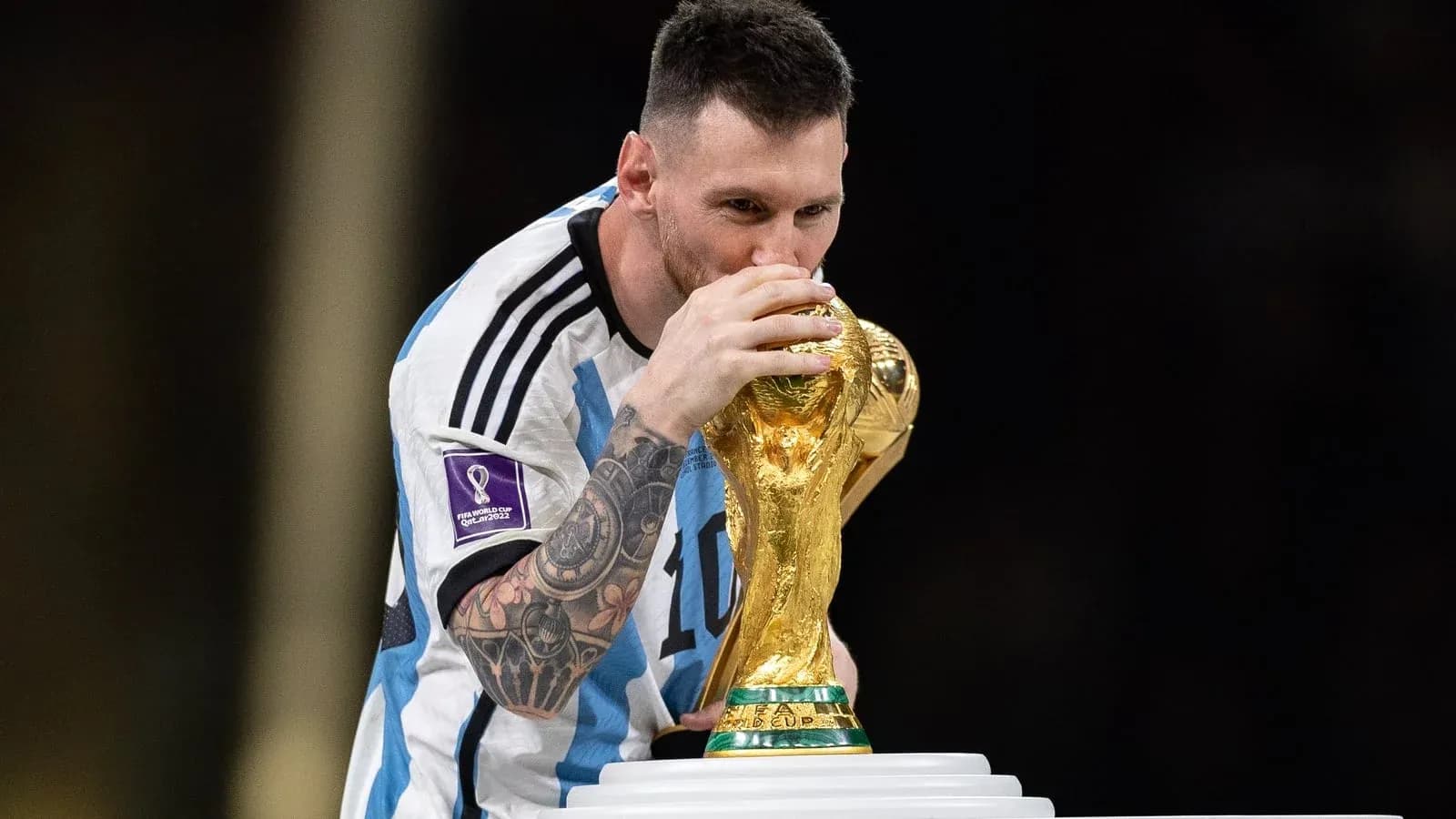
Argentina, the reigning champions, are chasing history. No one has defended the World Cup since Brazil in 1962. Lionel Messi, now 38, is trying to squeeze one last miracle out of a career already crammed with them. The aim is clear: retain the trophy, step out from even Diego Maradona’s shadow, and win it twice.
Whether his body can withstand eight potential matches in heat and humidity is another matter entirely.
Brazil, under Carlo Ancelotti, look dangerous but imperfect. They boast genuine quality at both ends of the pitch, with Vinicius, Raphinha and Marquinhos providing elite stardust. Yet the midfield remains a puzzle and their qualification campaign was far from smooth. This is not the irresistible Brazil of old, but nobody will relish facing them.
For Portugal, the story writes itself. Cristiano Ronaldo, one last tilt at the only major trophy that has eluded him. His presence guarantees global attention; whether it helps or hinders Portugal’s collective chances is far less certain.
And then there is the old line that refuses to die: never write off Germany. Under Julian Nagelsmann, they carry a sharper edge and tactical clarity. They also carry Curacao in their opener, a fixture that underlines just how wide this field has been stretched.
Colombia, Senegal and Morocco sit in the shadows, perfectly placed to ambush someone complacent. This format might protect the big names from early elimination, but it also hands ambitious outsiders more time to grow into the tournament.
Heat, Hydration Breaks and Survival
This World Cup will not only be about skill. It will be about survival.
Matches in cities like Miami, Houston, Guadalajara and Mexico City will unfold in punishing heat. FIFA has already ordered hydration breaks at the 22nd and 67th minutes of every match, regardless of conditions. Daytime games have been funnelled into air-conditioned stadiums where possible, but there is only so much the schedule can do.
On paper, the climate tilts the scales towards Spain, Brazil, Argentina and Mexico – teams accustomed to playing in sweltering conditions. In reality, it will test everyone.
With the finalists playing eight games, managers will have to treat the group stage as much like a medical management exercise as a sporting contest. Expect careful minutes for the stars. Messi, Neymar, Yamal, Bukayo Saka, Nico Williams – all are likely to be wrapped in cotton wool for at least parts of the early fixtures.
The expanded format allows it. You can rotate, stumble, still qualify, and then hit full throttle when the round of 32 begins.
A Marathon for Fans Too
The demands won’t be limited to players.
For supporters, especially those watching from awkward time zones, this tournament is a test of stamina. Irish fans, for instance, face late nights and brutal alarms. Brazil’s opener against Morocco kicks off at 11pm on a Saturday, Argentina’s first game starts at 2am on a Wednesday. Coffee will be as essential as commentary.
Across the board, the World Cup is asking more: more days, more games, more patience. It stretches attention, loyalty and sleep patterns to the limit.
There is even the chance that Ireland’s famous Italia 90 feat – reaching the knockouts without winning a single game – could be matched under this forgiving structure. Low-scoring, cautious groups may well be rewarded again.
And so, on the eve of kick-off, the picture is clear but the verdict is not. The cast is stellar. The conditions are brutal. The format is swollen. The promise is that the latter stages will deliver enough quality and drama to justify everything that comes before.
Whether 104 matches can truly be worth it will only be known on 19 July, when the last whistle blows and football’s longest show finally leaves the stage.