USA’s Tactical Mastery Secures 2-0 Victory Over Bosnia & Herzegovina
USA’s 2-0 win over Bosnia & Herzegovina at Levi's Stadium in this World Cup Round of 32 tie was defined less by volume of chances and more by control of key zones, tempo management, and game-state adaptation. With USA reduced to ten men for the final 25 minutes, the match became a study in how a proactive 4-3-3 can first unpick a 5-3-2 block, then morph into a compact, counter-oriented structure to close out a knockout tie.
Mauricio Pochettino set USA up in a clear 4-3-3: Matthew Freese in goal behind a back four of Alexander Freeman, Chris Richards, Tim Ream, and Antonee Robinson. Tyler Adams anchored midfield with Weston McKennie and Malik Tillman as the advanced interiors, while Sergiño Dest and Christian Pulišić flanked Folarin Balogun up front. The positional map was textbook: Robinson and Dest provided width high and wide, Pulišić rolled inside from the left half-space, and Balogun occupied the centre-backs, allowing Tillman to make delayed runs beyond.
Bosnia & Herzegovina, under Sergej Barbarez, went with a 5-3-2 that was clearly designed to compress central lanes: Nikola Vasilj behind a back five of Amar Dedić, Nikola Katić, Tarik Muharemović, Stjepan Radeljić, and Sead Kolašinac, with Armin Gigović, Ivan Šunjić, and Kerim Alajbegović screening ahead of them, and Edin Džeko–Ermedin Demirović as a classic target-plus-runner duo. The initial plan was conservative: protect the box, concede wide areas, and look to spring Džeko and Demirović in transition.
In the first half, Bosnia & Herzegovina actually edged possession 52% to 48% and finished with more total shots (10 to 8), but those headline numbers obscure the territorial story. USA’s 4-3-3 consistently pinned the Bosnian wing-backs deep. Robinson and Dest pushed the line of confrontation high, forcing Dedić and Kolašinac to defend rather than join counters, which left Džeko and Demirović isolated.
USA’s pressing structure was well-drilled. Adams stepped onto the deepest Bosnian midfielder, with McKennie and Tillman jumping onto the other two in the trio. That allowed USA’s front three to press three centre-backs in a curved pattern, using their cover shadows to block access into central midfield. The outcome was a Bosnian build-up that often resorted to longer passes toward Džeko, which Ream and Richards handled with good starting positions and anticipation.
On the ball, USA’s 415 passes (346 accurate at 83%) against Bosnia’s 446 (364 accurate at 82%) show near parity, but the Americans used their circulation to manipulate the 5-3-2 block rather than just recycle. Robinson’s advanced positioning on the left forced Radeljić and Kolašinac into uncomfortable lateral shifts, while Pulišić’s inside drifting created three-versus-two overloads around Šunjić and Gigović. That pattern underpinned the late first-half breakthrough: Folarin Balogun’s 45' strike came as the culmination of sustained pressure, with USA having already generated 0.92 xG to Bosnia’s 0.25 across the match.
Crucially, USA’s shot profile was more box-centric: 6 of their 8 attempts came from inside the area, compared with Bosnia’s balanced split of 5 inside and 5 outside. Even with only 2 shots on goal, USA were efficient, converting both on-target efforts into goals. Bosnia & Herzegovina, by contrast, managed 3 shots on goal from 10 attempts, but rarely forced Freese into extreme interventions. The Bosnian xG of 0.25 underlines how well USA protected the central channel: most Bosnian efforts were either from distance or from angles that limited threat.
Defensively, the USA back four benefitted from Adams’ screening. His positioning cut off passing lanes into Džeko’s feet, meaning Bosnia often had to play aerially. Ream and Richards were aggressive in stepping in front of Džeko, while Freeman and Robinson stayed compact enough to prevent Demirović from exploiting gaps between centre-back and full-back. The fact Bosnia only earned 3 corner kicks, despite chasing the game and having a nominal aerial advantage, highlights how USA limited sustained pressure.
The turning point in game-state came at 64', when Balogun was sent off for a “Serious foul”. Down to ten men and already 1-0 up, Pochettino’s USA adjusted their tactical posture. The front line dropped a few yards, the press became more selective, and the emphasis shifted toward protecting the middle third and counter-attacking. Bosnia & Herzegovina responded with a triple substitution at 51'—introducing Esmir Bajraktarević, Benjamin Tahirović, and Ermin Mahmić for Armin Gigović, Ivan Šunjić, and Edin Džeko—signalling a desire for more mobility and creativity between the lines rather than pure target play.
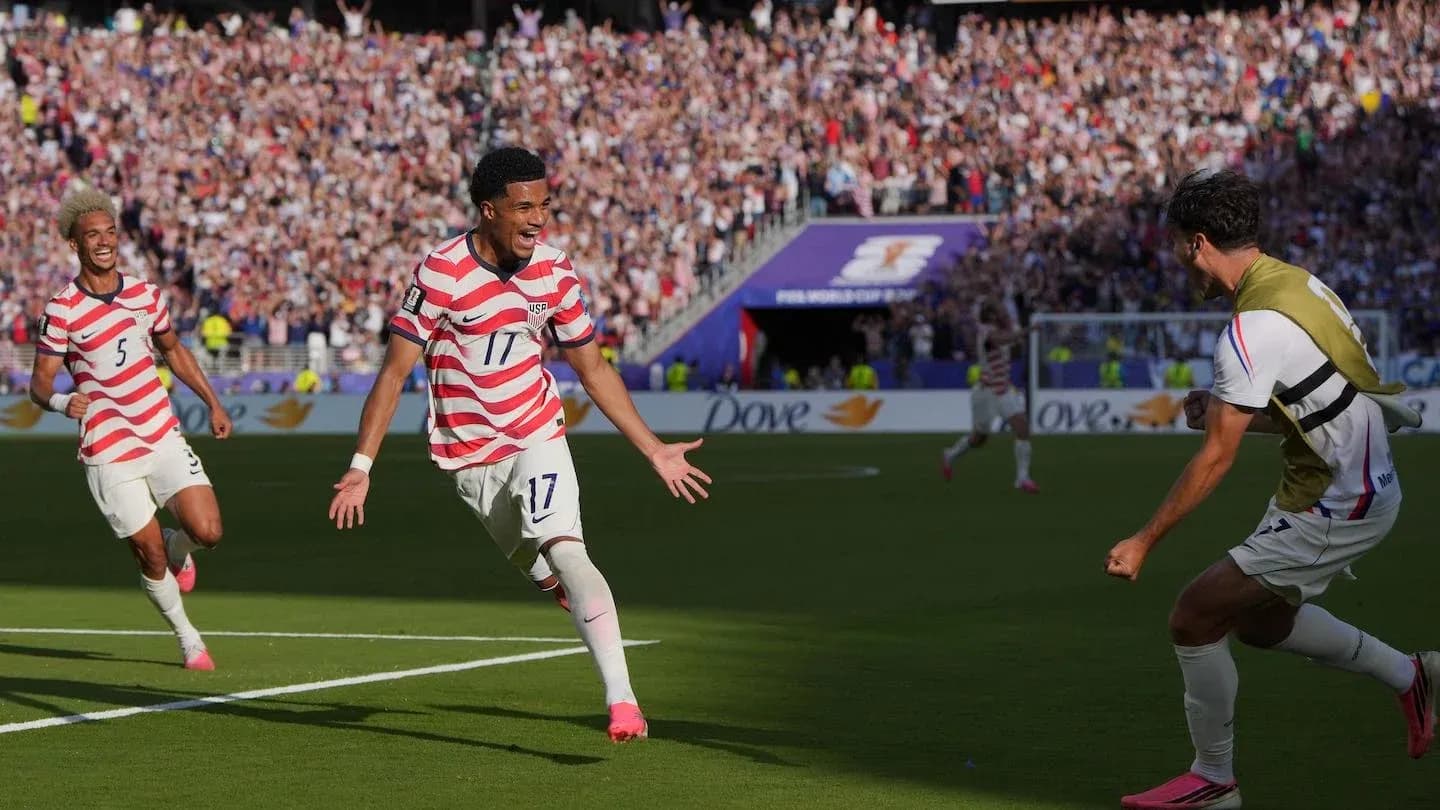
However, the Bosnian structural tweaks never fully translated into high-quality chances. Their 13 fouls to USA’s 7 reflected a growing desperation to disrupt American counters and regain the ball quickly after turnovers. The key defensive figure for Bosnia, Stjepan Radeljić, picked up a yellow card at 80' for “Holding”, emblematic of a back line increasingly exposed as they pushed up. That exposure was punished in the 82nd minute, when Malik Tillman struck USA’s second, effectively sealing the tie. The goal fit the game-state: USA, even a man down, exploited the spaces left as Bosnia committed more bodies forward.
From a goalkeeping perspective, Matthew Freese (USA) made 3 saves, aligning with Bosnia’s 3 shots on goal. His interventions were steady rather than spectacular, but they underpinned the clean sheet and validated the team’s compact block once reduced to ten. At the other end, Nikola Vasilj (Bosnia & Herzegovina) did not register a single save despite USA’s 2 goals, a reflection of the Americans’ ruthless finishing on their limited on-target attempts. The “goals prevented” metric at -1.73 for both teams suggests that, overall, finishing outstripped the underlying shot quality on both sides, but USA were the ones who translated that edge into the scoreboard.
Set-piece and transition details further underline the tactical balance. USA’s 4 corner kicks to Bosnia’s 3 show they were not overwhelmingly dominant in dead-ball situations, but their ability to keep Bosnia’s set-piece volume low was important given the aerial threat of Džeko and Radeljić. Offside figures—3 for USA, none for Bosnia—speak to USA’s willingness to push the line aggressively with runs in behind, particularly from Balogun and Dest before the red card, while Bosnia’s forwards more often received to feet or attacked second balls.
Discipline also shaped the rhythm. USA finished with 1 red card and no yellows, while Bosnia & Herzegovina collected 1 yellow card officially logged to Radeljić and an additional yellow event involving coach Sergej Barbarez, reflecting growing frustration on the Bosnian bench as the match slipped away. Those stoppages broke up Bosnian momentum just as they were trying to mount a late surge.
In statistical verdict, the 2-0 scoreline matches the tactical reality: USA created the better chances, defended their box with more cohesion, and adapted more intelligently to game-state changes. Despite Bosnia’s marginal edge in possession and total shots, their low xG and limited shots on goal confirm that USA’s structure—first in an aggressive 4-3-3, then in a compact, counter-focused shape after the red—kept them largely at arm’s length.