USA Defeats Australia 2-0 in World Cup Showdown
Soccer was always going to win here. On a mild, sunlit Friday in the Pacific north-west, two nations who actually agree on the word “soccer” met in a World Cup game loaded with meaning far beyond the group table. The United States beat Australia 2-0, booked a place in the knockout round, and gave 66,925 fans exactly the kind of afternoon this city thinks the sport deserves.
The scoreline might yet be worth even more. Depending on how Turkey v Paraguay plays out later on Friday, this result could also lock up top spot in Group D for the hosts.
A stage built for stakes
For the US and Australia, World Cups always feel like referendums. On progress. On relevance. On whether their version of the game can hold its own against other, richer sporting obsessions back home. Neither side came into this one under the illusion that it was just another group match.
Group D is too finely balanced for that, and both teams arrived buoyed by impressive opening wins. The occasion matched the stakes. Australia’s travelling support, clustered in three loud yellow blocs at the south end of Seattle Stadium, never stopped. They sang, they taunted, they believed. But the building belonged to the United States, one of the sport’s true capitals in this country, and the tone was set long before a ball was kicked.
Four military helicopters roared overhead as the last notes of the national anthem faded, a perfectly timed flyover that turned a big game into a full-on event. The crowd swelled, flags snapped, and the match started under a surge of patriotic adrenaline.
No Pulisic, no problem
The pre-game conversation had circled around one name. Christian Pulisic, the US star who limped out of the opener at half-time with a calf problem, had trained apart from the squad all week. Only shortly before kick-off did Mauricio Pochettino confirm what many feared: Pulisic was not available.
That announcement sharpened the question hanging over the hosts: without their talisman, could they unpick a disciplined Australian backline?
Australia had also been fed their share of motivation. Stateside pundits had casually dismissed the Socceroos as a “layup,” language that grated against the reality of their strong first outing. Inside the US camp, the tone was very different. Players and coach repeatedly stressed Australia’s quality and the grind that awaited them, a message delivered so consistently it felt almost rehearsed.
The game backed them up within a minute.
Alex Freeman, perhaps still settling into the occasion, played a loose pass out of the back. Mohamed Touré pounced, drove at Chris Richards and squeezed off a low shot from a tight angle. Matt Freese handled it cleanly, but the warning had landed. Australia were not here to play the punchbag.
The US response was sharp. They tightened their grip on the ball and began to probe, stretching Australia side to side, looking for cracks down both flanks.
Balogun forces the breakthrough
The opener came from the channel where Pulisic might normally operate. Antonee Robinson stepped forward and slid a ball into Folarin Balogun, who had drifted wide. Balogun burned past Jacob Italiano and drilled a low cross into the box. Defender Burgess, scrambling to react, could only deflect the ball into his own net.
Another early own goal in the Americans’ favor, their second in as many World Cup games. Paraguay had folded when it happened to them. Australia did not.
The Socceroos steadied quickly. Two minutes after the setback, Touré held the ball up well against a compact US backline and laid it off for Mathew Leckie. Leckie tried an audacious outside-of-the-boot effort from the top of the box, bending it around Richards. It sailed high and wide, but it was ambitious, defiant.
The contest grew more combative in flashes. Nishan Velupillay clattered into Tyler Adams right in front of the US bench, drawing fury from the crowd. Jordan Bos earned the first yellow card for a hand to Weston McKennie’s face. Later, Alessandro Circati went into the book for clipping Malik Tillman’s heel as the US midfielder surged toward the area. The free-kick that followed was bravely repelled, bodies flying everywhere.
Then came a pause that made everyone hold their breath. In the 39th minute, Freeman and Paul Okon-Engstler collided head-on, both players left on the turf needing treatment. They eventually continued, bandaged and shaken but still in the fight.
Moments later, Freeman changed the scoreboard.
Freeman’s redemption and a crucial second
The move started with Tillman. Locked in a wrestling match with Velupillay near the Australian endline, he refused to let the ball go and earned a dangerous free-kick for his trouble. Robinson rolled it to the top of the box, where Sergiño Dest met it with a firm strike. Harry Souttar hurled himself into the shot, the ball cannoning off him and back into the area.
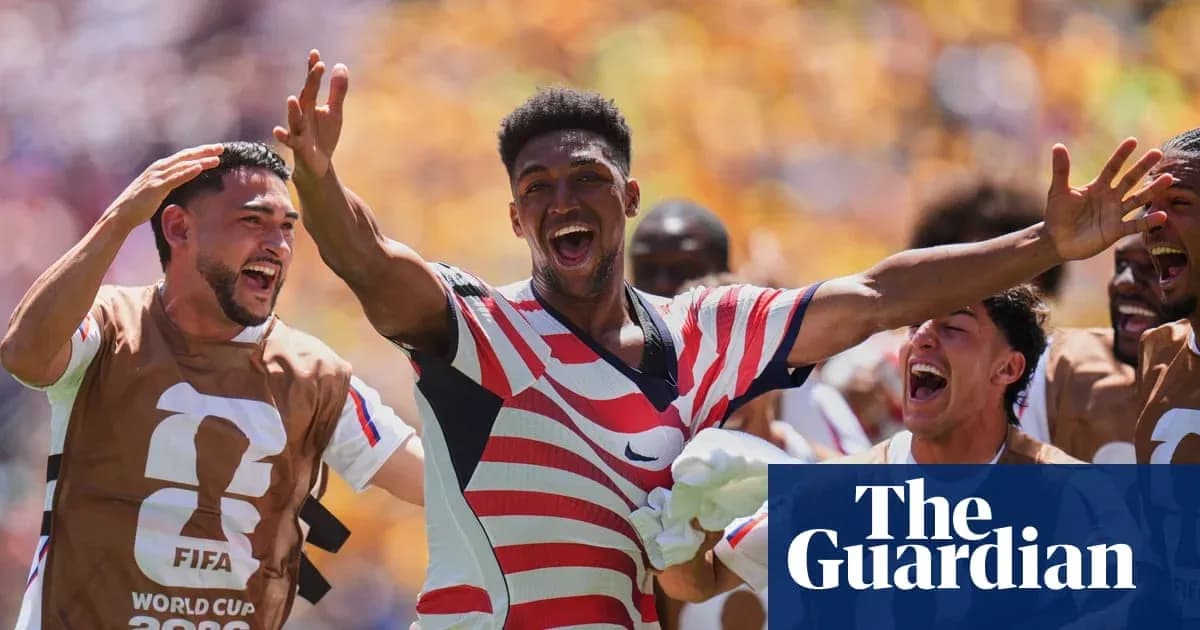
Freeman reacted first. He bundled the rebound over the line in a scrappy, vital finish. The flag went up, the goal went to review, and the stadium held its breath again. The decision came: onside. Goal stands.
By then, Freeman had already drifted back toward his usual center-back station and ended up celebrating at the far end, engulfed by teammates sprinting from the bench. From early error to first World Cup goal, his night had swung in the space of half an hour.
At 2-0, with the US in control and Australia struggling to carve out clear chances, Tony Popovic had to act.
Popovic rolls the dice
Popovic came out for the second half with a different plan and a different cast. Jason Geria replaced Burgess. Nestory Irankunda and Connor Metcalfe, both scorers in the Socceroos’ opener, came on for Touré and Velupillay. The shape shifted into a bolder 4-3-3 when Australia had the ball, snapping back into a five-man line without it.
Risky. Necessary.
The new approach almost blew up quickly. Seven minutes after the restart, McKennie picked Australia’s pocket and threaded a ball into Balogun’s path. Only Souttar chased. Balogun drove into the box and got his shot away, but a desperate block denied him a third US goal. The warning was clear: push too high, and the Americans would race in behind.
Australia kept coming anyway. Robinson picked up the US’s first yellow card in the 56th minute, forced to haul down a move building down his flank. The Socceroos had found a foothold.
Just after the hour, Popovic made another attacking change. Cristian Volpato replaced Leckie, and the Sassuolo man almost made an instant impact. Irankunda tore down the right, surged into space and cut the ball back. Volpato, arriving inside the box, lashed his effort over the bar. A huge chance, wasted.
Metcalfe followed with a shot minutes later, but Freese dropped comfortably on top of it. The US keeper, largely untroubled in the first half, now had to stay alert.
On the opposite bench, Pochettino read the shift and moved to protect what he had. Robinson, Dest and Ricardo Pepi made way for Sebastian Berhalter, Auston Trusty and Joe Scally, a trio of substitutions that tilted the US toward a more defensive posture.
Australia push, USA hold
The changes tilted the field. Australia began to camp higher, pinning the US back and forcing a series of frantic clearances. Circati went close during one scramble, others flashed half-chances wide or saw them smothered at the last second.
The physical tone hardened. Challenges flew in, tempers frayed, and the noise inside the stadium rose again as chants of “USA” rolled down from the stands. Late yellow cards stacked up: Souttar for his part in an off-the-ball tangle, Balogun for his own involvement, Italiano joining them in the book as frustration bubbled.
One last oddity delayed the final whistle. Referee Felix Zwayer picked up a knock and needed treatment, briefly threatening a stoppage that would have fit this bruising second half. He carried on, sore but upright, and the game staggered toward its conclusion.
Before it did, Balogun took one more turn in the spotlight. Feeling the tension dip, he turned to the stands, windmilling his arms, urging more noise. The response was instant. The crowd rose, the volume spiked, and for a few minutes this corner of the Pacific north-west turned into something the scoreboard already confirmed.
Soccer City, USA. And a host nation marching on, with bigger questions about how far this team can go still waiting just around the corner.