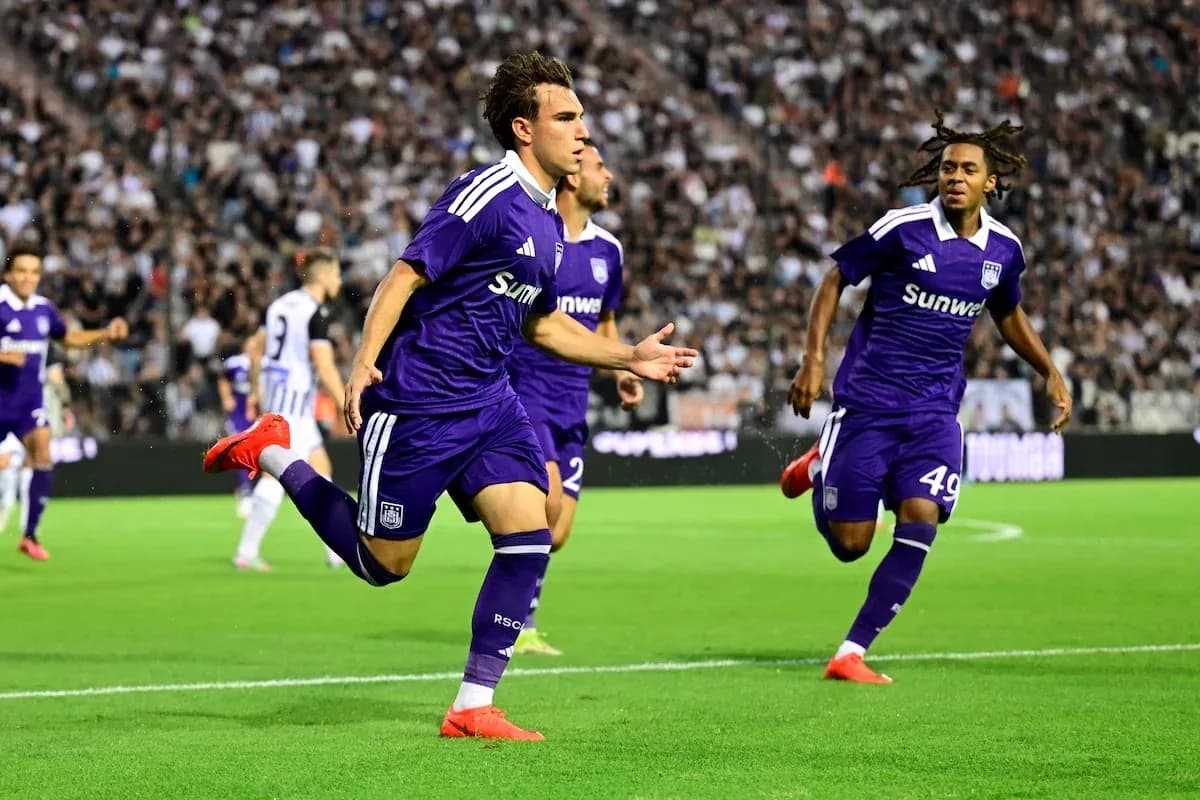
UEFA Europa League Showdown: Anderlecht vs PAOK
At Lotto Park in Anderlecht, the second leg of this UEFA Europa League 3rd Qualifying Round tie carries heavy seasonal weight: it is an early knockout-style test that will determine which club keeps its European campaign alive into the autumn and which one sees its continental ambitions cut short before the main phase.
Head-to-Head Tactical Summary
The only recent meeting in the data between these sides came in the first leg on 6 August 2026 at Toumba Stadium in Thessaloniki, where PAOK hosted Anderlecht. Anderlecht won 1–0, leading 1–0 at half-time and maintaining that advantage to full time. Tactically, that result underlines Anderlecht’s ability to manage an away game in Europe with defensive control, while PAOK showed they can be contained at home despite generally strong attacking numbers elsewhere this season.
Global Season Picture
- League Phase Performance: There is no standings data provided for this qualifying round, so rank, points, and aggregate goals in the group or league phase cannot be quantified here. The tie instead must be read purely through the lens of early-season European knockout performance.
- Season Metrics: In the league phase of the Europa League qualifiers so far, Anderlecht have played 3 matches (1 at home, 2 away), winning 2 and drawing 1, scoring 5 and conceding 2. They average 1.7 goals scored and 0.7 conceded per match, with no failures to score and one clean sheet, indicating a balanced, efficient start. PAOK have also played 3 matches (2 at home, 1 away), winning 2 and losing 1, with 5 goals scored and 3 conceded, averaging 1.7 scored and 1.0 conceded. They have one clean sheet but have failed to score once, showing slightly more volatility in attack. Card profiles suggest Anderlecht’s discipline can wobble late in games (a red card shown between minutes 76–90 and yellow cards spread across all phases), while PAOK’s bookings cluster around the 31–45 and 76–90 minute ranges, hinting at spikes of aggression before and near the end of regulation.
- Form Trajectory: Anderlecht’s form string of “DWW” shows an upward curve: an opening draw followed by back-to-back wins, including the away victory in Thessaloniki, suggesting growing confidence and tactical cohesion as the qualifiers progress. PAOK’s “WWL” points to a strong start with two straight wins before the setback against Anderlecht, implying a slight negative swing in momentum at precisely the wrong time in this tie.
Tactical Efficiency
Without explicit comparison indices, efficiency must be inferred from the season metrics. Anderlecht’s scoring rate of 1.7 goals per match combined with only 0.7 conceded and no failures to score indicates a high attacking and defensive efficiency: they are converting enough chances while limiting opponents to relatively few goals. Their biggest wins (3–1 at home and 1–0 away) show they can both dominate and edge tight matches, which is tactically valuable in a two-legged qualifier.
PAOK match Anderlecht’s 1.7 goals per match but concede more at 1.0 per game, and their biggest away win (3–2) highlights attacking ambition but also defensive exposure. The 0–1 home defeat to Anderlecht in the first leg underscores that when faced with a compact, structured opponent, their attack can be blunted and their back line can be punished by relatively few but well-chosen attacks. Overall, Anderlecht’s early defensive record and ability to avoid defeat (unbeaten in three) suggest a slightly more efficient balance between attack and defense compared with PAOK’s more open, risk-tolerant profile.
The Verdict: Seasonal Impact
This second leg is pivotal for both clubs’ 2026 European trajectories. For Anderlecht, protecting and potentially building on the 1–0 away advantage would secure progression and set up a season framed around group-stage European football, with the financial and sporting benefits that follow: stronger attraction for players, higher match volume, and a platform to prioritize deep runs in Europe alongside domestic objectives. Failure to advance from this position, given their unbeaten form and defensive record, would be a clear underperformance and could force a strategic refocus on domestic competitions alone.
For PAOK, overturning the deficit away from home would be a statement of resilience, restoring the positive “WW” start to their form line and keeping alive a season narrative built around European relevance and the associated revenue and prestige. Elimination at this hurdle, especially after two early wins and with attacking numbers that suggest they are capable of more, would compress their seasonal ceiling: no European group stage, fewer high-profile fixtures, and greater pressure to compensate through domestic title or top-spot ambitions. In strategic terms, this match functions as an early-season fork in the road: progression sustains a multi-front campaign and raises the club’s competitive ceiling; elimination narrows the season to domestic priorities and turns what follows into a test of how well each club can recalibrate its ambitions after a significant European setback.