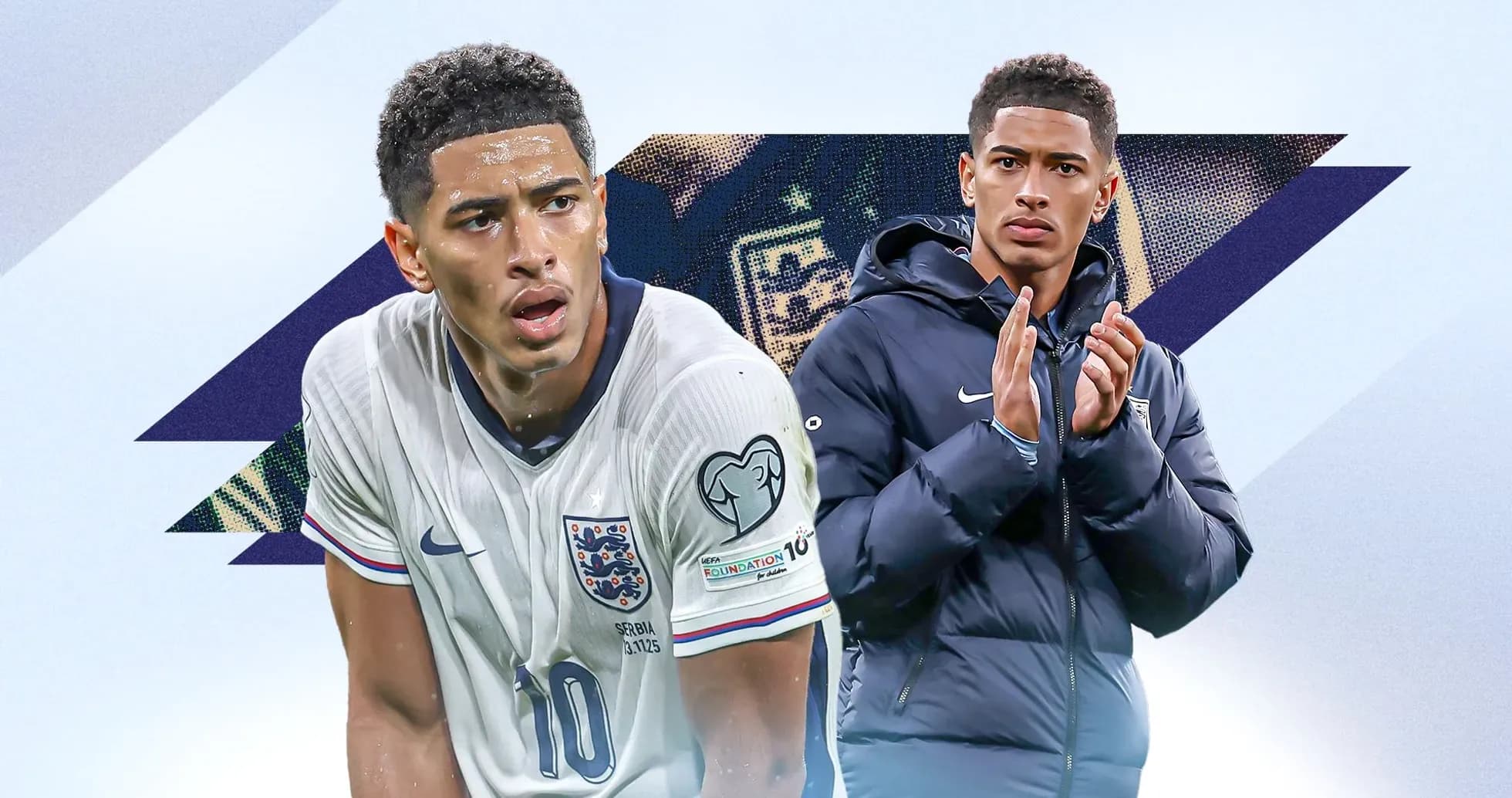
Thomas Tuchel's England Challenge: Bellingham vs. Rogers
Thomas Tuchel has not tiptoed into the England job. He has kicked the door open.
From his first camp he has made one thing brutally clear: reputations don’t start games. Competition does. And in the space Jude Bellingham thought he owned, a new name has muscled in.
Morgan Rogers.
Rogers the riser, Bellingham the benchmark
While Bellingham has drifted in and out of camps, nursing injuries and recovering from surgery, Rogers has simply played. And played well.
The Aston Villa attacking midfielder has carried his club form straight into the England set-up, offering Tuchel a true No.10 profile: pockets of space, sharp angles, constant movement between the lines. The goals haven’t flowed yet, but the creativity has. During qualifying, as Tuchel toyed with shapes and roles, Rogers became a useful constant – a link player who made attacks breathe.
Tuchel has rewarded that. Not with platitudes, but with a straight fight.
“Rather than finding the best players a position to just have them on the field, it's maybe better to put everyone in their best position and have a competition. At the moment, the competition is between the two of them,” he said back in November, laying out the battle to play behind Harry Kane.
On form, Rogers has a serious claim. Over the last year, his output for Villa and England has built a case that is hard to ignore. If Bellingham wants that role, he has to rip it back with performances, not memories.
The edge that divides opinion
Bellingham has never played small. He carries himself like a leading man, chest out, eyes blazing, a midfielder who wants every ball and every moment. That edge is part of his superstardom. It is also what drags him into trouble.
The flashpoint came in the 3-1 defeat to Senegal last June. A VAR call went against England; Bellingham’s reaction went viral. Anger, disbelief, a raw fury that lingered long after the whistle. It was the sort of moment that feeds a narrative.
Tuchel, speaking to TalkSport after that friendly at the City Ground, chose not to douse the fire, but to try to shape it.
“I think he brings an edge, which we welcome and which is needed if we want to achieve big things,” he said. “It needs to be channelled. The edge needs to be channelled toward the opponent, towards our goal and not to intimidate team-mates, or to be over aggressive to team-mates or referees.”
Then came the line that has followed him ever since – not about tactics, but about television and family living rooms.
“I see that it can create mixed emotions. I see this with my parents, with my mum that she sometimes cannot see the nice and well-educated and well-behaved guy that I see… If he smiles, he wins everyone, but sometimes you see the rage, the hunger and the fire, and it comes out in a way that can be a bit repulsive. For example, for my mother, when she sits in front of the TV, I see that, but in general we are very happy to have him, he's a special boy."
It was clumsy, and it stuck. From that moment, every Bellingham gesture felt like evidence in a wider argument.
A strained return, a public test
Injury kept Bellingham out until November. When he finally returned, the focus was less on his touch and more on his relationship with the man in the dugout.
Tuchel made his point immediately. Bellingham watched the first game of that break, against Serbia, from the bench. Three days later, he was back in the XI against Albania, but the night still ended in tension. With six minutes left of England’s final qualifier, his number went up. The cameras caught what looked like an angry reaction as he trudged off.
Tuchel did not sugar-coat it.
“That's the decision, and he has to accept the decision,” he said. “His friend is waiting on the sideline, so you need to accept it, respect it, and keep on going.”
The message was as much for the dressing room as for Bellingham. No one, however gifted, is above the rotation.
The debate beyond football
The conversation around Bellingham has not stayed purely tactical. It rarely does with players of his profile, and of his background.
Former England striker Ian Wright cut straight to the point, defending Bellingham while calling out what he sees in parts of the reaction to the midfielder.
“I don't think they're ready for a black superstar who can move like Jude is moving. They can't touch him," Wright said of sections of the English media and fanbase. "He goes out there, he performs, he does what he does. It's too uppity for these people.
“They all love N'Golo Kante. He's a humble Black man, gets on with what he's doing. Someone like Jude frightens these people because of his capability and the inspiration he can give. Because if you are outspoken, Black, and playing to that level and not caring, that frightens certain people. It's a tiring exercise to speak about.”
Wright’s words cut through the noise. They framed the debate around Bellingham as something bigger than a touchline tantrum or a VAR rant.
Tuchel’s dilemma in Dallas
Strip away the noise and one thing remains: when Bellingham hits his ceiling, England rise with him. He can tilt a game on his own. The problem is that those performances have thinned out. The peaks are still towering, but the gaps between them have grown.
Now comes Dallas, and with it Tuchel’s first major tournament decision. It is not a simple choice between good and bad, but between different types of risk.
Does he trust one of the most gifted midfielders on the planet, knowing that the same fire that drives him can spill over? Or does he back Rogers, the man in form, the cleaner fit as a classic No.10, even though he has never walked into a World Cup cauldron?
Tuchel has tried to prod Bellingham, to provoke a response, to turn that edge into fuel. Instead, the chatter around attitude, body language and that infamous “repulsive” comment has drowned out the real question: how well is Bellingham actually playing?
He will wear the No.10 shirt this summer. That much is certain. What is not certain is whether he walks out as the starting No.10 against Croatia.
Either way, the tournament will find him. Bellingham will make headlines in the United States – through match-winning brilliance, or flashes of petulance that ignite another storm.
Which version appears may end up defining more than his own summer. It may decide how far England go.