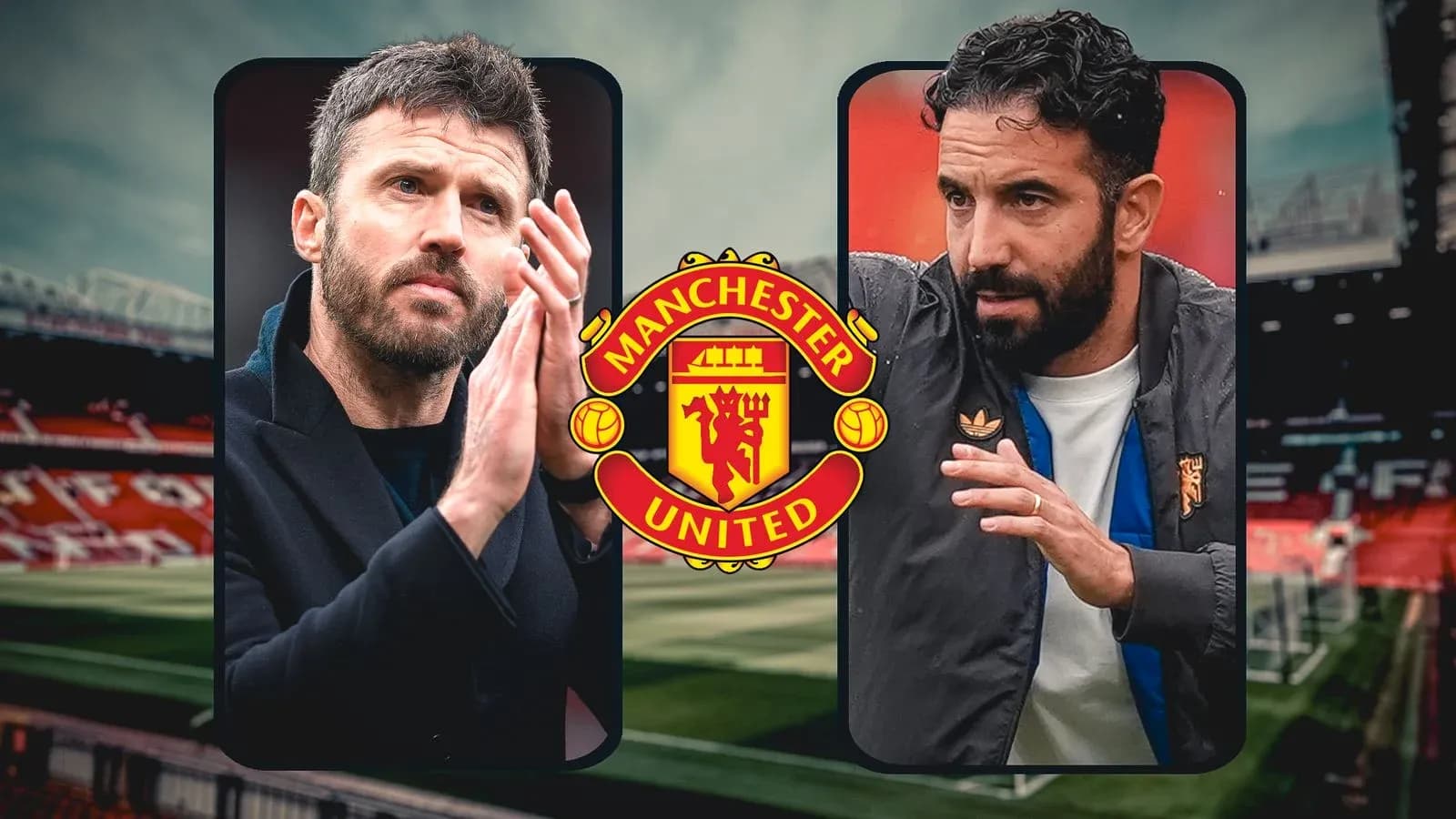
Ruben Amorim vs Michael Carrick: A Shift in Manchester United's Identity
Ruben Amorim once told Manchester United fans they would have to suffer to succeed. Michael Carrick has told them something very different: there is still a United way – and it doesn’t have to feel like punishment.
Twelve months ago, Marcus Rashford was lighting up Barcelona, Carrick was out of work after his dismissal by Middlesbrough, and Amorim was bracing himself for his first full campaign at Old Trafford. Now all three collide again, in the same stadium, with the roles completely flipped.
Rashford, the prodigal forward, walks back into a club that has changed without ever really leaving his orbit. On the touchline waits Carrick, once his team-mate and captain, now the head coach, ready to hand him a pen and a blank page for a new chapter in a story that began in the academy a decade ago.
Across from them stands Amorim. The man United once gambled on, sacked after five turbulent months, now in charge at AC Milan and still hunting his first pre-season win. He arrives with a point to prove and a squad still trying to decipher his demands. United’s meeting with Milan on Saturday is billed as a friendly. It feels anything but. This is a sequel.
It also offers a clear lens on what has changed since United tore up the script midway through last season and handed Carrick the job. Three themes define the shift.
From rigid dogma to United’s attacking DNA
Amorim’s reign at Old Trafford will always be remembered for one thing: the 3-4-3 he refused to abandon.
He came in with a system he trusted and clung to it. Under pressure, he famously declared that not even the Pope could convince him to change shape. The line went viral. The results did not. When the Africa Cup of Nations stripped numbers from his squad, the structure stayed the same while performances sagged.
There were late flickers of compromise, hints that he might bend. In the end, he snapped back to his default. That stubbornness, and the friction it created with the hierarchy, helped usher him towards the exit.
United fans never fully bought in. The goals came in bursts – this was not a dull side – but the three-at-the-back blueprint jarred with decades of expectation. It looked like a coach forcing a club into his image, not a coach tapping into what the club already was.
The same noise is now drifting out of Milan. Early reports from Italy talk of confusion, of players being squeezed into roles to serve the system rather than the other way around.
Carrick walked in and immediately cut across that. His first game, a Manchester derby at Old Trafford, felt like a manifesto. United went on the front foot, broke lines with intent and tore into Manchester City. The 2-0 scoreline flattered the champions. It could have been uglier.
That approach has rolled straight into this pre-season. United move the ball forward quickly. Andrey Santos, one of the summer arrivals, looks hard-wired to pierce midfield lines with vertical passes. Bryan Mbeumo, used centrally, spends his time darting in behind, dragging defences into panic.
Bruno Fernandes, shunted and shuffled under Amorim, has been restored to his natural habitat as a No 10. The response was emphatic: a creative surge that ended with him setting a new Premier League assist record.
Under Carrick, the old argument about United’s “identity” has gone quiet. The team looks like United again – not in nostalgia-soaked theory, but in the way it attacks, risks, and overwhelms.
From doom and storms to belief and ambition
The mood has changed as much as the tactics.
Amorim was box office in front of a microphone. He talked about storms. He talked about suffering. At one point he branded his side the worst team in the club’s history. The soundbites travelled, but they cast a long shadow. The atmosphere around Old Trafford felt heavy, pessimistic, permanently on edge.
The irony is that when he was dismissed, United were still within reach of the top four. You would not have guessed it from his tone. He repeatedly insisted the squad was not ready for the Champions League. Carrick took the same group, shifted the mood, and got them over the line.
Now, on the eve of a new campaign, the language has flipped. Leny Yoro has spoken openly about wanting to win the league. Mbeumo has echoed the ambition. Carrick has not tried to dampen it. He has leaned into it.
He believes this team can do something special. That conviction carries weight in a dressing room that, a year ago, was being told to brace for hardship and lower expectations. Under the previous regime, United flirted with the wrong end of the table. Under the current one, they talk about titles without it sounding delusional.
Belief, once in short supply, has become a central part of the project.
From closed doors to second chances
Under Amorim, falling out of favour often felt final. Cross the line and you stayed on the wrong side of it.
In a squad whose mentality had been questioned for years, that hard line carried a certain appeal. It sent a message. But it also left little room for redemption.
Alejandro Garnacho felt that reality. So did Kobbie Mainoo, who seemed destined to follow him out of the inner circle. Rashford, after public criticism of his attitude, was loaned out twice and looked finished as a United player.
Amorim will point to Garnacho as vindication. The winger’s loan to Chelsea underwhelmed, and he now finds himself at Aston Villa trying to reboot his career. That call looks justified.
Mainoo is another story. Under Carrick, the midfielder went from afterthought to cornerstone. He became a regular, only making his first league start in January yet doing enough to earn a PFA Young Player of the Year nomination. That is a significant mark against Amorim’s judgment.
Rashford sits somewhere in between. His quality has never been in doubt. Amorim’s frustration centred on professionalism and consistency, not talent. Rashford’s flashes at Villa and his role in a LaLiga-winning Barcelona side prove he can still change games at the highest level. The question is whether he now matches the culture Carrick has built at Old Trafford.
Carrick has chosen to find out. He has reopened a door that looked bolted shut. Rashford has a route back, at least until the end of the window in September. The offer is clear: meet the standards, buy into the collective, and there is a place for you.
It is a different kind of ruthlessness. Not the ruthlessness of exile, but of expectation. Perform, or someone else will.
On Saturday in this so-called friendly, Amorim will stare across at a club that moved on from him and a manager who has quietly reshaped it. Rashford will stand between them, emblem of a past mistake and a possible future.
United have chosen flexibility over dogma, belief over fatalism, and redemption over finality. The next nine months will reveal whether that shift delivers trophies – or simply sets up the next twist in this rolling Old Trafford drama.