Tottenham's Pitch: Modern Marvel or Injury Risk?
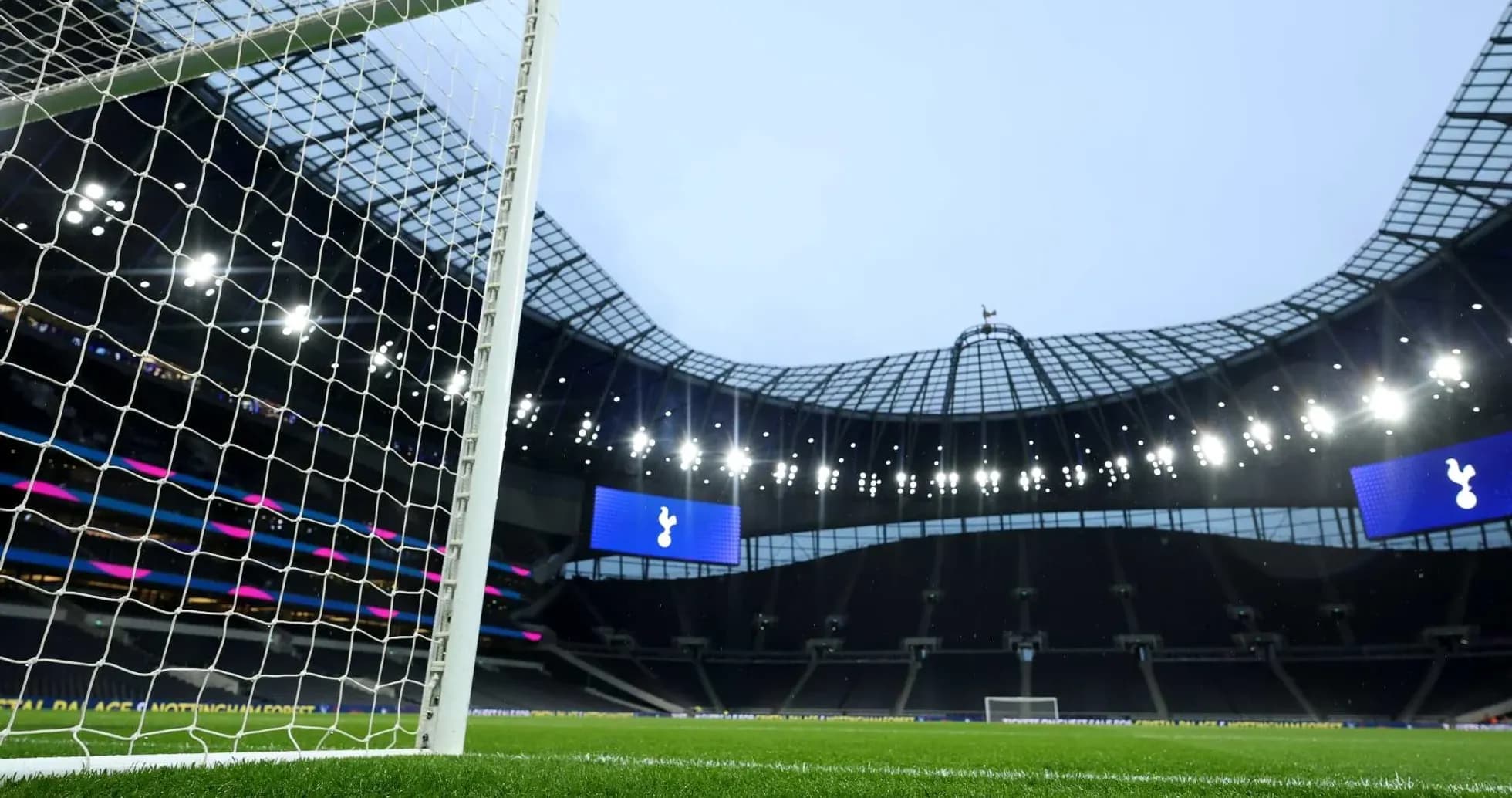
The Tottenham Hotspur Stadium was built to be a showpiece of modern engineering, a venue that could flick from Premier League cauldron to NFL stage and concert arena with the slide of a grass tray. Now that same dual-surface technology is under scrutiny, as the club asks an uncomfortable question: is the marvel under their feet helping to wreck their players’ knees?
New performance director Dan Lewindon has launched a detailed investigation into whether the retractable pitch is playing any part in a worrying spike in serious leg and ligament injuries. Independent testing has already examined the bounce and surface tension of the turf. The numbers, though, have not given Spurs the clarity they wanted. The data is inconclusive, so the club is digging deeper, benchmarking their surface against others across the Premier League.
The concern is not abstract. It is personal, and it is piling up in N17.
High‑profile injuries have stacked up at home: Dejan Kulusevski, Radu Dragusin and Wilson Odobert have all suffered major setbacks on that pitch. James Maddison first sustained a partial ACL tear in a home clash with Bodo/Glimt before later rupturing it fully. Each case adds another layer of doubt, another reason to question whether the state-of-the-art design carries an unseen cost.
Tottenham are not alone in asking those questions. Real Madrid are conducting their own review after a run of ACL injuries since installing a retractable pitch at the revamped Santiago Bernabeu. Two of Europe’s most advanced arenas, both wrestling with the same grim pattern.
A Broken Structure Behind the Scenes
Lewindon’s work has not stopped at the turf. His three‑month review has cut into the club’s internal workings and, according to reports, exposed deeper structural flaws in the performance department.
The diagnosis is blunt: too many silos, not enough shared thinking.
Within the hierarchy, there is a growing belief that a lack of integration between medical and coaching staff has helped create a cycle of repeat injuries. Decisions about training loads, recovery, and return‑to‑play have not been joined‑up enough. Players have bounced between departments rather than being managed by a unified team.
Tottenham’s answer is a “small‑team approach”. Specific physios will be assigned to tight groups of around six players, tasked with tailoring training plans and sharpening the detail of physical preparation. The idea is simple: fewer faces, more accountability, and a deeper understanding of each player’s body.
Four Managers, One Bruised Squad
The chaos has not been limited to the treatment room. The dugout has been a revolving door.
In the space of a single year, Spurs have worked under four different head coaches: Ange Postecoglou, Thomas Frank, Igor Tudor and Roberto De Zerbi. Each arrived with distinct tactical demands, different conditioning expectations, and their own ideas on intensity. The squad has been forced to lurch from one regime to the next.
That churn has come at a cost. The club believes the constant shifts in training methods and match preparation have raised the physical risk to players, who have struggled to adjust as workloads and styles changed sharply with every appointment. When the engine is tuned one way on Monday and another by Friday, breakdowns become almost inevitable.
The Xavi Simons Flashpoint
The handling of Xavi Simons’ season‑ending injury at Wolves poured fuel on an already heated debate.
In that match at Molineux, the midfielder went down injured, received ice spray treatment and was briefly allowed to continue before eventually being stretchered off with a ruptured ACL. Supporters raged at what they saw as a reckless decision, a symbol of a medical department under strain or out of its depth.
Inside the club, the view is very different. Tottenham have strongly defended their staff. It is understood Lewindon was very satisfied with how the incident was managed. Simons wanted to carry on, and with a full ACL assessment almost impossible at pitchside, the decision to let him attempt to continue has been deemed correct by those in charge.
Crucially, the club insists his short return to the pitch did not cause any further damage. For them, this was not negligence, but an unfortunate outcome in a situation where perfect information simply does not exist.
The Simons injury was only one flashpoint in a brutal opening spell under De Zerbi. During his first three matches, Spurs also lost Cristian Romero and Destiny Udogie to serious problems. The Italian has quickly pushed for a stronger support network around the squad, including the appointment of a team psychologist to improve communication across performance and medical teams and to help players navigate the mental toll of repeated setbacks.
Maddison’s Reality Check
On the pitch, the human cost has been impossible to ignore. Off it, James Maddison has become one of the clearest voices demanding answers.
"Our situation with the injuries has been worse than any other club," he said, refusing to hide behind clichés. "People try and say, 'Oh, but we've got this and that'. But ours is astronomical, and we need to look at why that is."
Maddison is quick to stress that not every incident fits a neat theory. Some blows are just brutal luck. He points to his own ACL and Kulusevski’s “horrendous knock” from Marc Guehi as examples that cannot be pinned on the pitch, the medics, or any grand explanation. Sometimes, as he puts it, “that’s rubbish”.
Yet even with that caveat, he is adamant the sheer volume of absences dragged Tottenham into danger as they battled to avoid relegation. "We've been a bit unlucky," he admitted. "But like I said, the big names that we've missed, it does affect you and you can't just deny that."
He reels them off: himself, Kulusevski, Mohammed Kudus, Rodrigo Bentancur. Key figures missing for months at a time. In Maddison’s eyes, that was the difference between a season spent fighting at the right end of the table and one spent staring down the trapdoor.
"If you had had them for the whole season, we wouldn't have been in this situation, I strongly believe. That's just not me being naive, that's just a fact."
The numbers on the injury list back up his frustration. The league table underlines it.
Yet even on a grim backdrop, Maddison clings to what the squad has shown in the worst of it. "It is the situation we find ourselves in," he said, "and I am just proud of the lads to dig deep today."
The stadium remains a gleaming monument to modern football. The pitch still glides away to reveal the NFL field beneath. But until Tottenham can answer why so many of their stars are breaking down on that surface and inside that structure, the question will linger: is this cutting‑edge home helping them compete, or quietly cutting them down?