Tottenham's Near-Miss Against Leeds: A Draw that Frustrates
Tottenham feel the sting of a near-miss. This was supposed to be the afternoon when a late-season surge hardened into something more concrete, when a raucous home crowd could exhale and start plotting next year. Instead, they walked away with a 1-1 draw against a sharp, stubborn Leeds United and a lingering sense of what might have been.
For 45 minutes, it simmered. The first half was tight, tense, and goalless, a contest between a Spurs side trying to build on their impressive display against Villa and a Leeds team very much not “on the beach.” Any notion that the visitors might drift through this one disappeared inside the opening 10 minutes. Leeds were compact, organised, and aggressive in the press. This was a live contest, not an end-of-season formality.
Tottenham named an unchanged XI from the Villa win, and the logic was clear. That performance had been one of their most coherent of the campaign. Why touch it?
They started with purpose. Pedro Porro slid a superb ball in behind early on, Richarlison bursting onto it with space to attack. The move begged for a composed finish or a cut-back. Instead, his heavy touch killed the moment. It set the tone for his afternoon: tireless running, relentless pressing, but a lack of precision when it mattered.
The chances kept coming. Spurs found ways to carve Leeds open, especially down the flanks and in transition, even if central midfield again felt more like a bypassed zone than a creative hub. They racked up promising looks without reward, a steady drip of half-chances and near-misses that fed both optimism and irritation inside the stadium.
At the other end, they needed their goalkeeper. Kinsky produced a stunning first-half save, clawing away a close-range effort that seemed destined to cross the line. It was the kind of intervention that shifts seasons, not just matches.
Leeds thought they had their own big moment late in the half, only for VAR to confirm an offside in the build-up to what might well have ended with a penalty against Danso. Spurs escaped, and for once did not concede in stoppage time. Goalless at the break, but hardly lifeless.
Second Half
The second half finally gave the game its headline.
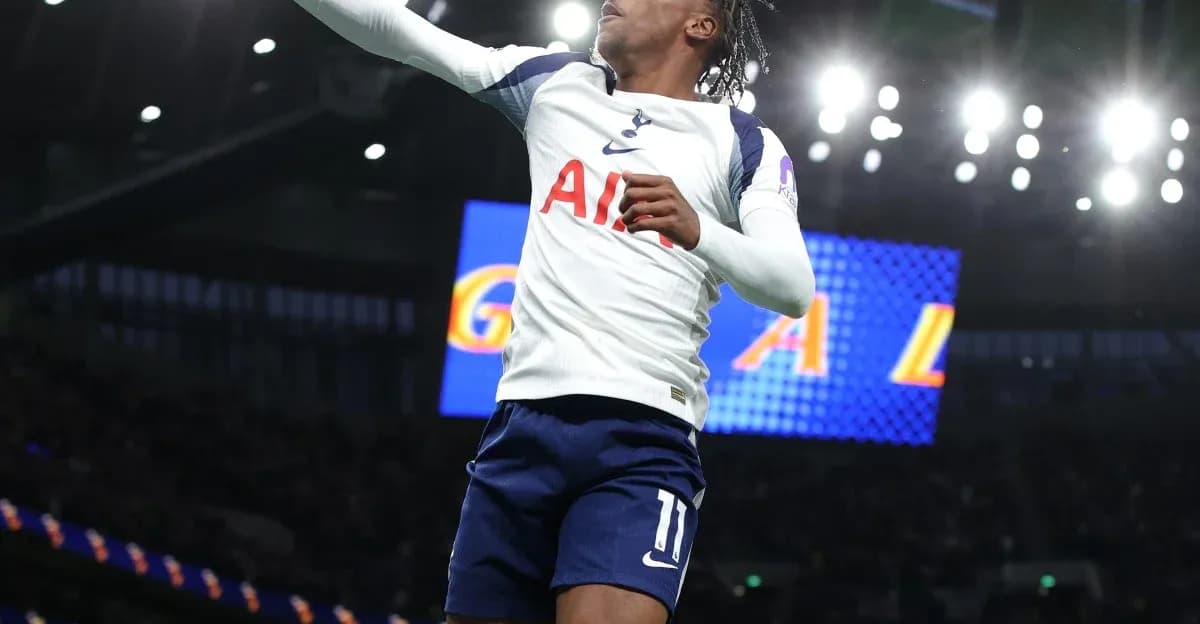
Mathys Tel had been lively without being decisive, as he so often is. Then he found his moment. Picking up the ball in space, he unleashed an outrageous strike that screamed into the top corner. Pure technique, pure conviction. The kind of shot he attempts regularly but rarely perfects. This time, everything aligned. The stadium erupted. Tel, at last, had his signature Spurs goal.
The goal seemed to free Tottenham. Joao Palhinha almost added a spectacular second, sliding in to meet a loose ball and coming inches away from bundling it over the line. Randal Kolo Muani produced one delightful touch to tee up Richarlison, only for Pombo to blaze the follow-up over the bar. Again, the pattern: clever approach play, wasteful finishing.
Leeds, though, refused to fade. They stayed in the game, kept asking questions, and eventually the pressure twisted into something far more dramatic.
The pivotal moment arrived in Tottenham’s own box. Tel, now the central figure at both ends, attempted an acrobatic overhead clearance. Ethan Ampadu rose to attack the same ball. Tel, unaware of the Leeds man’s position, caught him in the head. The contact was clear. What followed was six long minutes of VAR scrutiny and a trip to the monitor.
The decision went against Spurs. Penalty.
Intent doesn’t come into it in these situations. Tel didn’t mean it, but attempting that kind of clearance in a crowded penalty area is a risk, and he paid for it. The real debate among supporters will be consistency: would the same call be made if it were a different defender in a different shirt? On this occasion, the law was applied firmly.
Dominic Calvert-Lewin stepped up and did what Tottenham’s forwards had not. He buried the spot-kick. 1-1, and the mood inside the ground shifted from confident to anxious in an instant.
From there, the match stretched into a frantic, nervy contest, heavy with season-defining implications. Spurs pushed again. Leeds threatened on the break. Kinsky, once more, stood tall, tipping a ferocious Longstaff drive away in stoppage time with a save that might yet prove as important as any goal this campaign. Without it, Tottenham’s season could have tilted into real trouble.
The drama did not end there. Deep into the extended added time — 13 minutes, to the bemusement of almost everyone — Tottenham believed they had their lifeline. James Maddison, making his first appearance of the season as a late substitute, drove into the box and went down under a challenge that looked, from home eyes at least, like a clear penalty. The referee waved play on. VAR did not intervene.
The roar of anticipation turned instantly to fury. For a fanbase already bristling over the earlier decision against Tel, it felt like a second wound. Spurs were convinced. The officials were not. The whistle eventually went, the score unchanged, the sense of grievance very much alive.
Maddison’s cameo still mattered. Rusty or not, his presence alone changed the feel of Tottenham’s attacks, adding a touch of craft and urgency between the lines. His return is a rare piece of good news at a tense stage of the run-in.
Strip away the emotion and the numbers tell their own story. The final xG read 1.32 to 1.26, almost dead even. A draw, on balance, was not an injustice. Tottenham did not collapse. They did not play poorly. Last week against Villa, the same kind of performance produced goals. This week against Leeds, the ball simply refused to cooperate.
The table, though, does not grade on aesthetics. The point keeps Spurs two clear of West Ham with two matches to play, bolstered by a strong goal difference that serves as an extra layer of protection. It is an advantage, but not a cushion. Not yet.
The equation is simple enough: match or better West Ham’s result away at Newcastle and Tottenham stay in control of their fate. The complication is the venue. Next up is a trip to Stamford Bridge, a ground that has been a graveyard for Spurs ambitions for most of the modern era. One league win there since 1990 tells its own story.
So this 1-1 draw lives in the awkward space between acceptable and infuriating. Not a disaster. Not what they needed either. The performance offered reasons for belief; the scoreline, reasons for doubt.
The season now narrows to a question that has haunted Tottenham for years: when the pressure bites hardest, can they finally turn performances into results in the places that have hurt them most?