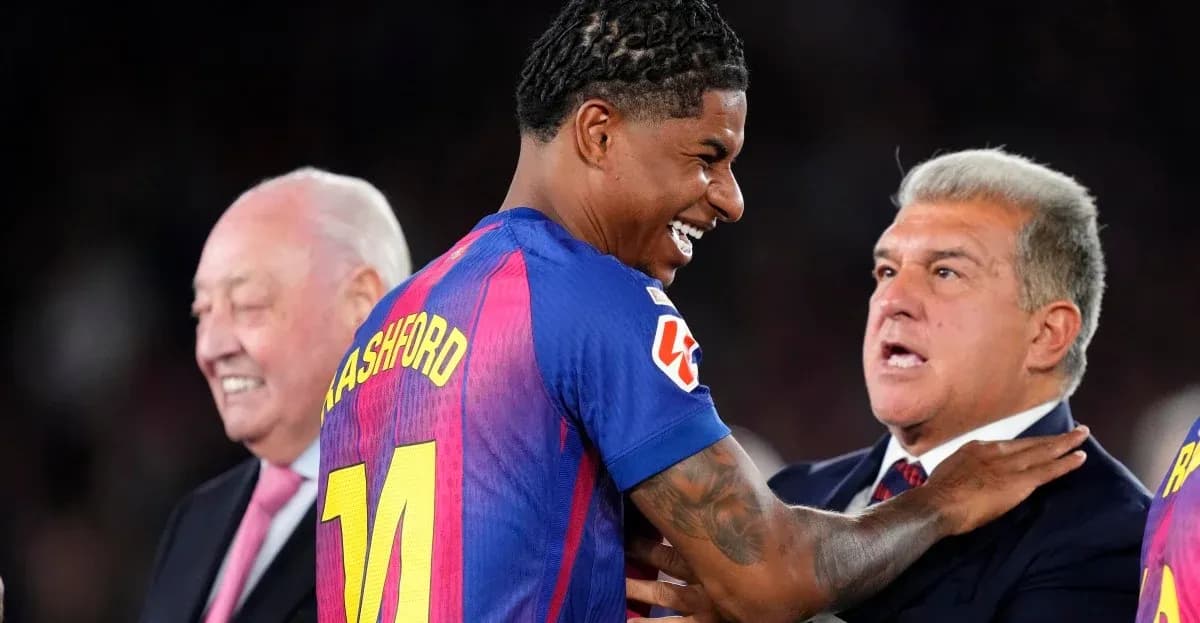
Barcelona Warned: Don't Let Marcus Rashford Return to Manchester United
Barcelona have been warned: let Marcus Rashford slip back to Manchester United and you may spend years regretting it.
That is the stark message delivered in Spain, where the forward’s loan spell at Barcelona and his performance against Real Madrid have dramatically shifted the conversation around his future. For a club wrestling with finances and squad planning, the numbers being discussed sound almost absurdly low.
“Thirty million euros in the current market for a player with these characteristics, these numbers, this experience… that’s a steal,” the assessment ran, via AS.
In other words, this is the kind of deal big clubs are supposed to pounce on, not second‑guess.
The argument is simple: Rashford changes games. He did it against Real Madrid, in the most unforgiving fixture of all.
Rashford repeatedly tore into Madrid on the counter, turning and running at a back line that never looked comfortable once he opened his stride. The description from Spain was blunt: “Madrid looked terrified every time he turned and ran. Against Real Madrid, he completely destroyed them on the counter-attack.”
This was not a quiet, tidy cameo. It was a statement. His pace ripped open space that did not seem to exist seconds earlier. His aggression forced defenders to retreat. His directness dragged the entire Madrid block backwards, distorting their shape. His confidence on the ball made him the reference point every time Barcelona broke forward.
“That speed, the aggression, the directness, the confidence—Madrid couldn’t handle him. Every time Barcelona advanced, he was the danger,” the analysis continued.
Rashford’s influence stretched far beyond open play. He scored from a free kick in El Clásico, a moment that underlined both his technique and his nerve on the biggest stage. Off the ball, he pressed. On the last line, he constantly threatened to dart in behind. Between the lines, he created numerical superiority by drawing markers and freeing teammates.
“He scores a free kick in El Clásico, stretches the entire defensive line, creates numerical advantages, presses, gets in behind the defense,” the verdict read, building a picture of a complete modern forward, not just a sprinter in space.
And still, inside Barcelona, there is doubt. Debate over whether to commit 30 million euros to make the move permanent has lingered, a hesitation that has baffled those watching his impact up close.
“Yet there are people within the club who hesitate to pay 30 million euros? That seems insane to me,” came the final, pointed line.
For a club that has spent heavily and sometimes carelessly in recent years, the question now is brutally clear: can Barcelona really afford to pass on a player who looks tailor‑made for their biggest nights, at a price that belongs to another era?