Torino vs Roma: A Tactical Analysis of Serie A Match
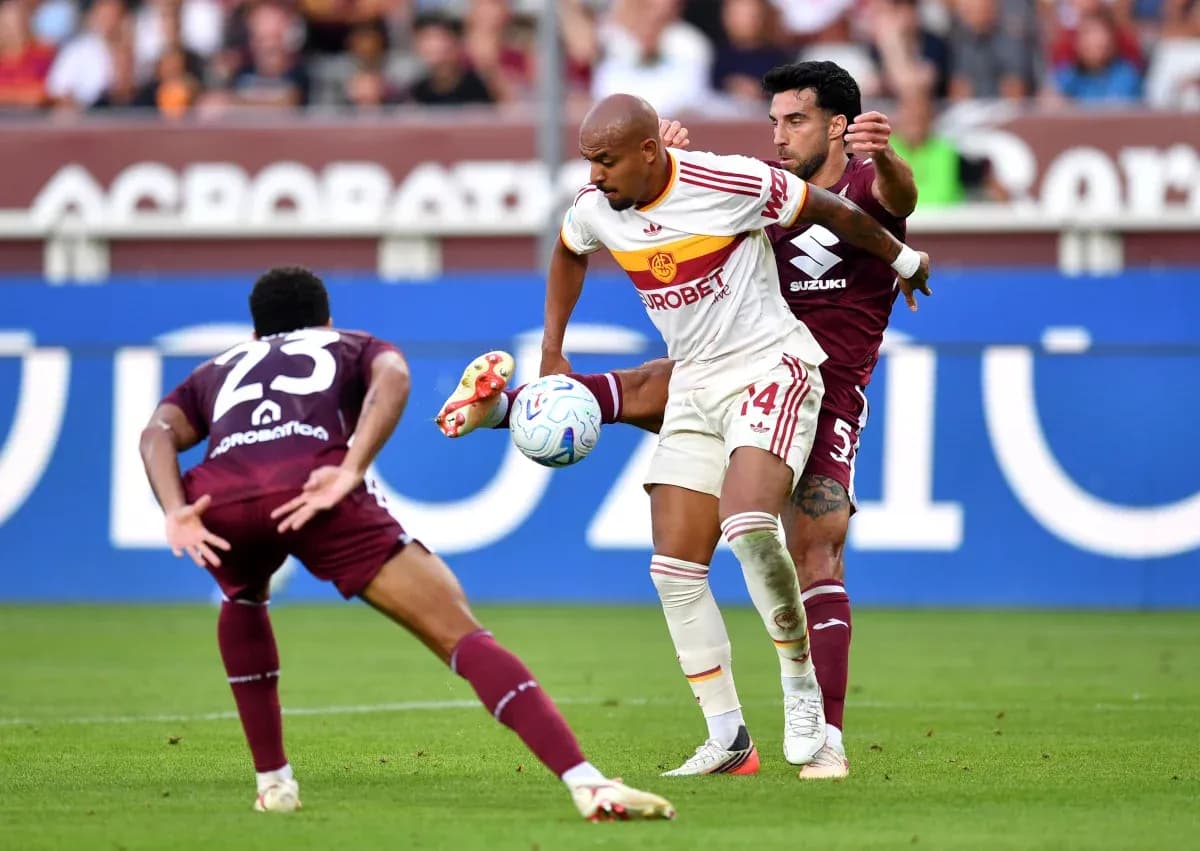
Under the late-afternoon lights of the Stadio Olimpico Grande Torino, this was billed as a litmus test of identity as much as a fixture: Torino, still searching for stability in Serie A’s early weeks, against an AS Roma side that has started the season like a machine. By full time, the 2–0 scoreline to Roma felt like a confirmation of the broader story the table already hinted at.
Heading into this game, Torino were 14th with 3 points from 4 matches, their overall goal difference at -3, the product of 4 goals scored and 7 conceded. At home they had been particularly fragile: 2 defeats from 2, with just 1 goal scored and 4 conceded. Roma arrived as league leaders, 1st with 12 points from 4, and a commanding overall goal difference of +11 (12 scored, 1 conceded). On their travels they had been perfect: 2 away wins, 6 goals scored, none conceded.
I. The Big Picture: Structures and Season DNA
Ignazio Abate doubled down on Torino’s defensive shell, deploying a 5-3-2. Lucas Perri anchored a back five of R. Belghali, E. Comert, S. Coco, P. Comuzzo and N. Fortini. Ahead of them, a compact midfield trio of G. Gineitis, R. Mandragora and K. Fitz-Jim was tasked with screening and springing transitions toward the front two, G. Simeone and N. Vlasic.
The shape reflected Torino’s season-long pattern: cautious, low-margin football. Overall they had averaged 1.0 goals for per game, but at home that dropped to 0.5, while they allowed 2.0 goals against per home match. Without a single clean sheet in total and having already failed to score once overall, the margin for error was always thin.
Roma, under Piero Gasperini Gian, lined up in a 3-4-2-1 that looked more like a rolling wave than a static formation. M. Svilar was protected by a back three of G. Mancini, L. Balerdi and M. Hermoso. The wing corridors belonged to N. Molina and E. Lulli, with B. Cristante and N. Pisilli as the central hinge. Ahead of them, P. Dybala and M. Soule floated behind D. Malen, the league’s most lethal early-season striker.
Roma’s season profile is ruthless: overall, they had scored 10 goals in 3 matches from the separate statistics snapshot, with an overall average of 3.3 goals per game, and conceded only 1 at an overall rate of 0.3. On their travels in that same snapshot, they had averaged 4.0 goals for and 0.0 against. That attacking avalanche, married to a mean defensive line, framed everything about their approach in Turin.
II. Tactical Voids: Absences and Discipline
Torino came in without some of their most direct threats and depth options. C. Adams, who had already scored 2 league goals overall and offered vertical power, was ruled out with a muscle injury. P. Pellegri’s knee problem and F. Israel’s shoulder injury further thinned the spine, while C. Casadei’s rest removed another midfield runner from Abate’s options. On paper, Torino’s bench still carried variety – from the experience of R. Rodriguez and C. Biraghi to the power of D. Zapata – but the absence of Adams in particular blunted their counter-attacking ceiling.
Roma were not untouched either. M. Bah (knee injury) and E. Ndicka (illness) were missing, slightly reducing Gasperini’s defensive rotation and athleticism at the back. Yet the core of their system – the back three, Cristante’s control, Dybala’s creativity and Malen’s finishing – remained intact.
From a disciplinary perspective, Torino’s season data suggested a relatively calm side, with their only recorded yellow-card cluster coming between 16–30 minutes, where 100.00% of their overall yellows had been shown. Roma, conversely, spread their bookings more evenly: 33.33% of their overall yellows in each of the 0–15, 31–45 and 46–60 ranges, a sign of a team that plays on the edge in all phases and across all periods of the match.
III. Key Matchups: Hunter vs Shield, and the Engine Room
The headline duel was always going to be D. Malen against Torino’s back five. Malen arrived as Serie A’s most efficient finisher: 5 goals overall from 3 appearances, with 11 total shots and 7 on target, plus a strong 8.17 average rating. He is not just a poacher; 13 dribble attempts with 8 successes underline his ability to destabilise defensive lines off the dribble as well.
Torino’s “shield” was collective rather than individual. E. Comert and S. Coco had to hold an aggressive line while Comuzzo and Fortini protected the wide channels against Roma’s wing-backs and half-spaces. Given Torino’s overall defensive numbers – 1.8 goals against per match, with 2.0 conceded at home – the risk was that once Roma’s first line of pressure was broken, Malen and Soule would find gaps between the centre-backs and wing-backs.
Behind Malen, the creative axis of Dybala and Soule posed a second problem. Dybala, leading the league in assists with 4 overall and averaging an outstanding 8.63 rating, is the conductor: 164 passes overall, 14 key passes, and a willingness to drop between the lines. Soule complements him with directness and final-third productivity: 2 goals and 1 assist overall, 10 total shots and 7 on target, plus 3 interceptions that show his pressing intelligence.
Torino’s answer lay in the engine room. Mandragora, Gineitis and Fitz-Jim had to compress space around Cristante and Pisilli, preventing Roma from turning calm build-up into vertical surges. Mandragora’s role as tempo-setter and destroyer was crucial; if he could not slow Dybala’s receiving zones or cut off the lane into Malen’s feet, Torino’s back five would be left to absorb waves rather than control them.
IV. Statistical Prognosis and Tactical Verdict
Overlaying the season data on the tactical picture, Roma’s superiority felt structural rather than situational. Overall, Torino’s attack has been modest – 4 goals in 4 matches, with their biggest win coming away at 1–2 and their heaviest home defeat a 0–2 – while Roma’s biggest away win was 0–4, a snapshot of their capacity to run away from opponents on their travels.
Defensively, Torino’s lack of clean sheets overall and their tendency to concede twice at home aligned ominously with Roma’s multi-scorer threat. Roma’s clean-sheet record – 2 in total from the separate statistics snapshot, including 1 away – suggested that once they scored first, they had both the structure and the control to suffocate games.
Even without explicit xG values, the pattern is clear: Roma generate high shot volume and quality through Malen, Dybala and Soule, while conceding very few good chances thanks to a stable back three and an industrious midfield. Torino, by contrast, lean on defensive density and moments from their forwards, but with Adams absent and their home scoring average at 0.5, the probability tilted heavily toward Roma dictating territory and chances.
Following this result, the narrative hardens: Roma look every inch a title contender built on balance and brutality in both boxes; Torino, still without a home point and with their overall goal difference further eroded, must quickly evolve from mere resilience into a side capable of sustaining attacks, or risk spending the season pinned to the lower half of the table.