Terry Butcher’s Legacy and England's Search for a New Warrior
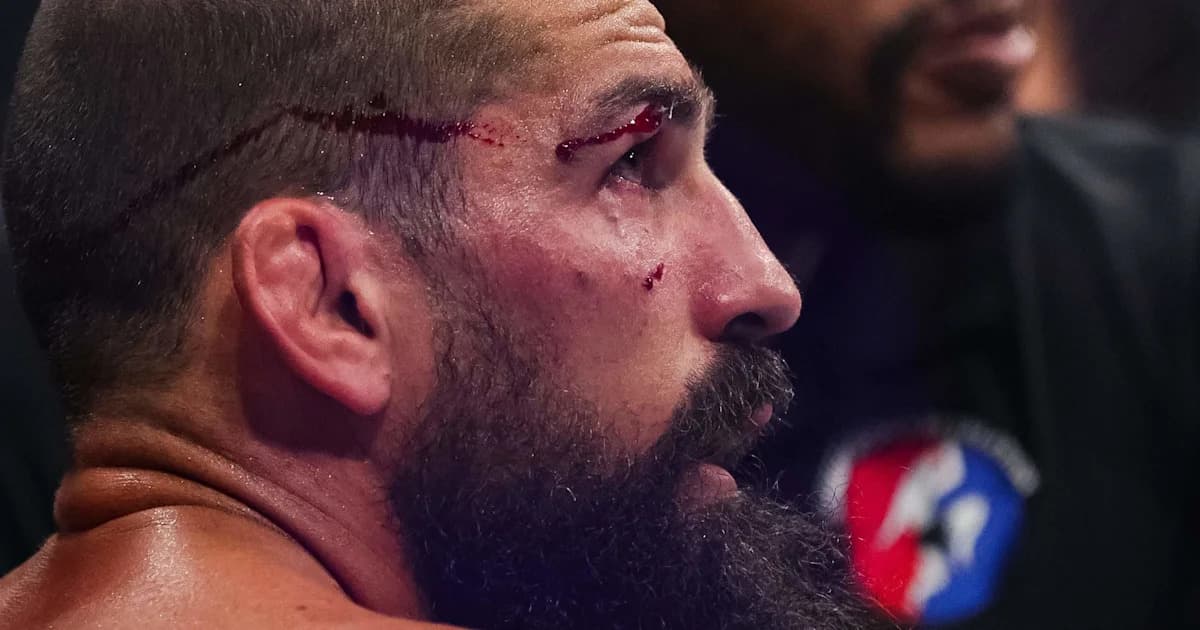
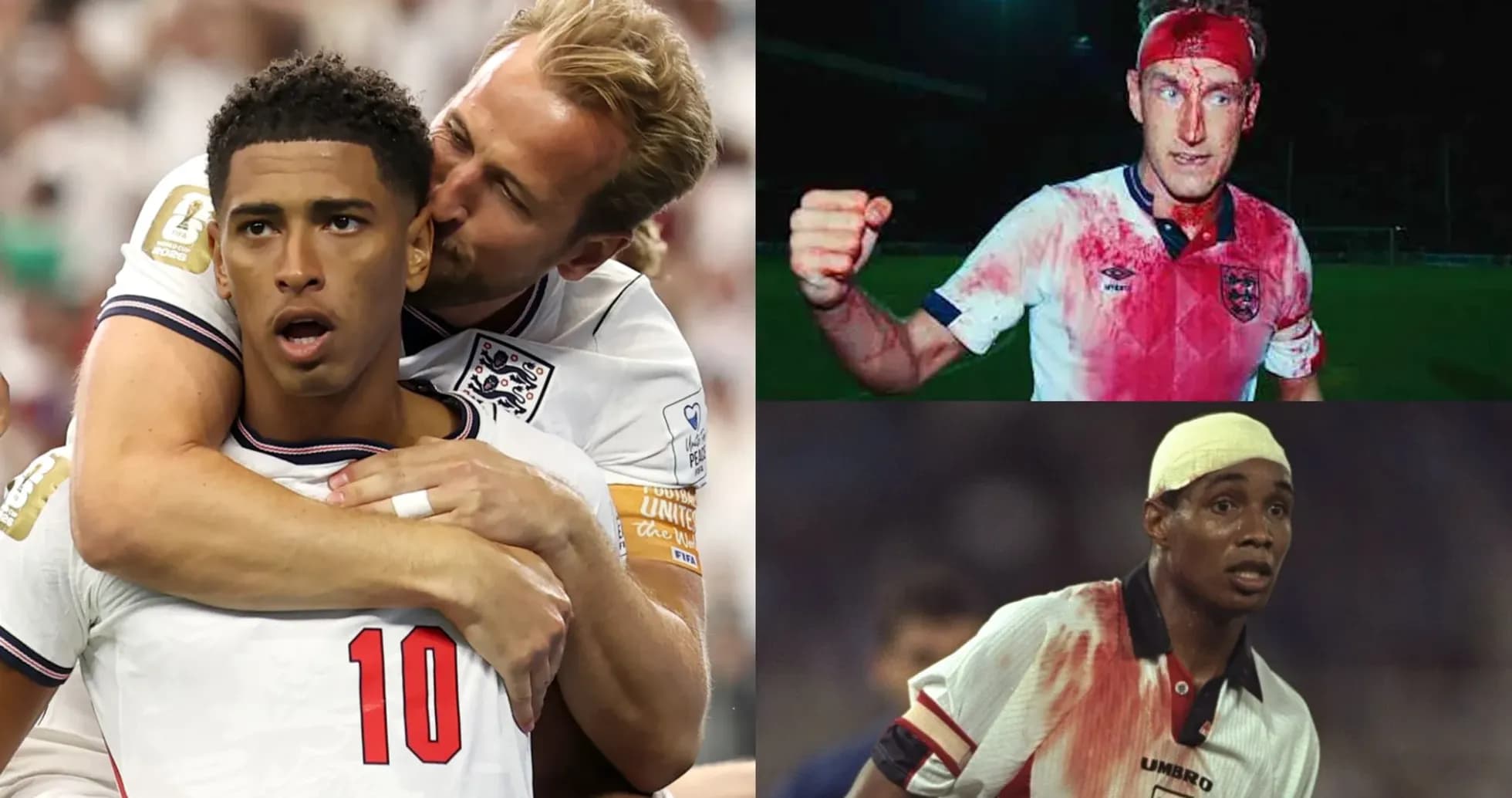
The image is burned into English football folklore: Stockholm, September 1989, Terry Butcher’s head split open, his England shirt soaked in blood, yet the centre-half refusing to come off. By the end, white had turned to red, and the defender who once patrolled for Ipswich and Rangers had become a symbol. Not of recklessness, but of a kind of defiance that felt stitched into the Three Lions’ shirt.
Butcher has long been held up as the embodiment of that spirit. Paul Ince followed in the same vein, bandaged and bloodied in Rome as he helped drag England past Italy and into the 1998 World Cup. Stuart Pearce, too, lived in that world of clenched jaws and flying tackles.
Football has moved on. Blood on a shirt now means an immediate stoppage, a change of kit, medical checks. But the question lingers: who in this modern England would really put their body on the line?
Asked exactly that while speaking in association with Domino’s “Shirtiette” campaign – which leans into the idea of fans getting messy for their team – Butcher did not hesitate for long.
“The biggest warrior we've got at the moment? I’d probably say Jude Bellingham, someone like that,” he told GOAL.
“He'd be more of a warrior, he does get worked up and he's fiery. I like that. Perhaps sometimes too fiery, but that's the way he plays. He lives on the edge sort of thing. He wants to put himself about and gets frustrated like everybody else. I think Jude would be the one for me.”
In an era of data, structure and risk management, Butcher is drawn to the Real Madrid midfielder’s raw edges. The 21-year-old rages, celebrates, complains, drives his team on. It is messy, emotional, human – and to a man like Butcher, that matters.
The Game Is a Different Animal Now
The old guard often talk about how football has changed. Butcher does more than sigh nostalgically; he dissects it.
Asked whether characters like himself, Ince and Pearce have been phased out, his verdict is blunt.
“Yeah, it's faded out of the game because the game is a different sort of animal now. It's more technical. It's more about ways of playing rather than just getting stuck in.
“There's no sort of real physicality in football. It's all about the technique. It's all about creating overloads and all the technical terms. The nearest that comes to our day is probably on set plays and particularly corners when everybody seems to take on a wrestling image and try and bundle people to the ground.”
He is not blind to progress. He accepts that much of the evolution has been for the better. But he does not hide his belief that something has been lost.
“The game has changed and you can see that it's changed for the better in many instances, but I just think a bit more physicality would certainly help. It certainly helps with the fans because the fans always like to see someone getting stuck in, but you can't do that now because you do run the risk. If you do intimidate players and if you do throw your weight around, then you're in danger of getting not a yellow card, but a red card.”
The line between aggression and dismissal has never been thinner. One late lunge, one mistimed shoulder, and the warrior becomes a liability.
Where Are the Organisers?
England’s need for leaders has rarely felt more acute. Sixty years without a major trophy still hangs over every tournament squad, every new generation promised to be “the one.”
So who, in this current group, marshals the back line as Butcher once did? Who snarls, orders, drags the defensive unit into line?
His answer is stark.
“No, I don't think there is. I don't think there's been anybody there for a long, long time.”
He reaches back to his own playing days to underline the contrast.
“I think gone are the days when you can speak harshly at players. I had Bryan Robson, he used to speak harshly at me if I did something wrong and then I'd have a go back at him if he did something wrong – but he didn't do anything wrong generally so I didn't have to go back at him! But you let your feelings be known vocally, very quickly and very strongly.”
Today’s dressing rooms operate differently. So do today’s tactical systems.
“Nowadays you don't do that. I think one of the reasons is that players, particularly on set plays, in the corners and free-kicks, they don't mark a specific opponent. They are zonal, so there's no need for them to shout or do anything else.
“I think the way that football is now, players are too nice with each other. There's no one demanding more of each other. There's no leaders in the group. It's players and just a bunch of individuals getting on with it. They may say things in the dressing room, but on the pitch there doesn't seem to be anyone that really does shout and point a finger.”
One name does escape that criticism.
“[Jordan] Pickford does that sometimes and he points a finger. Not many in the England team do. It's just a case of getting on with their job and being the best that they can be themselves.
“I liked the vocal side. I enjoyed it. I enjoyed praising people as well as also shouting at them to urge them on, ‘come on lads’ and all that sort of thing. You see it occasionally, but not very often. I'd like to see it more.”
In Butcher’s world, leadership is not a slogan or a social media post. It is a shout in the 88th minute when legs are gone and minds are foggy. It is confrontation as a form of care.
Bellingham, Rice and the Future of the Armband
For now, Harry Kane wears the armband and carries the records. Eighty-one international goals, a place in history already secured, and still he keeps scoring, keeps leading the line.
At some point, though, England will need a new captain. Declan Rice and Jude Bellingham sit at the front of that queue, each with a different style, each already central to how this team plays.
Questions have occasionally circled Bellingham’s temperament. Could that fire be harnessed into captaincy, or would it burn too hot? Butcher sees a path.
“I was the captain of a few clubs and I used to kick doors down and I used to be vocal and I used to swear at referees and all these kinds of things. Not what you would really expect a captain to do, but that was what it was in those days.
“I think Bellingham will in time mature, particularly on the international scene. I think then he could be eligible for the captaincy. I think at the moment he's one of the lieutenants, one of the wingmen, he's underneath that captaincy level.”
That word – lieutenant – feels telling. Bellingham as the emotional spark, the driving force from midfield, but not yet the man who carries the full weight of the armband.
“Declan Rice would be an obvious candidate for a captaincy, particularly following in the footsteps of Harry Kane,” Butcher continued.
Rice brings a different type of authority. Calm, consistent, relentlessly available. The kind of presence managers trust and team-mates gravitate towards. Yet Butcher is in no rush to usher Kane off the stage.
“But Harry Kane could play forever. The way he's going about his business, the way he looks after himself, the way he behaves, he’s like [Cristiano] Ronaldo and he could play forever. Harry didn't have much pace to lose, but his brain seems sharper, his reactions seem sharper. I think that he's got a lot more to do.”
For all the talk of the next generation, the current captain is still setting the standard – not with blood on his shirt, but with the quiet, relentless accumulation of goals and games.
New Jersey, New Demands
The next test comes in North America. England close out their Group L campaign at the 2026 World Cup against Panama in New Jersey, a fixture that on paper should be routine, but in tournament football rarely is.
Kane will lead the line again. Bellingham will stride into midfield, Rice likely anchoring behind him. Jordan Pickford will bark from his penalty area. Somewhere in the stands, fans will remember Butcher’s bloodied shirt and wonder what “warrior” looks like in 2026.
Thomas Tuchel, now the man charged with turning this group into champions, will want more than control. He will want edge, energy, a performance that ignites those in the stadium and those watching at home.
England do not just need tactics and talent to end six decades of hurt. They need leaders who demand more, voices that cut through the noise, and a few players willing to live on that same edge that Butcher once did.
The question now is simple: who is ready to step into that space when the next World Cup game in New Jersey turns ugly, tight and tense – and who will just quietly do their job?