Tactically Tight Champions League Play-offs: Fenerbahçe vs Lyon
The 1-1 draw at Chobani Stadium was a tactically tight Champions League Play-offs first leg, shaped by two mirror 4-2-3-1 systems and a finely balanced statistical profile. Fenerbahçe had a slight edge in possession (52% to 48%) and passing volume, but Lyon’s structure without the ball and their first-half vertical threat ensured the contest stayed even in both score and shot volume (12-12 in Total Shots, 5-5 in Shots on Goal).
Both sides built from a double pivot, yet used it differently. For Fenerbahçe, N. Kanté and M. Guendouzi were tasked with controlling rhythm and counter-pressing. Their 453 Total passes with 389 accurate at 86% show a methodical approach, circulating through the back four of N. Semedo, M. Škriniar, N. Aké and A. Brown before accessing the advanced trio of M. Greenwood, Talisca and K. Akturkoglu behind V. Muriqi. Lyon, with T. Tessmann and T. Morton as the double pivot, were slightly more direct: 433 Total passes, 375 accurate at 87%, and fewer wide combinations, reflected in 0 Corner Kicks but more blocked efforts (5 Blocked Shots to Fenerbahçe’s 2), underlining their willingness to shoot through traffic rather than work crossing overloads.
First Half
The opening phase belonged more to Lyon’s defensive organisation than to their attack. Their back four held a compact line, with A. Maitland-Niles and Abner Vinicius pinching in to deny central lanes to Talisca. The first booking, at 37', to Abner Vinícius (Lyon) for “Foul”, illustrated how aggressive the visitors were in defending Fenerbahçe’s left side, where K. Akturkoglu tried to receive between lines. Lyon’s 13 Fouls, identical to Fenerbahçe’s 13, came largely from controlled contact rather than desperation, helping them disrupt rhythm without being overrun.
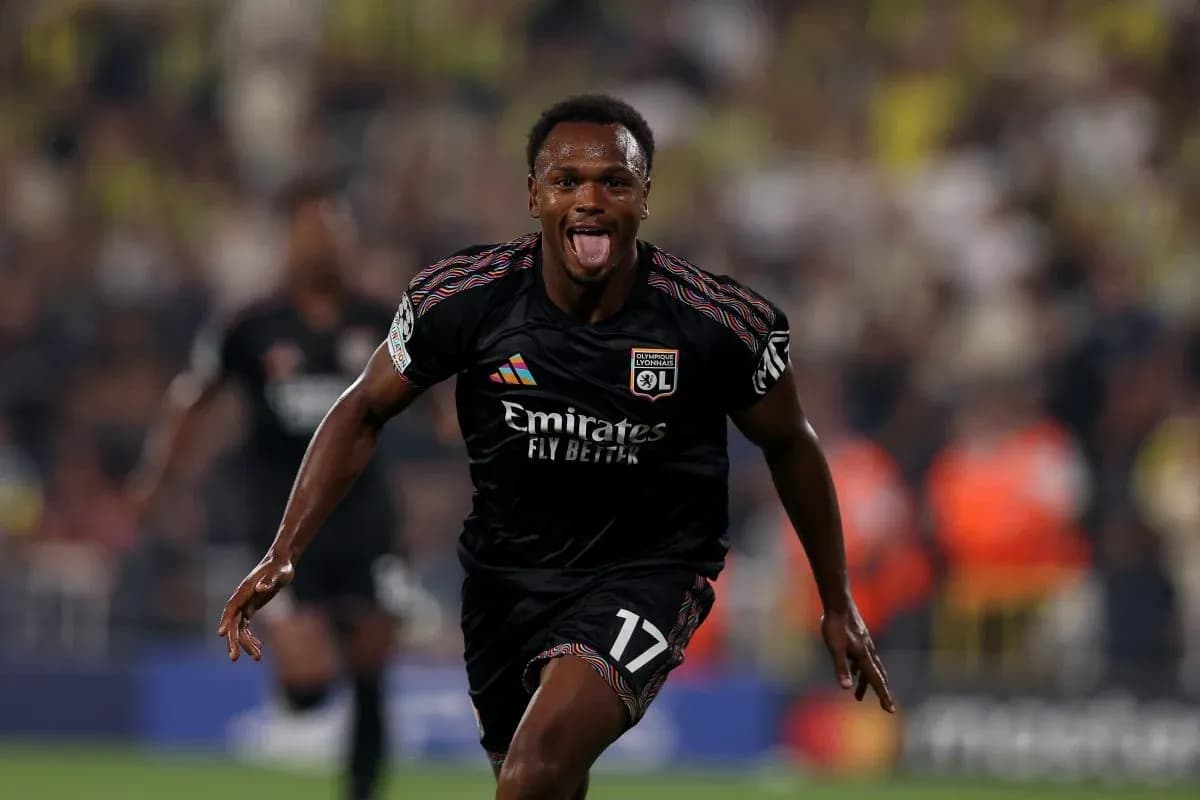
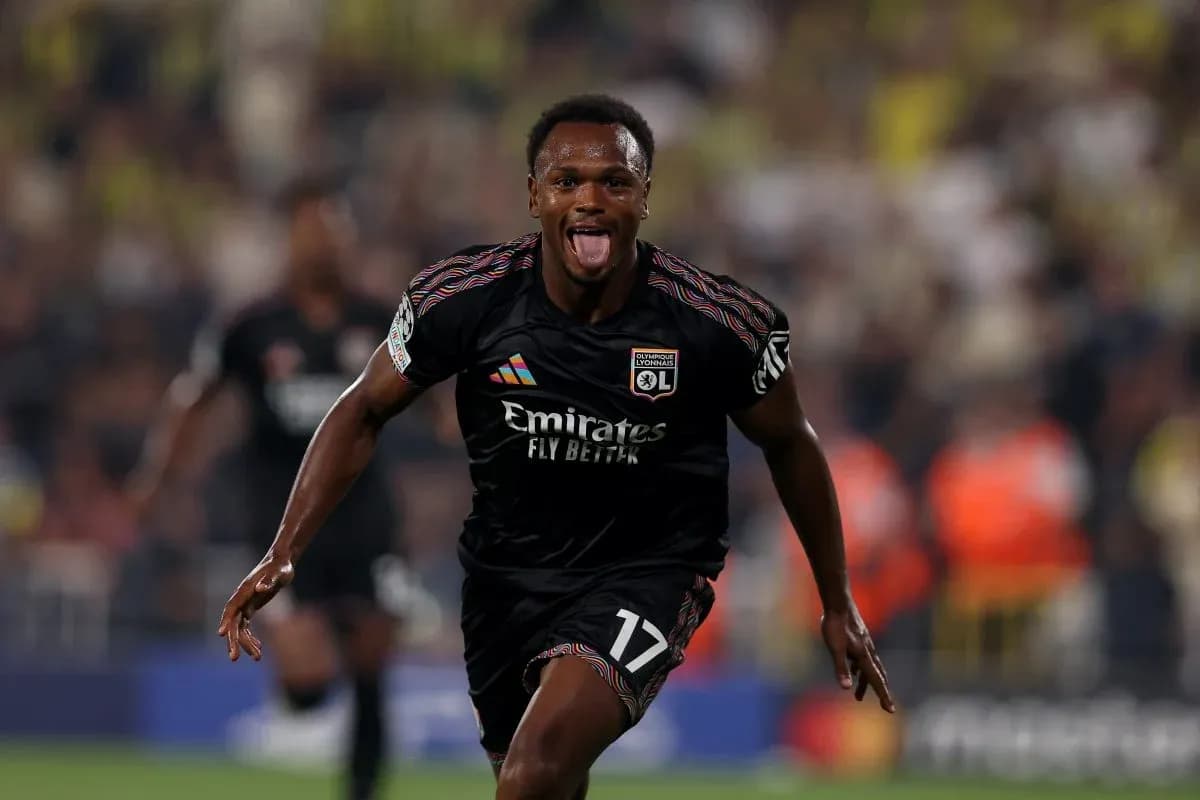
Lyon’s goal on 40' through L. Openda, assisted by C. Tolisso, emerged from this balance: winning the ball in midfield, they transitioned quickly into the space behind the Fenerbahçe double pivot. Tolisso’s positioning as a high eight/ten, between Fenerbahçe’s lines, was crucial. His ability to receive on the half-turn and immediately release Openda exploited the momentary disorganisation of the home centre-backs, who had stepped into midfield to compress space but left depth uncovered.
Second Half
Ismail Kartal’s 4-2-3-1 for Fenerbahçe was more possession-oriented. The 3 Corner Kicks to Lyon’s 0 and a 7-5 edge in Shots inside the box underline how often they managed to pin Lyon back and work the ball into dangerous central areas. M. Greenwood’s equaliser at 47', assisted by K. Akturkoglu, came from precisely that pattern: wide occupation to stretch Lyon’s back line, followed by a decisive occupation of the half-space and box. Akturkoglu’s role as an inverted wide midfielder, drifting inside to combine, created the channel for Greenwood to attack the interior.
Out of possession, Fenerbahçe’s 4-4-2 pressing shell (with Talisca stepping up alongside Muriqi) tried to lock Lyon’s build-up on one side. However, Lyon were comfortable enough under pressure to maintain an 87% pass completion, using Tessmann and Morton to bounce play away from the pressing trigger and occasionally switching through the full-backs. The fact that Lyon finished with 5 Shots outside the box compared to Fenerbahçe’s 5 suggests both sides were forced into similar shot profiles: neither consistently broke the last line, but both found pockets around the edge of the area.
The substitutions from 73' onwards shifted the tactical texture more than the raw numbers. For Fenerbahçe, D. Nene (IN) came on for K. Akturkoglu (OUT) and M. Asensio (IN) came on for Talisca (OUT), signalling a move toward fresher, more direct wide and half-space threats. Asensio’s tendency to drop into right half-space to receive between lines offered another playmaking reference point, while D. Nene provided vertical running to threaten behind Lyon’s tiring full-backs. At 82', R. Lukaku (IN) came on for V. Muriqi (OUT), adding a different profile at centre-forward: more of a back-to-goal focal point, capable of pinning M. Niakhaté and R. Kluivert deeper and giving Fenerbahçe clearer central targets for their late crosses and direct passes.
Lyon’s response was equally structural. C. Mata (IN) came on for R. Kluivert (OUT) and K. Boudache (IN) came on for E. Nuamah (OUT) at 75', with M. Bidstrup (IN) replacing T. Morton (OUT) on 86' and M. Ouedraogo (IN) coming on for M. Fofana (OUT) at 90+1'. These moves collectively freshened the defensive line and midfield, effectively shoring up the flanks and adding legs in central zones to resist Fenerbahçe’s growing territorial dominance. Bidstrup’s introduction in particular suggested a more conservative, ball-winning focus in midfield, sacrificing some of Morton’s distribution for defensive coverage.
Discipline became a late-game factor in controlling tempo. N’Golo Kanté (Fenerbahçe) was booked at 81' — “Foul” — a reflection of his constant engagement in duels as Lyon tried to break. Three minutes later, at 84', Milan Škriniar (Fenerbahçe) also received a Yellow Card for “Foul”, underlining how much the home side were committing numbers forward and occasionally leaving themselves vulnerable to counters they had to halt cynically. Lyon, by contrast, finished with only the single first-half booking to Abner Vinícius, suggesting that their second-half defensive work was more about positioning than last-ditch interventions.
In goal, Ederson (Fenerbahçe) made 4 Goalkeeper Saves, matching D. Greif (Lyon), who also registered 4 Goalkeeper Saves. This parity reflects the broader shot pattern: both teams produced 5 Shots on Goal and 12 Total Shots. However, Lyon’s 5 Blocked Shots to Fenerbahçe’s 2 hints at a defensive unit more willing or more frequently forced to throw bodies in front of efforts, especially as the match tilted territorially toward the hosts after the equaliser.
Statistically, the contest is almost perfectly balanced. Fenerbahçe’s marginal edge in possession, passing volume and corners speaks to territorial control, especially in the second half, while Lyon’s equal shot count and higher number of blocked efforts point to a compact, resilient block that managed to limit the quality of those chances. With both sides committing 13 Fouls and collecting a combined three Yellow Cards (Fenerbahçe: 2, Lyon: 1, Total: 3), the game was competitive but rarely chaotic.
From a broader tactical perspective, Fenerbahçe will feel their structure worked: the 4-2-3-1 generated more box entries and sustained pressure, particularly after the interval and the introduction of Asensio and Lukaku. Yet Lyon’s disciplined 4-2-3-1, their use of the double pivot to escape pressure, and the Openda–Tolisso connection in transition delivered an away goal and a platform for the second leg. The first leg closes with the sense of two well-drilled sides whose small structural tweaks — particularly in how they protect and attack the half-spaces — may ultimately decide the tie.