Sweden’s World Cup Return: Potter’s Impact and Gyökeres' Rise
The road to North America should have broken Sweden. It almost did.
One point from the first four qualifiers. A flat, confused team. A 1-0 defeat to Kosovo in October 2025 that felt less like a bad night and more like a full stop. Jon Dahl Tomasson was gone before the dust had settled. Sweden were going nowhere fast – except out.
Then Graham Potter walked back into Swedish football like a familiar character in a sequel you weren’t sure you needed, but suddenly can’t imagine the story without.
Potter’s second Swedish act
Potter’s name still carries weight in Sweden. Östersund from the fourth tier to Allsvenskan, a domestic cup, that surreal Europa League win at Arsenal – those memories bought him something no foreign coach usually gets with a national team: instant trust.
He didn’t waste it.
Out went the muddled identity. In came something far more Swedish: organisation, discipline, a back line that refuses to blink, and a team that knows exactly what it is. Potter spoke about preferring a back four, yet when the stakes rose in the playoffs he went with a 5-3-2, building a low, compact block and asking his forwards to punish mistakes on the break.
It wasn’t romantic. It was ruthless. And it worked.
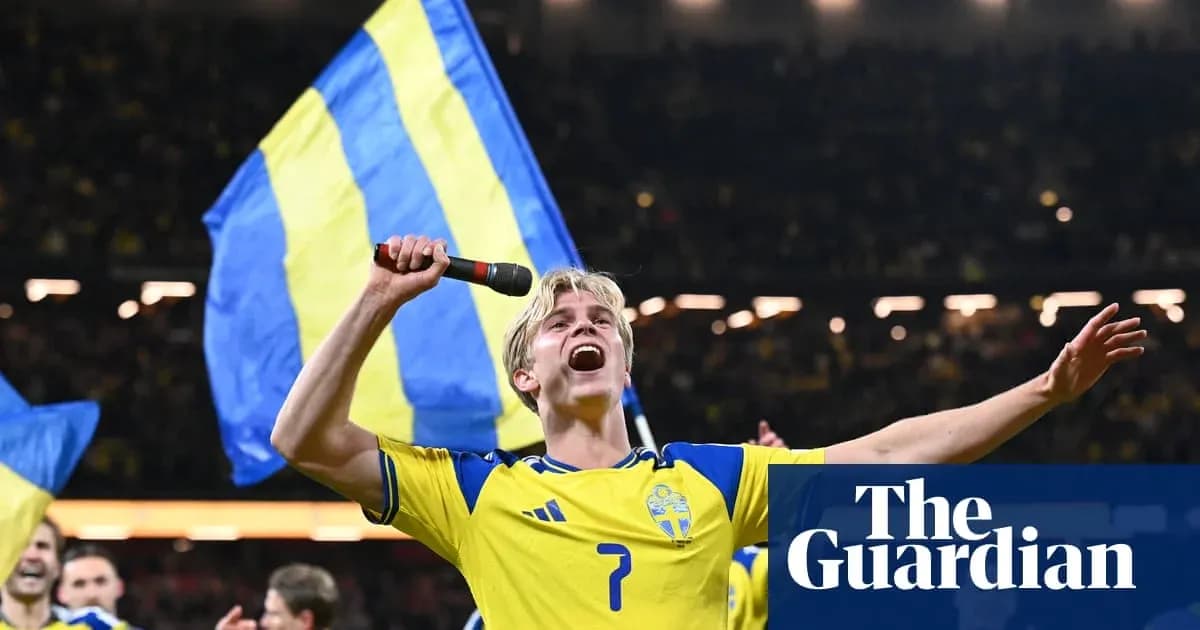
The Nations League had handed Sweden a lifeline back into the World Cup qualifying process. They grabbed it with both hands in Spain, where Ukraine were swept aside 3-1 in the semi-final. That night belonged to Viktor Gyökeres, who rattled in a hat-trick and, in the process, quietly moved from “important player” to “undisputed talisman”.
The final against Poland was different. Tighter. Nervier. Poland controlled long stretches, asked questions, forced Sweden deep. Yet every time the game threatened to slip away, Sweden clung on. Then, in the 88th minute of a 2-2 thriller, Gyökeres did it again – the late winner that detonated the bench and rewrote the narrative of a qualifying campaign that had been a shambles.
Potter called it “the best night I’ve had in football”, describing it like an out‑of‑body experience as he watched his staff sprint past him in celebration. For a coach bruised by difficult spells at Chelsea and West Ham, this was redemption in yellow and blue.
The Swedish FA didn’t hesitate. By March, before he had even won a competitive game with them, they had pushed a contract in front of him running to 2030. They were all-in on Potter, in his fluent Swedish and his clear plan.
The numbers are still bizarre: Sweden took just two points from six games in their qualifying group, yet they will be in North America, drawn with Tunisia, Netherlands and Japan, and quietly believing in the knockout stages again.
That’s the Potter effect.
Life without Kulusevski
The optimism comes with a brutal caveat. Dejan Kulusevski, the captain and heartbeat, will not be there. His influence on this side is enormous – as a carrier of the ball, a leader, a connector between midfield and attack. Sweden will feel his absence in every transition, every tight moment when a calm decision is needed.
Then there is Alexander Isak. On paper, the star. In reality, a question mark. His world-record move within the Premier League – from Newcastle to Liverpool for £125m – has not yet translated into dominance at Anfield. Form and fitness have both wobbled. He did at least score after coming off the bench in a 3-1 defeat to Norway on 1 June, but that performance raised more alarms than hopes. Norway controlled the game. Sweden looked second best.
So the burden shifts again to Gyökeres, now at Arsenal and finally finding rhythm after his own slow start in north London. He scored four of Sweden’s six goals across the two playoff ties and has become a cult figure back home, his Bane-inspired celebration from The Dark Knight Rises copied in living rooms, pubs and schoolyards across the country.
This is his team now. His World Cup.
The baron at the back and the late-blooming anchor
Sweden’s story in North America won’t just be written by the forwards.
Gustaf Lagerbielke, the Braga centre-back, may arrive as a curiosity and leave as a star. His playoff final against Poland was a statement: a thunderous header at one end, a composed, physical performance against Robert Lewandowski at the other. The fact he is a baron and 254th in line to the Swedish throne only adds colour to a defender whose reputation is growing fast. There is already talk of a move to one of Europe’s big five leagues; a strong World Cup could turn that into a bidding war.
Just in front of him, Jesper Karlström will be asked to hold everything together. The Udinese captain is not the type to dominate highlight reels, but coaches love players like him. A classic deep-lying midfielder: strong in the tackle, tidy on the ball, able to set the tempo without fuss.
Karlström’s journey has not been smooth. He has spoken openly about his gambling addiction during his time at Djurgården and how the club and his family helped him fight his way back. That experience shows in his game now – calm under pressure, unflustered by chaos around him. At 30, he will be the steadying force in a midfield that includes younger talents such as Yasin Ayari and Lucas Bergvall.
If Sweden are to survive a group containing a slick, technically polished Netherlands and a relentless, intricate Japan, Karlström’s ability to win duels and cool the temperature will be vital.
The travelling Swedes and an old American echo
Wherever Sweden go, the fans follow. Blågult supporters have built a reputation for travelling in heavy numbers, painting city centres in yellow and blue and turning stadiums into noisy, good‑natured cauldrons. They sing, they joke, they drink.
Their anthem of choice, “Kanna på”, is an ode to beer pitchers that never stop arriving. The lyrics promise: “We are coming with 100,000 men.” North America won’t quite see a Viking invasion, but there will be a loud Swedish presence from coast to coast.
The relationship between Sweden and the United States carries a strange, modern footnote. In 2017, Donald Trump stood at a rally and said: “Look what happened in Sweden last night,” while talking about immigration and terrorism. Nothing of note had happened. He later pointed to a Fox News report, which only deepened the confusion. Swedish newspaper Aftonbladet dryly listed what had actually occurred: technical problems for singer Owe Thörnqvist at rehearsals, a man setting himself on fire in central Stockholm, and some road closures in the north due to harsh weather.
That was the supposed “Sweden incident”.
Now the two nations meet again, not in speeches or soundbites, but in stadiums and fan zones, with Swedish supporters ready to write their own American chapter – this time with footballs, not headlines.
Potter has dragged Sweden from the brink of irrelevance to the World Cup stage. The question now is simple: is this just a remarkable rescue act, or the start of something far bigger in yellow and blue?